
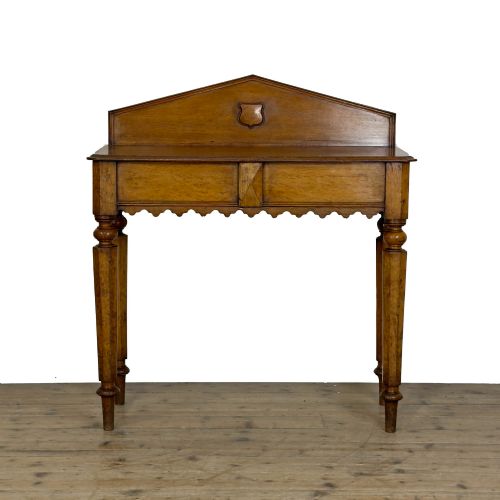
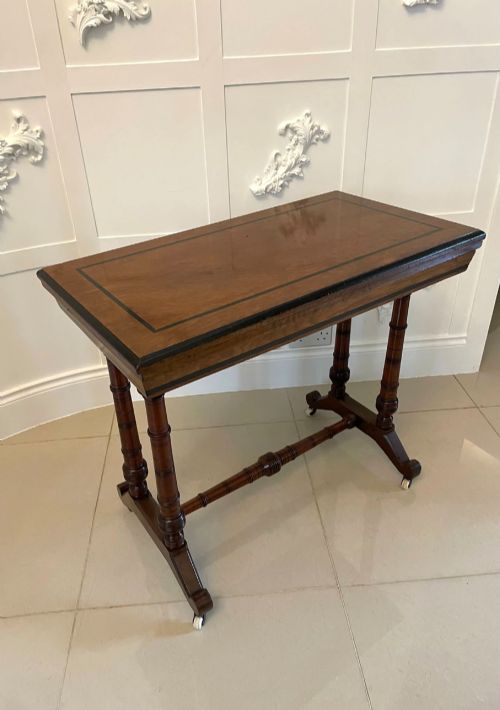
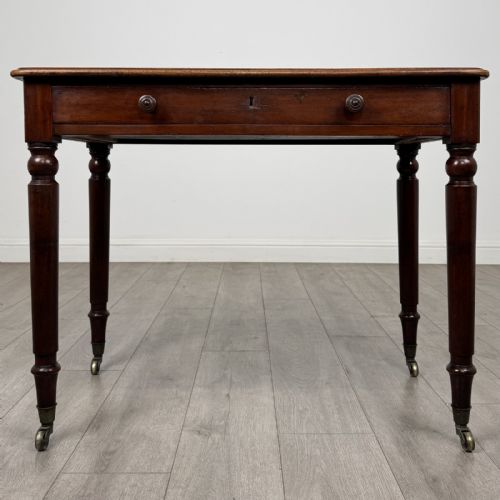
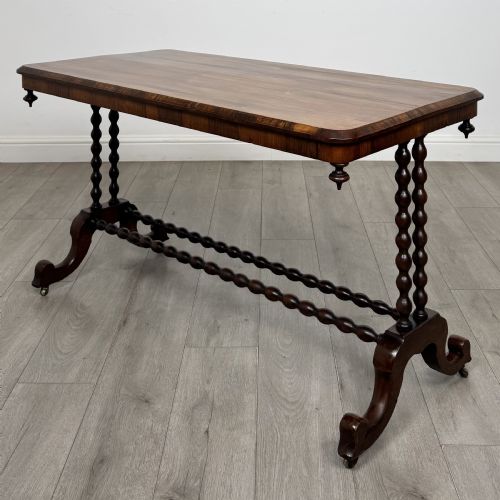
Victorian Turned Leg Console
These Victorian turned leg console and side tables bring practical surface space and solid timber construction directly into a hallway or reception room.
Victorian Turned Leg Console
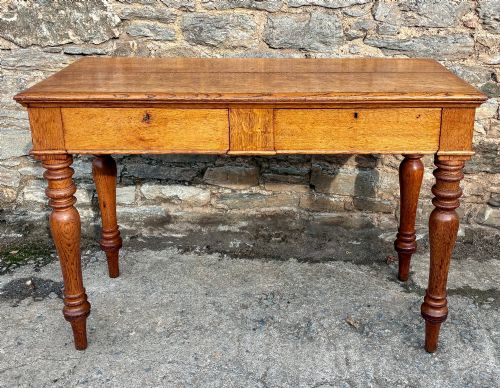
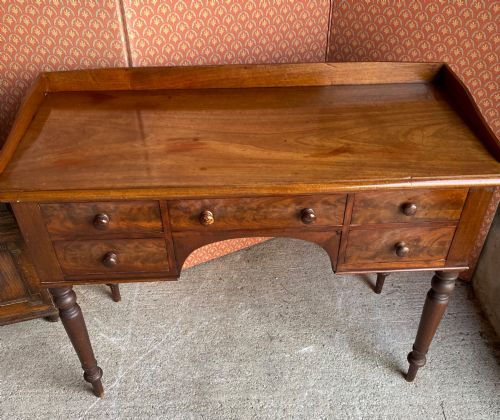
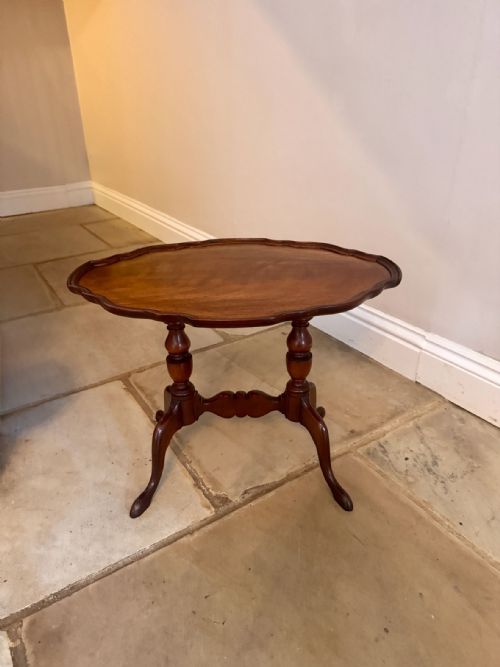
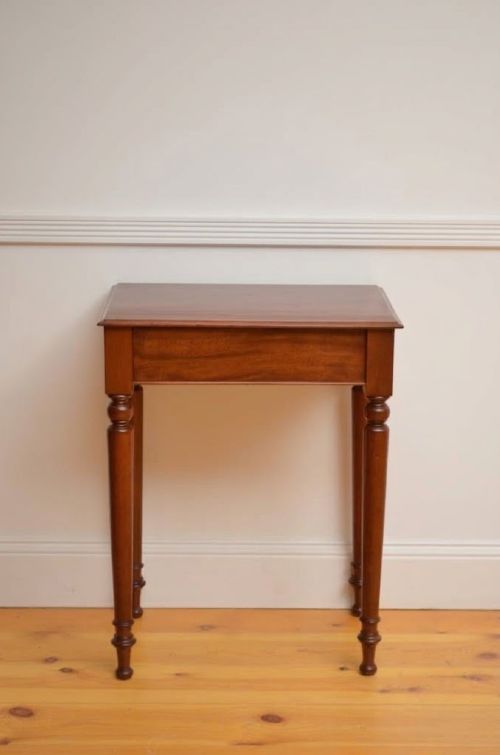
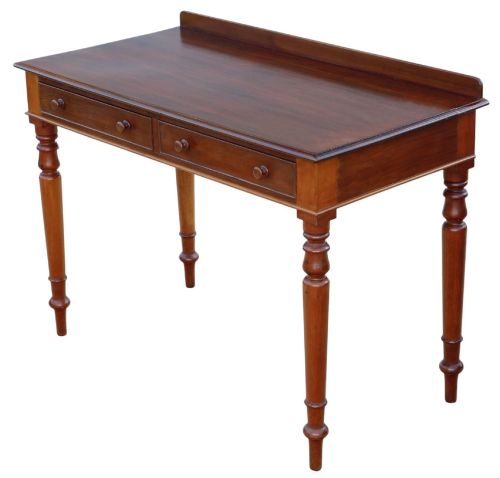
A Victorian turned leg console or side table is primarily a narrow surface designed for placement against a wall, frequently incorporating drawers for storage or functioning as a writing desk, washstand, or hall table.
The pieces appearing on this page date from the nineteenth century, spanning periods from the eighteen-fifties through the Edwardian era, with distinct styles including Arts and Crafts, Aesthetic Movement, and Victorian Country.
Mahogany and pine dominate the materials seen, while walnut, oak, satin birch, and pitch pine also appear, often taking the form of side tables, console tables, and writing desks with turned legs.
How they were made
Cabinet makers utilised dense hardwoods such as mahogany, walnut, and oak alongside softer timbers like pine and pitch pine, frequently incorporating brass castors and ceramic or marble tops.
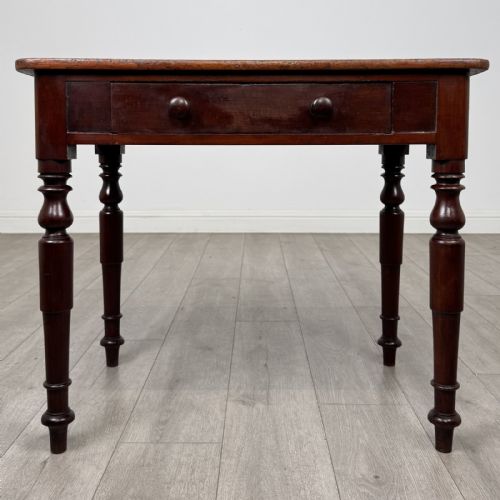
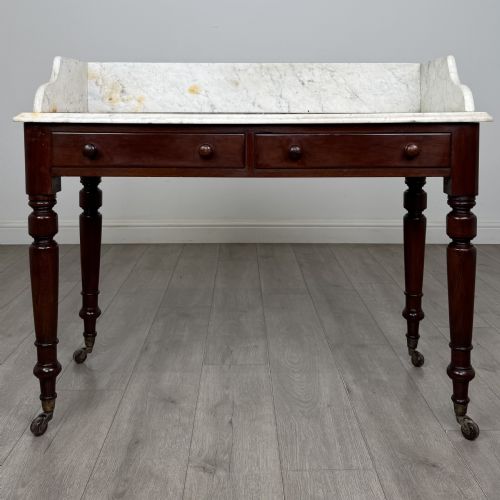
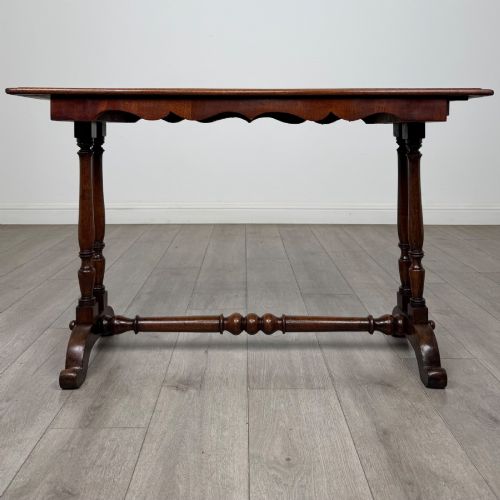
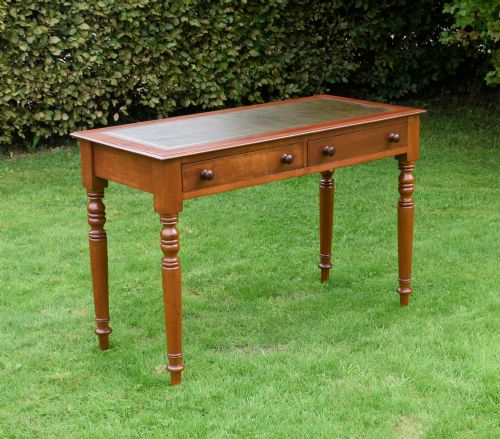
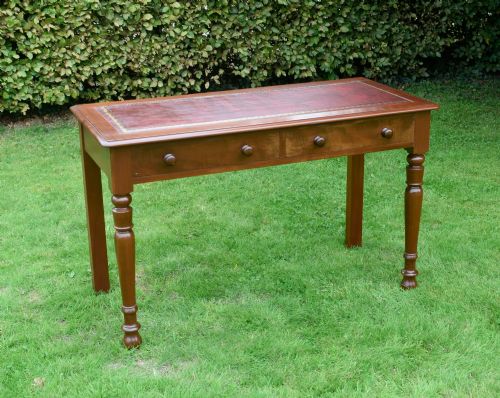
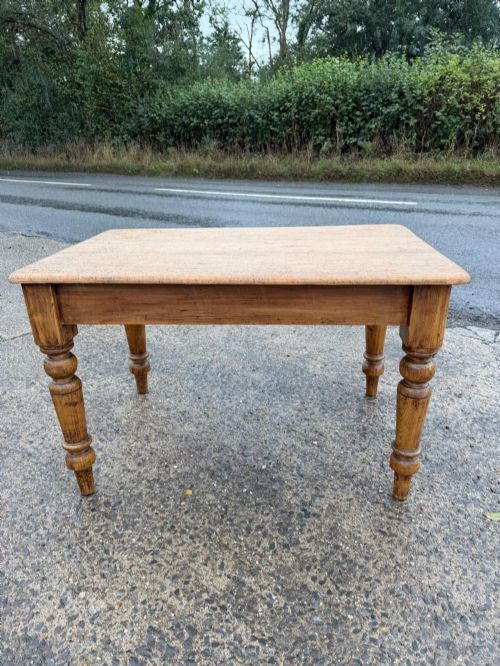
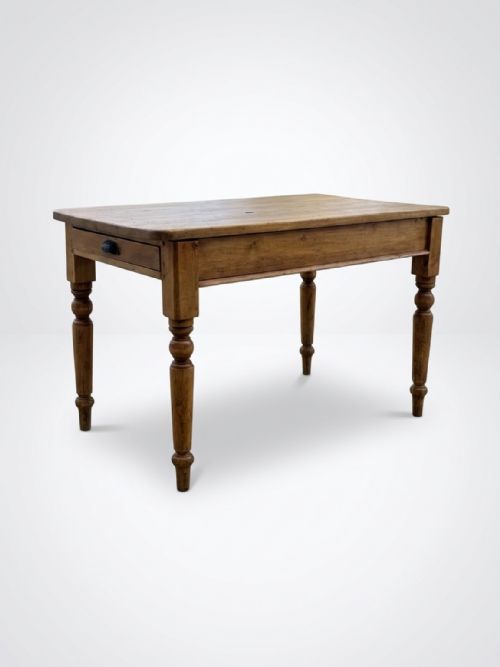
Structural turning forms the defining characteristic of the legs on these pieces, executed through lathe work to produce bobbin or standard turned supports beneath frieze drawers and raised galleries.
Some tables double as washstands, complete with marble tops for splashing Victorians.
What varies in quality
Quality rests in the selection of timber, visible in the figured grain of mahogany or walnut surfaces and the choice of secondary woods used within drawer construction.
The execution of the turned legs and the crispness of detailing, such as carved mouldings, raised galleries, or original brass hardware, separate standard utility pieces from finer workshop productions.
Druce and Co·Heal and Son·Gillows·J A Mein Edinburgh Cabinet Maker·Liberty
The Victorian Turned Leg Console Glossary
- Console table
- A table designed to stand against a wall, frequently supported by brackets or legs at the front. These pieces serve narrow spaces like hallways.
- Turned leg
- A pillar or leg shaped on a lathe by rotating the timber against a cutting tool. This method produces cylindrical or bobbin profiles seen on Victorian tables.
- Frieze
- The horizontal band situated directly beneath the tabletop. Drawers are frequently housed within this structural section.
- Gallery
- A low decorative border raised around the edge of a tabletop or washstand. It prevents items from sliding off the surface.
- Sutherland table
- A narrow drop-leaf table featuring folding leaves supported by swinging gate legs. This form maximises floor space when folded.
Victorian Turned Leg Console: Frequently Asked Questions
What is a turned leg console?
A turned leg console is a narrow nineteenth century table designed to stand against a wall, featuring lathe-turned wooden legs. They function as hall tables, side tables, or writing desks.
Most examples date from the Victorian period and incorporate single or double drawers within the timber frieze.
Where were these tables used?
These tables served various domestic functions in Victorian and Edwardian homes, appearing in hallways for correspondence, bedrooms as washstands, or reception rooms as occasional surfaces.
Their narrow proportions allowed them to fit into confined spaces without obstructing room circulation.
How do I identify a Victorian table?
Victorian tables show construction methods specific to the nineteenth century, including hand-cut dovetails on drawer boxes and the use of solid timbers like mahogany, walnut, and pine.
Design styles range from plain country pine to formal figured mahogany with turned supports and brass castors.
What woods were commonly used?
Mahogany and pine are the most prevalent timbers found across these listings, supplemented by walnut, oak, satin birch, and pitch pine. Finer pieces utilise figured mahogany veneers.
Ebonised finishes and decorative woods like ebony also appear within Aesthetic Movement and Arts and Crafts examples.