
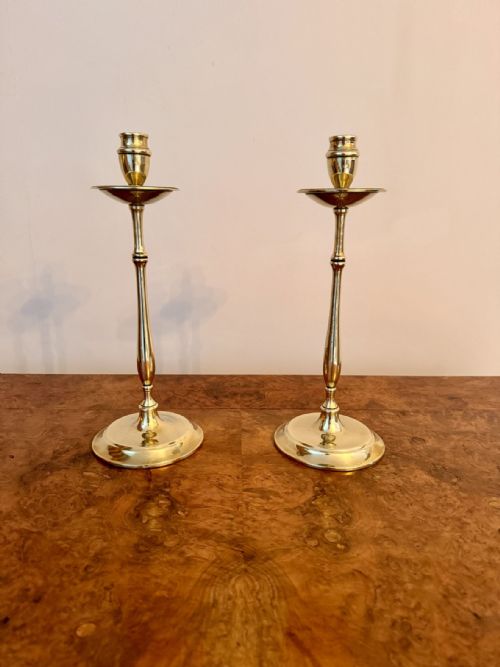
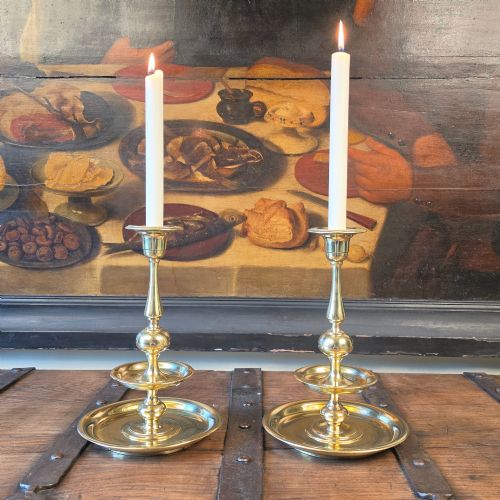
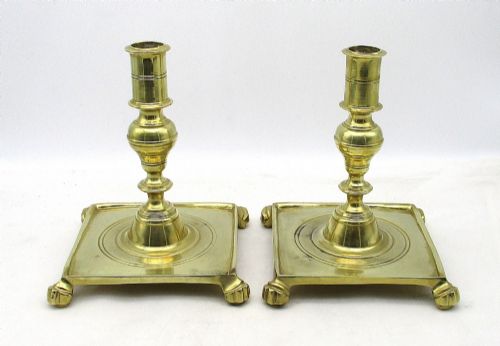

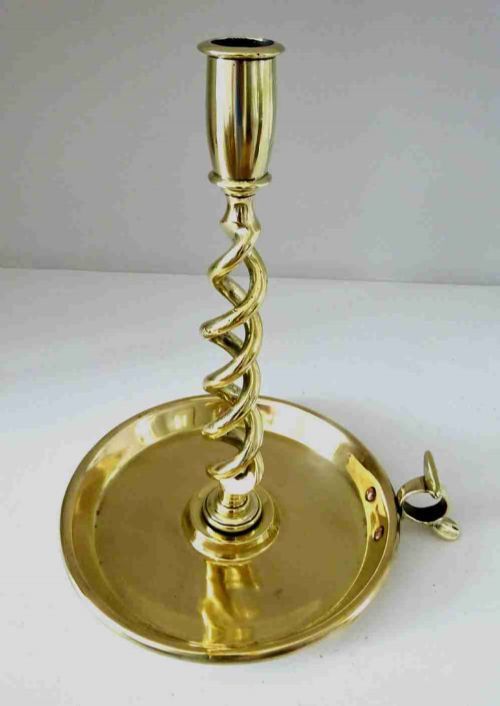


Victorian Turned Brass Candlesticks
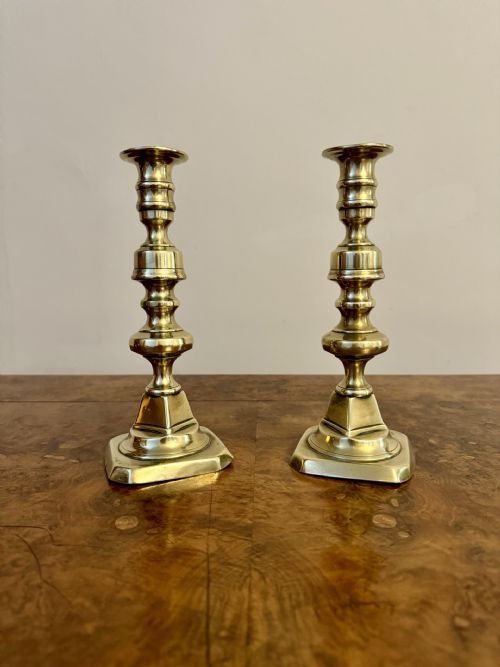
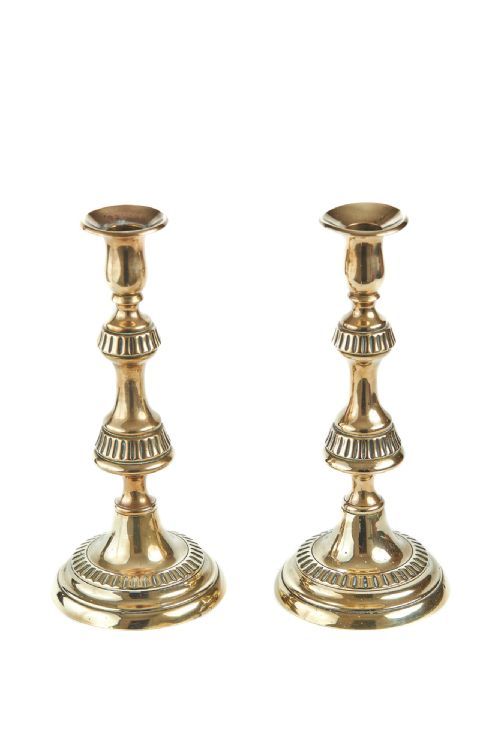
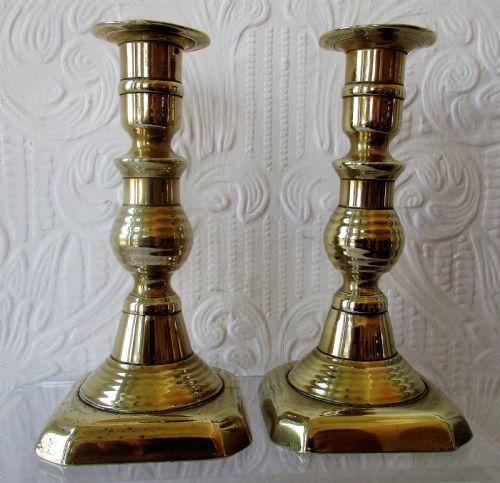
These Victorian turned brass candlesticks bring substantial weight and warm metallic lustre to a room, offering the classic forms that collectors seek.
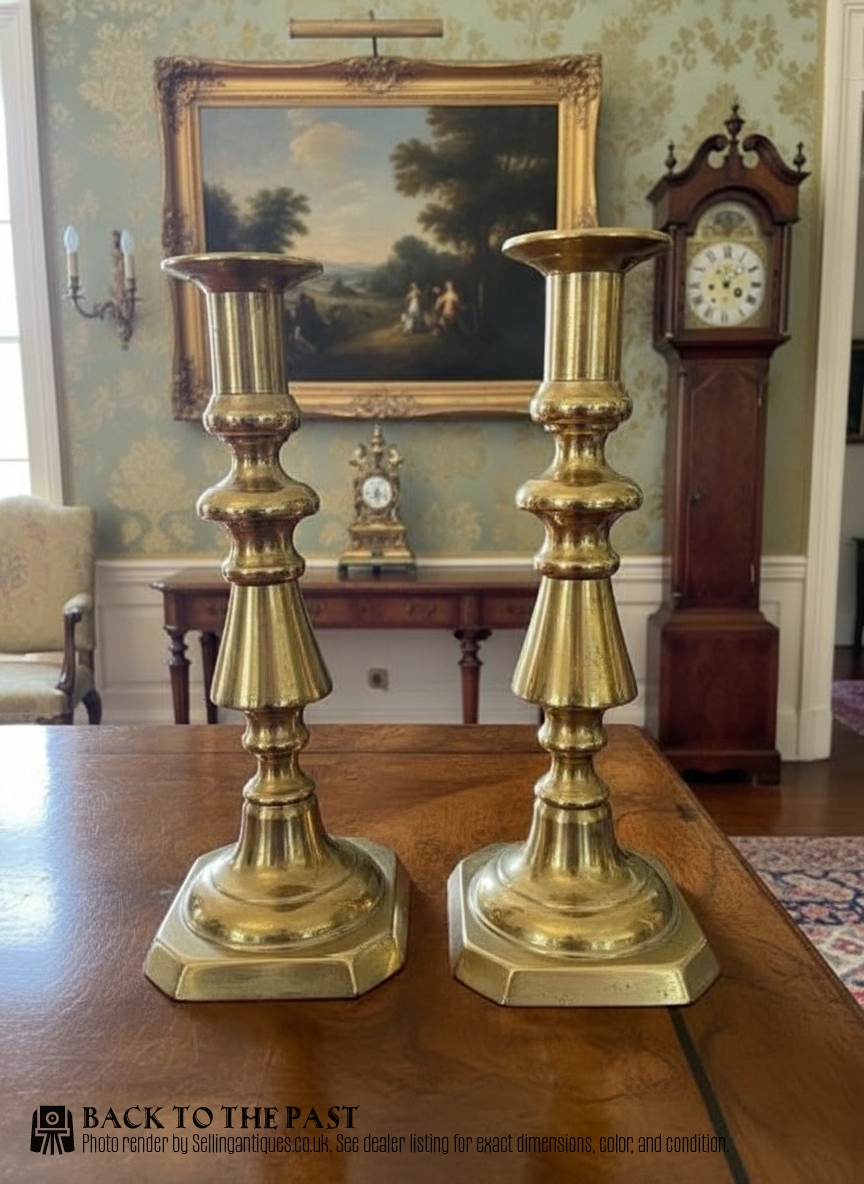
Victorian Turned Brass Candlesticks
Victorian turned brass candlesticks are typically found as matched pairs, designed to sit upon mantelpieces, dining tables or sideboards to provide domestic illumination. Most examples encountered here date from the nineteenth century, spanning from the middle decades through to nineteen hundred, with occasional pieces extending into the Edwardian era.
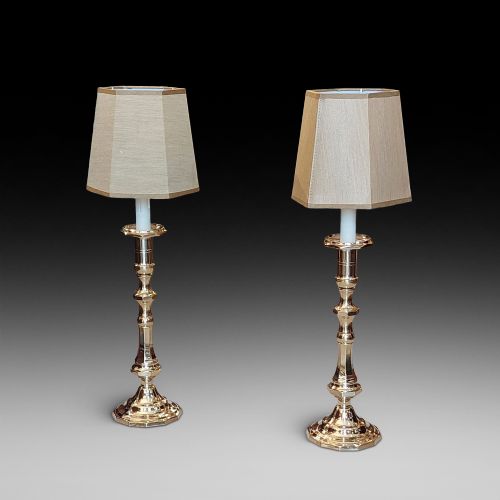
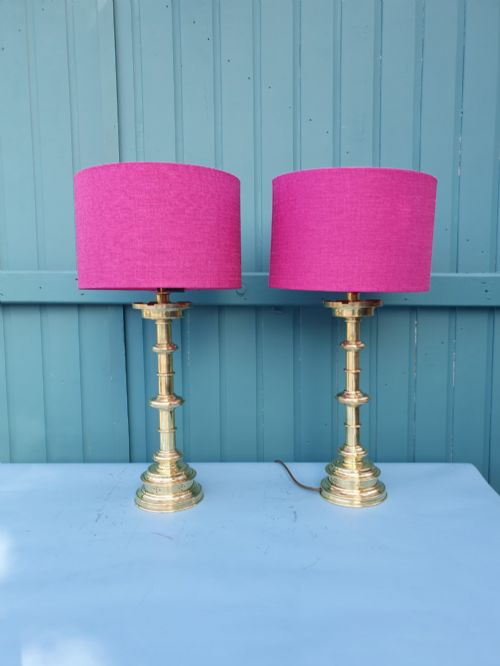
The primary forms take the shape of standard candlesticks or chamber sticks, while several examples have been converted into table lamps using fabric components. They range from modest domestic items to large, impressive pairs with shaped columns and fitted bases.
Makers and marks occasionally appear on the metal, including specific stamps such as Queen of Diamonds, alongside identified makers from the period. Alongside solid brass, some pieces incorporate walnut, mahogany, glass and opaline glass into their construction.
Markers of quality
Quality in these pieces rests upon the crispness of the turning on the column and the stability of the base. Heavy, solid brass castings with clean lines and balanced proportions represent the upper tier of production.
Subtle details in the shaping of the candlestick body and the presence of maker stamps or clear attribution distinguish finer examples from standard commercial output of the period.
The listings span from eighteen sixty through to nineteen thirty, incorporating both solid brass constructions and mixed media pieces featuring mahogany, walnut and opaline glass.
Frederick J Smith & Co·Wm Tonks & Sons
The Victorian Turned Brass Candlesticks Glossary
- Turned
- Shaped on a lathe to create symmetrical, rounded profiles along the column of the candlestick. This technique produced the classic rings and twists found on nineteenth-century metalwork.
- Chamber stick
- A low candlestick fitted with a pan to catch dripping wax and a handle for carrying from room to room. These frequently incorporate treen elements like walnut or mahogany.
- Pricket
- A candlestick that uses an upward-pointing metal spike to impale the base of the candle rather than a socket to hold it. This form is often seen on taller table lamp conversions.
- Opaline glass
- A dense, translucent milk glass used in combination with brass on specific lamp and candlestick forms. It adds a contrasting tactile element to the metal body.
- Treen
- Small handmade wooden household objects, occasionally combined with brass in nineteenth-century chamber sticks. Walnut and mahogany were standard woods for these parts.
Victorian Turned Brass Candlesticks: Frequently Asked Questions
How do I date these candlesticks?
Dating relies on stylistic shifts, manufacturing methods, and occasional maker stamps or registration marks stamped into the brass.
Items from the middle of the nineteenth century often display heavier cast components, whereas later pieces towards nineteen hundred can feature more slender profiles or twisted columns.
Can I use them with modern candles?
Most standard taper candles will fit into the sockets of these nineteenth-century pieces, though minor adjustments using melted wax or thin card are occasionally needed for a secure hold.
It is sensible to check the internal diameter of the socket before lighting a candle to ensure it sits upright and stable.
How should I clean the brass?
Gentle dusting with a soft cloth preserves the aged patina that collectors prefer on Victorian metalwork.
Harsh chemical polishes remove the historical character and should be avoided in favour of mild soapy water if cleaning is strictly necessary.
Were these originally table lamps?
Many items listed as lamps started life as standard candlesticks and were later converted to hold electrical fittings.
Original Victorian chamber sticks and tall candlesticks often show adaptation for modern domestic use while retaining their turned brass columns.