
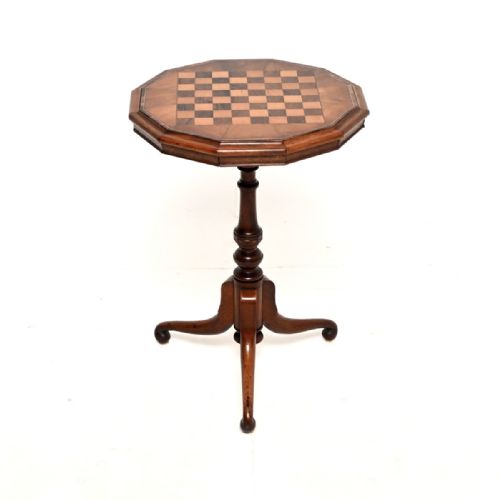


Victorian Tripod Work Table
These Victorian tripod work tables are practical nineteenth-century sewing and games pieces designed to hold needlework while anchoring a room.
Victorian Tripod Work Table
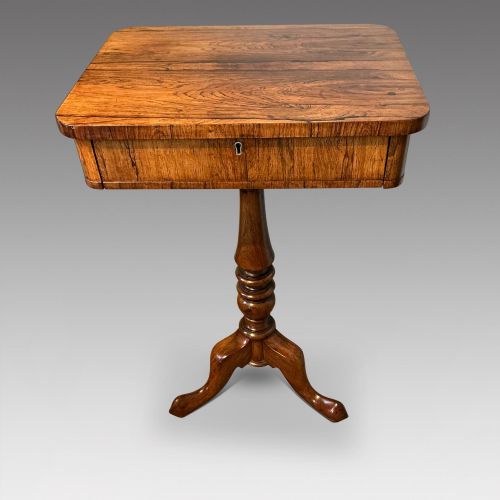
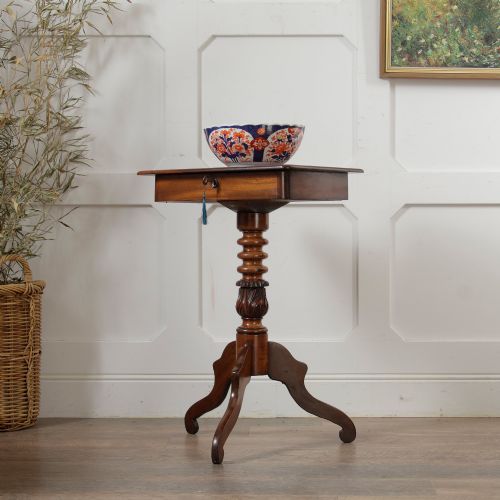
A victorian tripod work table combines a central pedestal supported by three feet with an upper compartment or box for sewing equipment and wool. These nineteenth-century pieces appear frequently as trumpet-shaped workboxes, sewing tables, and occasional chess tables set upon a tripod base.
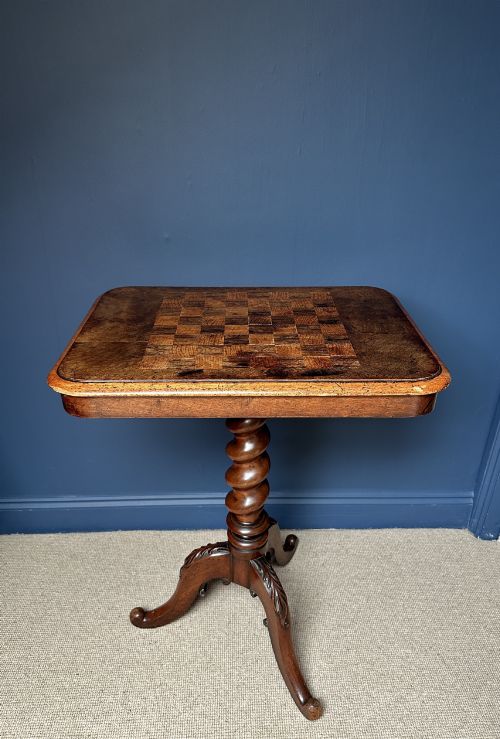
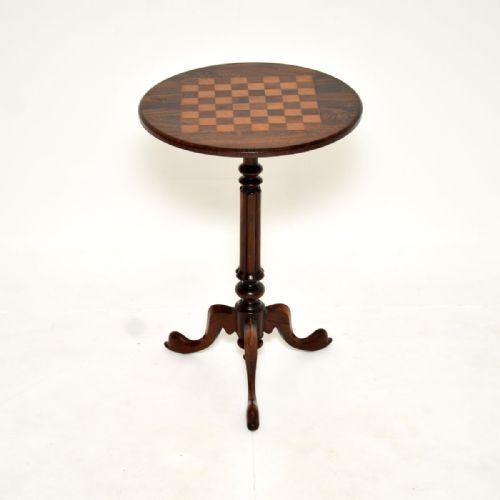
The selection here ranges from rosewood and burr walnut marquetry examples to simpler mahogany variants and unusual Black Forest or Anglo-Indian interpretations. Alongside standard sewing boxes, listings include occasional side tables, drop-flap designs, and multi-functional game tables featuring inlaid chess boards.
How they were made
Cabinet makers utilised dense hardwoods such as rosewood, mahogany, and burr walnut, frequently applying intricate boxwood inlay and marquetry across the lids and tops. Interiors were often fitted with small compartments, trays, and workboxes designed to organise needles, threads, and fabric.
Support structures rely on turned pedestals rising from three stability legs, sometimes featuring carved scrollwork or cast iron elements. Trumpet work tables expand outward from a slender stem toward a wide octagonal or circular box lid.
Materials across these listings include rosewood, walnut, burr walnut, mahogany, brass, boxwood, and cast iron.
What varies in quality
The sophistication of the timber veneers and the precision of the marquetry inlay determine the visual standing of each piece. Figured burr walnut and richly grained rosewood sit at the upper end of the scale, contrasted by simpler mahogany or plain turned constructions.
Interior cleverness and structural integrity also separate standard examples from finer commissions. Fully fitted internal compartments, well-preserved needlework baskets, and sturdy pedestal joints distinguish superior cabinet work from ordinary production.
The Victorian Tripod Work Table Glossary
- Trumpet workbox
- A sewing table featuring an octagonal or circular body that flares outward toward the top, resembling the bell of a musical instrument. It typically conceals a fitted interior tray for small sewing implements.
- Marquetry
- Decorative veneer work created by fitting together small pieces of different coloured wood or other materials to form pictorial or geometric patterns on the surface.
- Pedestal base
- A central vertical column supporting the upper table body, which in these pieces terminates in a tripod foot arrangement.
- Drop flap
- A hinged leaf on the side of a table that can be raised to extend the surface area or lowered when space is restricted.
- Chess table
- A multi-functional surface featuring an inlaid board on the top, allowing the piece to serve for gaming alongside needlework.
Victorian Tripod Work Table: Frequently Asked Questions
What is a tripod work table?
A tripod work table is a nineteenth-century small table featuring a central pedestal supported by three feet, combined with a compartment for sewing and needlework.
These pieces were designed for domestic parlours to keep sewing materials tidy while providing a stable surface beside a chair.
How were work tables used?
Victorian women used these tables to store sewing, knitting, and embroidery supplies within the internal boxes and fitted trays.
Many examples also doubled as games tables or occasional lamp tables when the lid was closed and flat.
What woods are typical?
Cabinet makers predominantly used rosewood, mahogany, and burr walnut, often enhancing the surfaces with lighter boxwood inlay.
Some unusual variations incorporate yew wood, cast iron, or carved Black Forest elements into the tripod structure.
How do I date a work table?
Dating relies on observing the timber choices, turning styles, and construction methods characteristic of the nineteenth century.
Pieces from this era frequently utilise trumpet silhouettes, brass fittings, and marquetry patterns typical of Victorian and Regency design.