
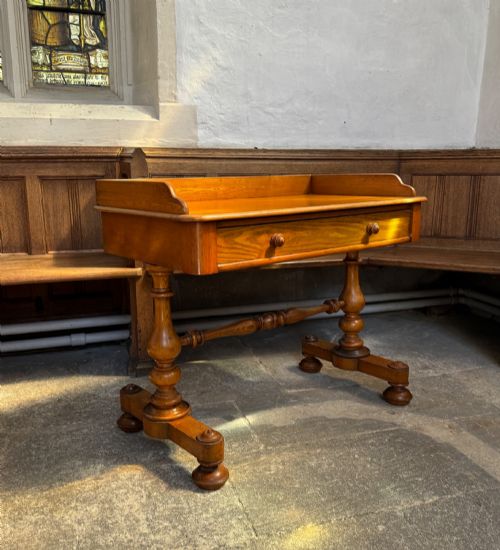
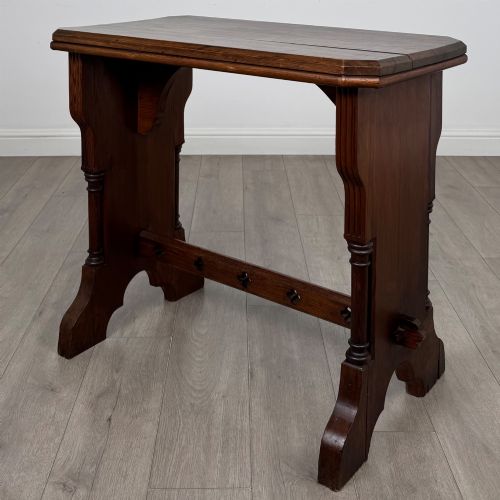
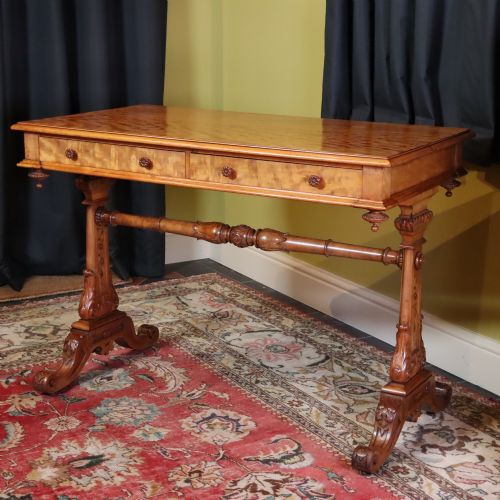
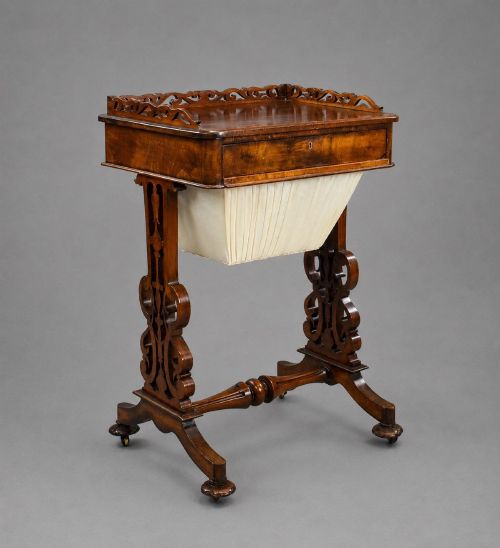
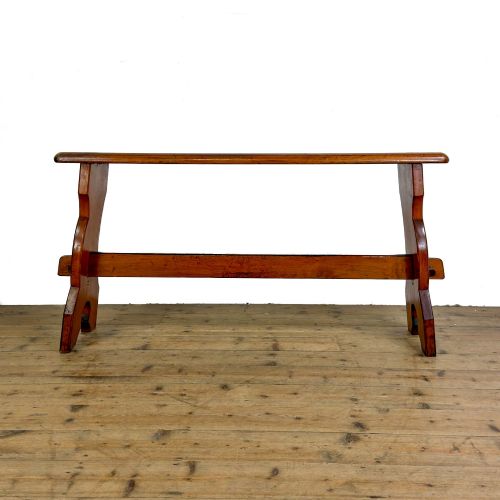
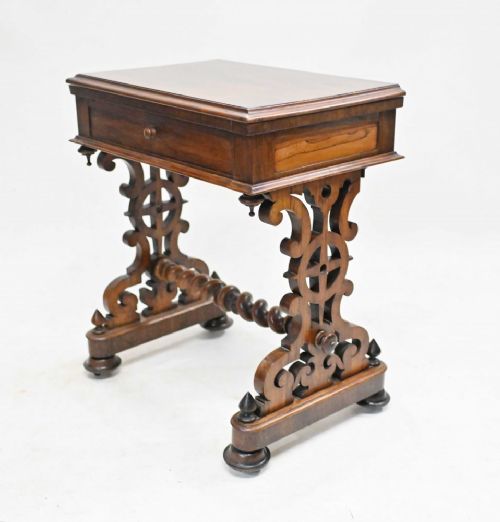
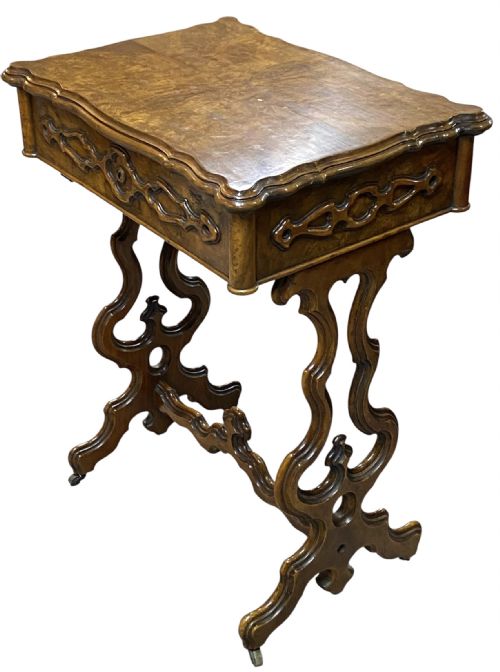
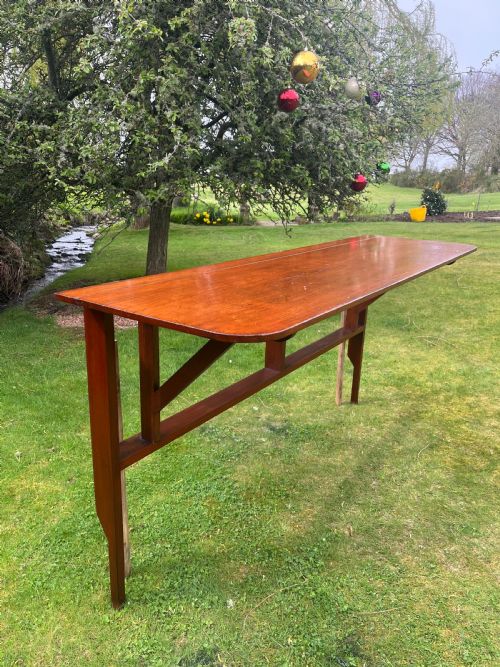


Victorian Trestle Side Table
These nineteenth century pieces offer sturdy timber and honest utility, providing a practical surface for daily life in any room.
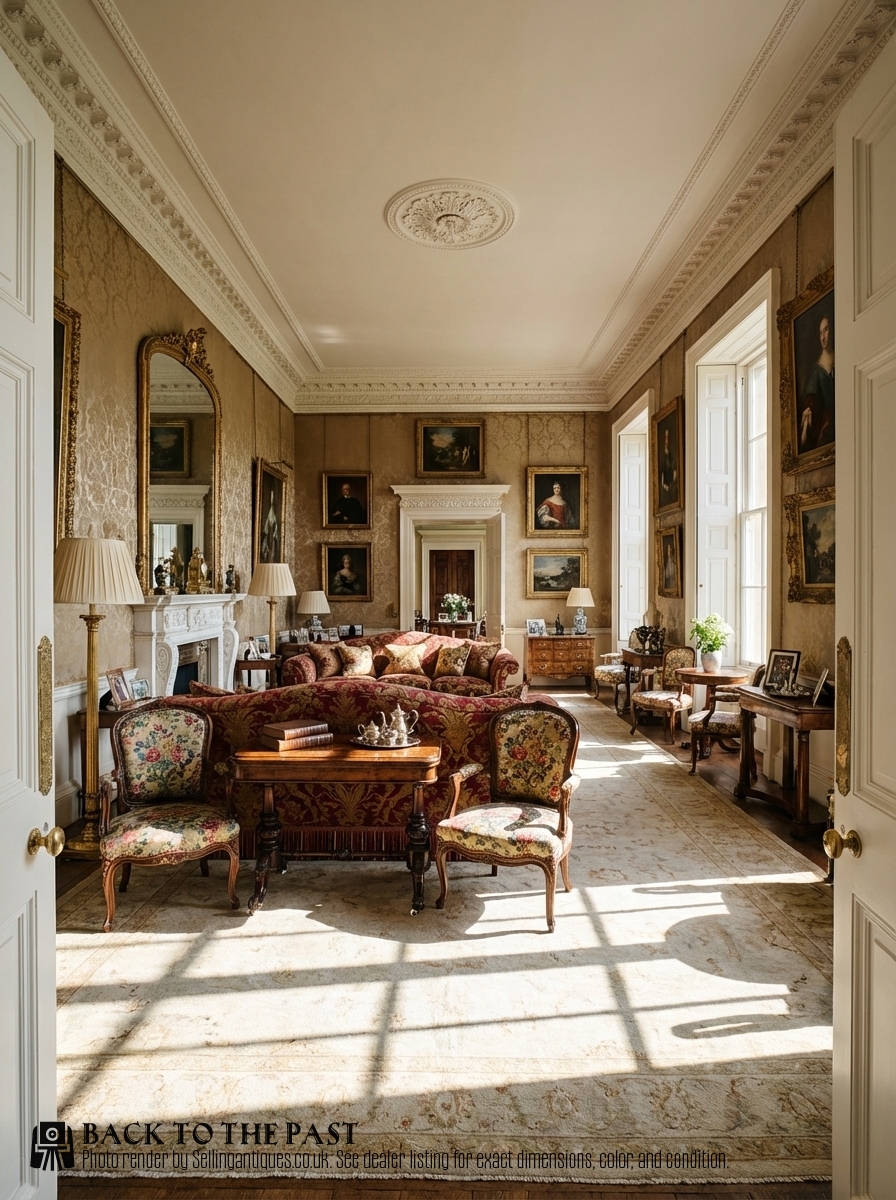
Victorian Trestle Side Table
The material palette recorded in current listings spans mahogany, walnut, burr walnut, pitch pine, rosewood, and pine. These timbers appear in forms ranging from Gothic revival washstands and tavern tables to card tables and compact writing desks.
Materials and Construction
Cabinet makers utilised dense hardwoods like mahogany and rosewood alongside figured veneers such as burr walnut to create durable surfaces. Softer woods like pitch pine and Welsh pine frequently appear in vernacular country pieces and washstands, often retaining original paint or wax finishes.
Joinery techniques relied on solid timber construction, turned spindle bases, and cast iron supports where industrial elements met traditional cabinet making. Inlays of marquetry and contrasting ebony details add decorative refinement to structural frames.
Victorian Trestle Side Table Retail Price Guide 2026
Typical asking prices for victorian trestle side table among the pieces listed under this phrase on Sellingantiques today, from the lower quarter to the upper quarter. They describe what is for sale here now, not the wider market.
Listings feature woods spanning mahogany, walnut, burr walnut, pitch pine, rosewood, and pine across the nineteenth and early twentieth centuries.
Assessing Quality
The grade of a piece rests upon the selection of timber, particularly the grain figuration visible in burr walnut and satinwood tops. Superior examples demonstrate crisp carving, precise marquetry inlay, and robust structural integrity within the underframe.
Original surface patination and untouched timber finishes distinguish finer workshop output from later alterations. Consistency in secondary woods and thoughtful proportions elevate a utilitarian form into a notable specimen of its period.
The Victorian Trestle Side Table Glossary
- Burr walnut
- A figured veneer sliced from walnut tree growths, prized for its swirling grain patterns on table tops. It yields a highly decorative surface unique to each individual piece of furniture.
- Pitch pine
- A durable, resinous softwood commonly utilised in nineteenth century country and ecclesiastical furniture. It offers a distinct grain structure and ages to a warm amber tone.
- Marquetry
- The art of applying pieces of veneer to a structure to form decorative patterns and pictorial designs. Cabinet makers used contrasting timbers like satinwood and ebony to achieve this effect.
- Trestle
- A structural support consisting of a horizontal beam balanced on two pairs of splayed legs. This framework provides stability for long console, centre, and tavern tables.
- Work table
- A specialised nineteenth century table fitted with drawers or fabric bags designed for sewing and needlework. These versatile pieces often double as compact side or lamp tables today.
Victorian Trestle Side Table: Frequently Asked Questions
Where should I place a side table?
These compact tables suit hallways, landings, or beside seating where surface space is needed without dominating the room.
Their narrow proportions allow them to fit easily against walls or function as lamp tables in smaller spaces.
How do I care for timber surfaces?
Maintain the wood by applying natural beeswax periodically to nourish the grain and protect the original finish.
Avoid placing pieces in direct sunlight or near heat sources to prevent timber splitting and veneer lifting.
What is the difference between a side table and a console table?
Side tables typically offer freestanding versatility with four legs or a central pillar, designed for general placement around a room.
Console tables are generally longer and narrower, traditionally intended to stand flat against a wall often with decorative brackets or trestle supports.
How do I identify a nineteenth century piece?
Examine the timber selection, construction methods, and secondary woods used on the interior drawer linings and underneath the top.
Hand-cut joints, traditional fox-wedged tenons, and authentic patination accumulated over decades point directly to nineteenth century manufacture.