
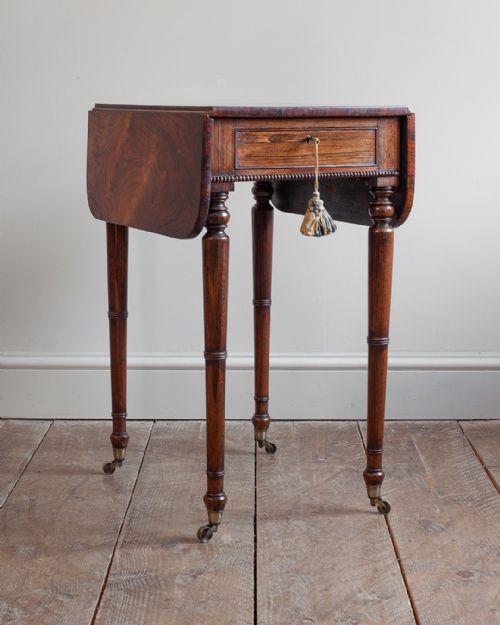
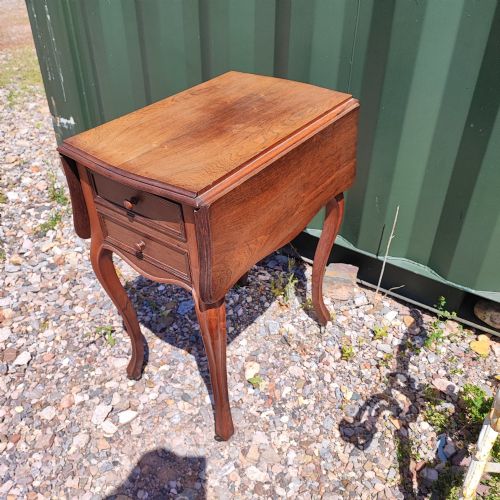


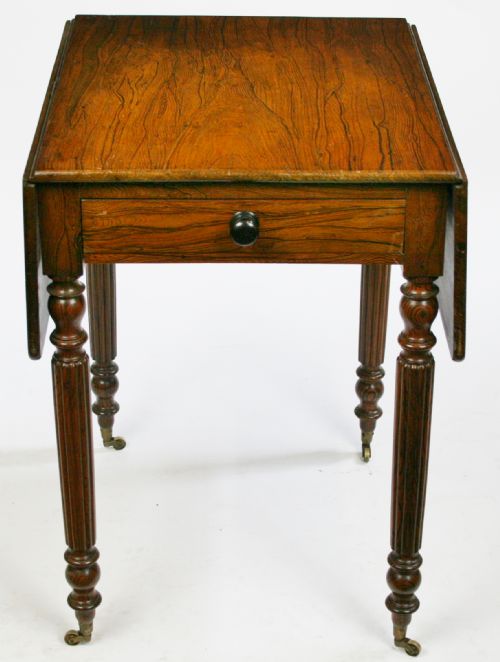
Small Rosewood Drop Leaf
These small rosewood drop leaf tables offer practical folding surfaces and rich grain, making them essential additions to compact spaces.
Small Rosewood Drop Leaf
When you search for small rosewood drop leaf pieces, you encounter versatile occasional, writing, bedside, and pembroke tables designed for flexible living. The selection on this page centres primarily on nineteenth-century examples, spanning the Regency and Victorian periods alongside simulated finishes.
These items function as side tables, games tables, and work tables equipped with folding flaps that adjust the footprint of the furniture. Their origins bridge various historic styles including French Provincial, William IV, and Edwardian interpretations.
The most common formats combine compact proportions with drop leaves supported by swing brackets or gatelegs. Buyers meet everything from triangular occasional tables to fitted writing desks within this specific group.
How they were made
Cabinet makers utilised dense rosewood timbers, frequently pairing the primary dark grain with contrasting boxwood and satinwood inlay. Marquetry decoration and simulated rosewood treatments also appear across the surviving pieces.
Metal components such as brass hardware provide structural support and functional movement for the drop leaves and drawers. Secondary timbers like mahogany support the internal framework while leather inserts line specific writing surfaces.
One table arrives with a triangular top, proving that nineteenth century cabinet makers loved a geometry puzzle.
What varies in quality
The refinement of the decorative inlay and the precision of the marquetry set the finer examples apart from simpler utilitarian pieces. Crisp execution in the boxwood and satinwood details indicates superior workshop origin.
The choice of timber grain and the integrity of the drop leaf mechanism dictate the overall standing of an individual table. Finer pieces demonstrate careful selection of rosewood veneers alongside robust hinging systems.
Gillow
The Small Rosewood Drop Leaf Glossary
- Drop leaf
- A table with hinged flaps on the sides that fold down to save space or lift up to extend the surface area.
- Pembroke table
- A small form featuring two hinged leaves and usually one or more small drawers beneath the top.
- Marquetry
- Decorative patterns formed by fitting together small pieces of coloured wood veneer into a design.
- Satinwood
- A luminous yellowish timber utilised for contrasting inlay work and stringing lines on dark surfaces.
- Simulated rosewood
- A painted or grained finish applied to an alternative timber to imitate the appearance of genuine rosewood.
Small Rosewood Drop Leaf: Frequently Asked Questions
What are small rosewood drop leaf tables?
These items are compact nineteenth-century furnishings featuring hinged flaps designed to expand the surface area when needed. They include pembroke, writing, and occasional tables.
Cabinet makers produced them across periods spanning the Regency, Victorian, and Edwardian eras using rich timbers and decorative inlay techniques.
How were pembroke tables used historically?
Pembroke tables served as versatile breakfast, writing, or occasional pieces that could be easily moved around a room. The folding leaves allowed owners to tuck them against a wall when floor space was limited.
Drawers built into the frame provided storage for writing implements, sewing materials, or small household items.
How do I identify a Regency rosewood table?
Regency pieces often display classical proportions, crisp brass details, and clean architectural lines influenced by ancient design. Makers of this era frequently utilised solid rosewood or high-quality veneers with minimal fuss.
Looking beneath the top reveals construction methods and secondary timbers characteristic of early nineteenth-century workshops.
How should I care for rosewood furniture?
Rosewood benefits from stable indoor environments away from direct sunlight and dramatic temperature swings. Regular dusting with a soft, dry cloth preserves the polished finish without stripping natural oils.
Avoid placing damp items directly onto the vulnerable wood or leather surfaces of antique tables.
What is simulated rosewood?
Simulated rosewood is a painted or stained finish applied to a more common wood to mimic the dark, figured grain of genuine rosewood. Artisans used this technique to achieve an expensive look using alternative materials.
William IV examples occasionally feature this decorative graining method on structural frames.