

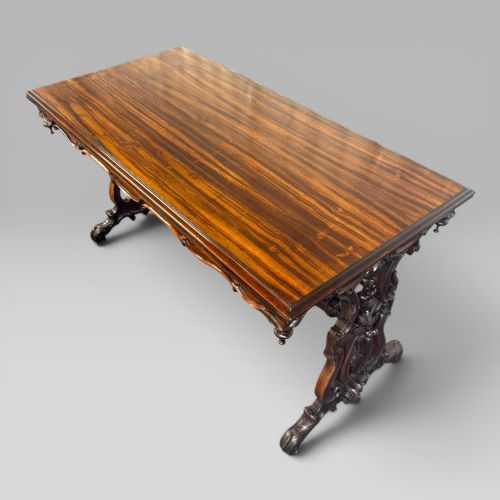
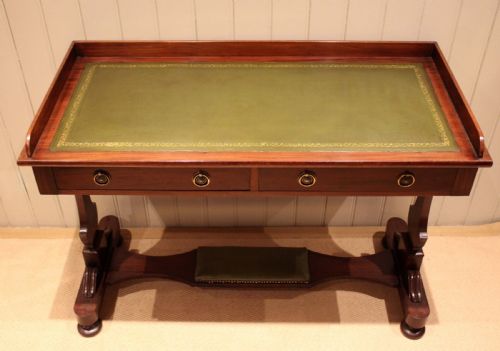
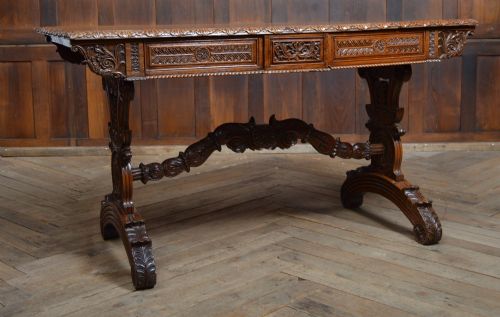


Victorian Trestle Desk
A victorian trestle desk brings honest nineteenth-century utility and fine timber to a study, uniting practical work surfaces with enduring period craftsmanship.
Victorian Trestle Desk
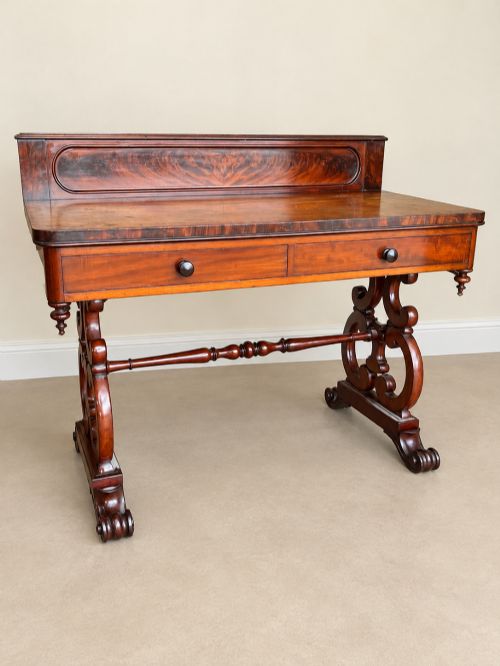
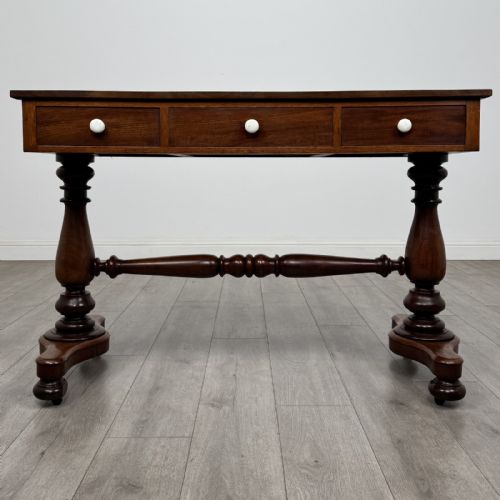
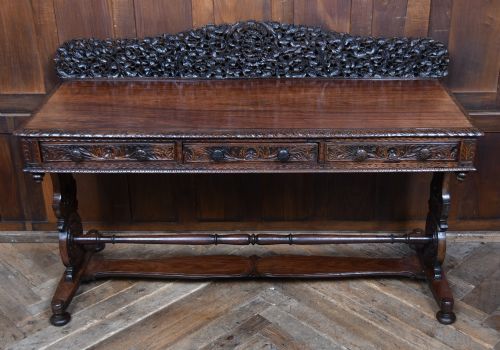
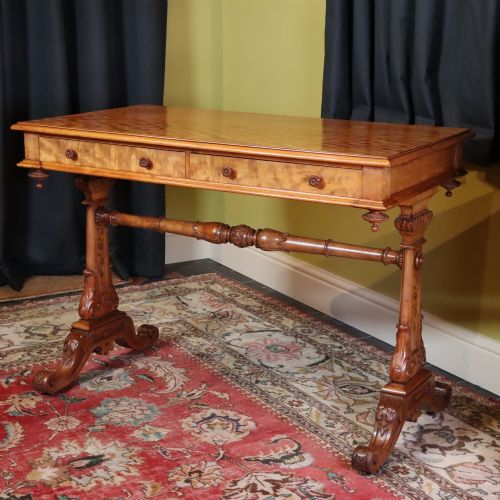
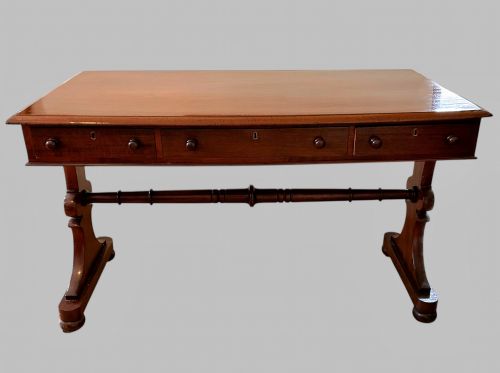
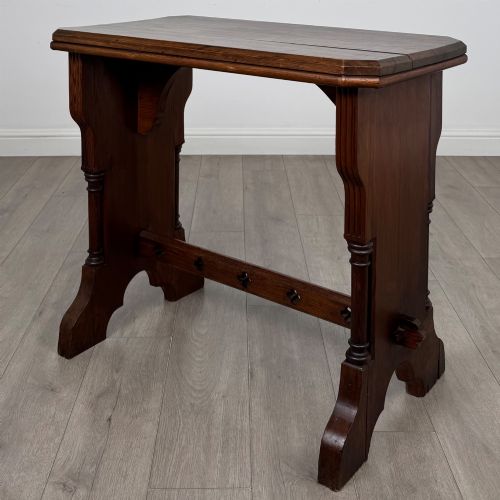
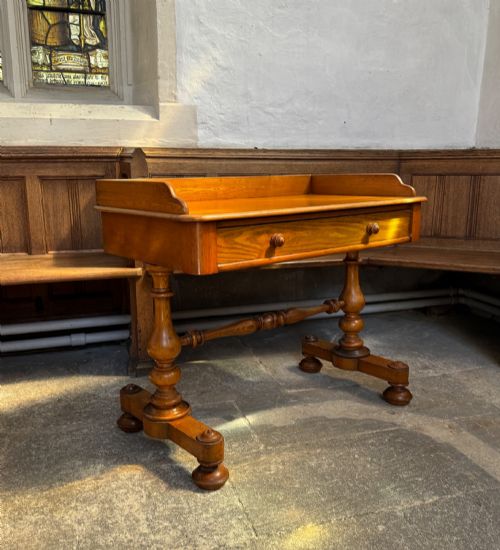
A victorian trestle desk represents the practical working furniture of the nineteenth century, encompassing robust writing tables, library tables, and robust tavern tables with supporting frames. These pieces span periods from early Victorian and William IV eras through to the close of the century, frequently constructed in mahogany, walnut, and pitch pine. Buyers encounter diverse regional variations, ranging from formal satinwood writing tables to rustic farmhouse and ecclesiastical pitch pine examples.
Materials and Technique
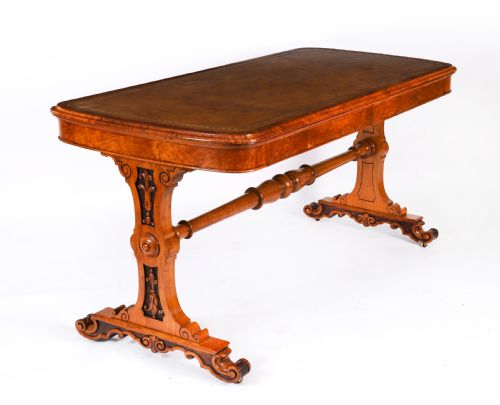
Cabinetmakers relied on dense timbers such as mahogany, rosewood, burr walnut, and satinwood for visible surfaces, pairing them with structural pine and pitch pine. Fine grain selection dictated the aesthetic, with flame mahogany veneers and intricate marquetry reserved for high-status library tables. Brass fittings, leather inserts, and cast iron components provided both structural reinforcement and functional utility.
Joinery methods of the nineteenth century ensured rigidity across large writing surfaces and trestle bases, utilising precise drawer construction and sturdy framing. Timber was hand-finished, polished, or painted, as seen in examples retaining original red paint on X-frame tavern bases. This combination of robust framing and select hardwoods allowed desks to endure centuries of active use.
Victorian Trestle Desk Retail Price Guide 2026
Typical asking prices for victorian trestle desk among the pieces listed under this phrase on Sellingantiques today, from the lower quarter to the upper quarter. They describe what is for sale here now, not the wider market.
One exceptionally honest tavern table arrived bearing its original red paint, having spent generations surviving spills in a Welsh taproom.
Evaluating the Pieces
Quality rests in the choice of primary timber and the precision of the cabinetwork, distinguishing formal library pieces from utilitarian kitchen tables. Superior examples display carefully matched burr walnut or flame mahogany veneers, finely executed drawer dovetails, and integrated brass hardware. Lesser pieces rely on simpler pine construction and plain surfaces intended strictly for utilitarian service.
The presence of secondary decorative elements, such as inlaid banding, carved mouldings, or Gothic Revival detailing, elevates a piece above standard workshop production. Proportions and structural integrity remain paramount, separating desks designed for refined domestic interiors from those built for basic tavern or vernacular use.
Gillows
The Victorian Trestle Desk Glossary
- Library Table
- A large freestanding table designed to stand in the centre of a room, typically fitted with frieze drawers for stationery and books. These pieces finished on all four sides allow placement away from walls.
- Pitch Pine
- A durable resinous softwood utilised extensively during the nineteenth century for furniture requiring high structural strength. It yields a prominent grain pattern with deep colour variation.
- Frieze
- The central horizontal band situated directly beneath the top of a desk or table, frequently housing one or more drawers.
- Satinwood
- A hard, lustrous timber native to the tropics, prized for its pale golden yellow tone and satiny sheen in fine Regency and Victorian cabinetwork.
- X-Frame
- A structural base formed by intersecting diagonal timbers that provide lateral support without obstructing legroom beneath a table top.
Victorian Trestle Desk: Frequently Asked Questions
How do I identify a Victorian writing desk?
Examine the timber selection, drawer construction, and secondary woods visible inside the carcass. Nineteenth-century pieces typically feature hand-cut dovetails and traditional finishes suited to the period.
Look for stylistic markers such as Gothic Revival detailing, turned legs, or inset leather writing surfaces that confirm the manufacturing era.
Were these tables used for writing or dining?
Many large nineteenth-century examples served dual purposes as library tables, serving tables, or tavern tables depending on their primary domestic context. Desks specifically featured frieze drawers for storing writing implements and papers.
Simpler pine and pitch pine variants often functioned in kitchens, servants' quarters, or informal dining spaces.
How should I care for a nineteenth-century timber desk?
Maintain stable humidity levels in your room to prevent timber from splitting or veneers from lifting away from the substrate. Avoid placing antique desks near direct heat sources or in harsh sunlight.
Apply quality beeswax sparingly to nourish the wood and preserve the traditional sheen of the polish.
What distinguishes a centre table from a side table?
Centre tables are finished on all sides so they can stand independently in the middle of a room without facing a wall. Side tables generally feature a finished front and a plain back intended to sit flush against a wall.
Both forms appeared frequently throughout the nineteenth century in various domestic settings.