


Victorian Transferware Bowl
A victorian transferware bowl brings nineteenth-century blue and white pattern printed pottery straight to the table or washstand.
Victorian Transferware Bowl
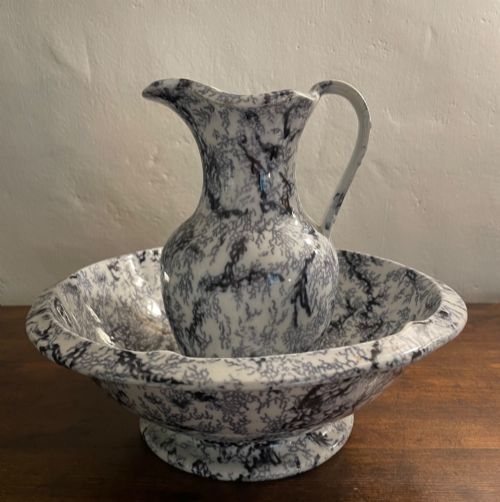
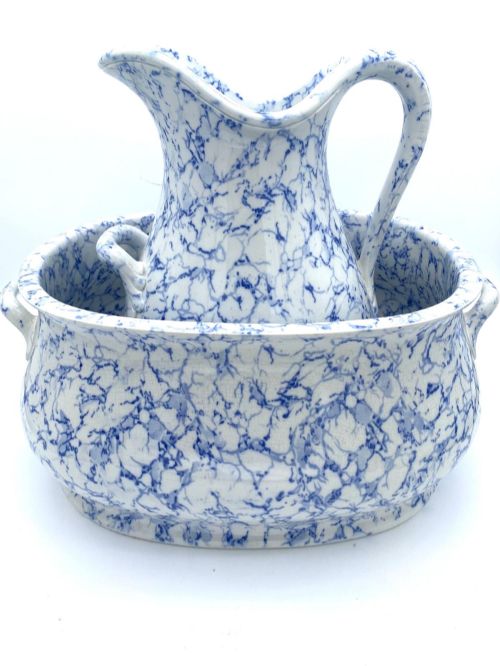
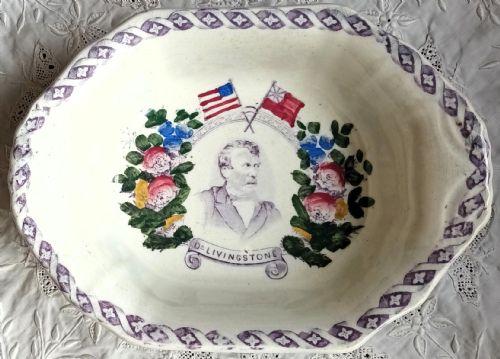
A victorian transferware bowl forms part of a rich tradition of patterned pottery produced across the nineteenth century, including large fruit vessels and covered tureens. The examples seen on this page span the Regency, Victorian, and Edwardian periods, often appearing in blue and white or flow blue designs.
Buyers will encounter various forms ranging from commemorative dishes to large footbaths and bathroom sets. These pieces reflect the domestic ceramic production of Staffordshire and Scottish potteries during the 1800s and early 1900s.
Materials and production
Potters created these items using earthenware, ceramic, and glazed pottery bodies shaped into bowls, jugs, and tureens. The characteristic transfer print design was applied to the surface before glazing and firing in the kiln.
Makers utilised copper plate printing techniques to transfer intricate patterns, such as rural scenery and Italian marble motifs, onto the clay surface. Certain pieces received additional gilt highlights or silver plate mounts to elevate their finish.
The listings show nineteenth-century transferware produced in earthenware, ceramic, and porcelain, featuring styles from the Regency period through to Edwardian bathroom sets.
Factors of quality
The crispness of the transfer print and the uniformity of the glaze determine the visual success of each piece. Finer vessels show precise alignment in the pattern transfer without smudging.
The reputation of the pottery, such as Minton, Doulton Burslem, or Copeland and Garrett, distinguishes standard domestic wares from exceptional factory productions. The depth of the blue colour and the complexity of the moulded details, like lion mask handles, further separate the range.
Minton·Doulton Burslem·James Wallace and Co·Copeland and Garrett
The Victorian Transferware Bowl Glossary
- Transferware
- Earthenware or ceramic pottery decorated by transferring a printed design from an engraved copper plate onto the clay body.
- Flow blue
- A style of nineteenth-century transfer printing where the blue cobalt colour intentionally blurred into the surrounding white glaze during firing.
- Tureen
- A deep covered bowl designed for serving soups or vegetables at the dining table.
- Earthenware
- A porous type of pottery made from clay fired at relatively low temperatures and finished with a vitreous glaze.
Victorian Transferware Bowl: Frequently Asked Questions
Are these bowls safe for food?
Many nineteenth-century earthenwares contain lead in the glaze and may have hairline cracks that harbour bacteria. It is generally advised to use them for display or dry storage rather than serving meals.
Modern food safety standards differ significantly from nineteenth-century manufacturing methods. Treat decorative bowls and tureens primarily as historical display pieces.
What is flow blue?
Flow blue is a specific nineteenth-century aesthetic where cobalt blue ink blurred outward into the white glaze during the kiln firing. This created a misty, painterly effect across the entire surface of the ceramic.
Potters achieved this result by introducing volatile chlorides or lime into the kiln atmosphere. Collectors prize the resulting soft, atmospheric depth.
How do I date an antique bowl?
Examine the maker marks stamped or printed on the base of the ceramic body. Registry marks, factory names, and specific pattern titles often provide a precise decade of manufacture.
Stylistic clues like the depth of the footring and the shade of the blue transfer print also indicate whether a piece originates from the Regency era or the later Edwardian period.