



Victorian Transferware Basin
A victorian transferware basin brings printed blue, mulberry, or flow blue patterns to earthenware washstands and dairy counters.
Victorian Transferware Basin
A victorian transferware basin includes large footbaths, washset bowls, and dairy pails produced during the nineteenth century. These ceramic pieces display applied transfer prints in deep blue, mulberry, and flow blue colours.
The selection ranges from large footbaths and multi-piece bathroom sets to dairy pails and decorative bowls. Makers such as Minton, Spode, and Doulton Burslem produced these earthenwares across the Victorian, Edwardian, and Regency periods.
Materials and production methods
Potters shaped these vessels from earthenware and ironstone, applying metallic oxide glazes to create the characteristic blue and white or mulberry surfaces. Minton and Staffordshire potteries utilised printed tissue transfers pressed onto the damp clay before glazing and firing.
Details such as lion mask handles and gilt highlights were added to specific forms like covered sugar bowls and large footbaths. Glazed ceramic surfaces provided the durable finish required for daily washing and dairy work.
Victorian Transferware Basin Retail Price Guide 2026
Typical asking prices for victorian transferware basin among the pieces listed under this phrase on Sellingantiques today, from the lower quarter to the upper quarter. They describe what is for sale here now, not the wider market.
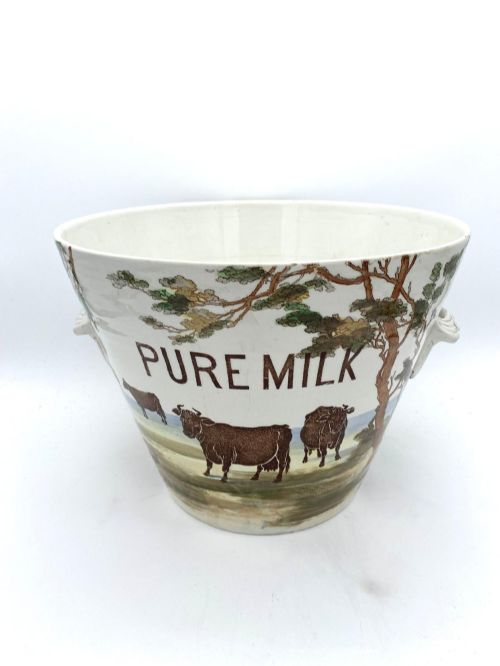
One dairy pail comes decorated with cows, bringing the farmyard straight into the Victorian parlour.
Assessing quality and craftsmanship
Quality in a victorian transferware basin rests upon the clarity of the transfer print and the crispness of the underlying ceramic form. Pieces featuring complex multi-piece sets or named factory marks display higher levels of pottery skill.
The depth of the glaze and the preservation of the printed pattern distinguish standard commercial ware from finer decorative examples. Earlier nineteenth-century pieces often show greater hand-finishing in handles and moulded details.
Minton·Spode·Doulton Burslem
The Victorian Transferware Basin Glossary
- Transferware
- Earthenware decorated by printing a design from an engraved copper plate onto tissue paper and transferring it to the ceramic body before glazing.
- Flow Blue
- A nineteenth-century type of transferware where the blue print bleeds into the surrounding glaze during firing, creating a soft, hazy effect.
- Ironstone
- A heavy, durable type of earthenware patented in the nineteenth century that resists chipping better than standard pottery.
- Footbath
- A large, deep ceramic vessel designed for washing feet or for use as a decorative container on the floor.
Victorian Transferware Basin: Frequently Asked Questions
What is a victorian transferware basin used for?
These large basins served practical washing and bathroom functions on washstands during the nineteenth century. Many were part of larger toilet sets paired with matching water jugs.
Others served specific domestic purposes, such as footbaths for household hygiene or dairy pails for handling milk in the country.
How do I date a transferware basin?
Dating relies on the style of the ceramic body, the depth of the glaze, and any maker marks stamped or printed on the base. Stylistic clues like Regency shapes or Victorian flow blue patterns help narrow the period of manufacture.
Pottery marks from firms like Minton or Doulton Burslem provide specific chronological markers when present on the underside.
Are these basins safe to use daily?
While these nineteenth-century earthenware vessels were built for practical use, most collectors treat them as decorative display pieces today. The historic ceramic and glaze can be sensitive to modern detergents and thermal shock.
Displaying them on washstands or using them for dry storage preserves the transfer-printed surface from modern wear.
What is flow blue transferware?
Flow blue is a distinct nineteenth-century ceramic style where the cobalt blue pigment intentionally bleeds into the white glaze during the kiln firing. This chemical reaction creates a blurred, atmospheric appearance across the pattern.
Potteries in Staffordshire, including Minton, produced some of their most notable footbaths and jugs using this technique.