



Victorian Tool Box
When you search for a Victorian tool box, you are looking at utilitarian carpentry and specialist storage designed to endure.
Victorian Tool Box
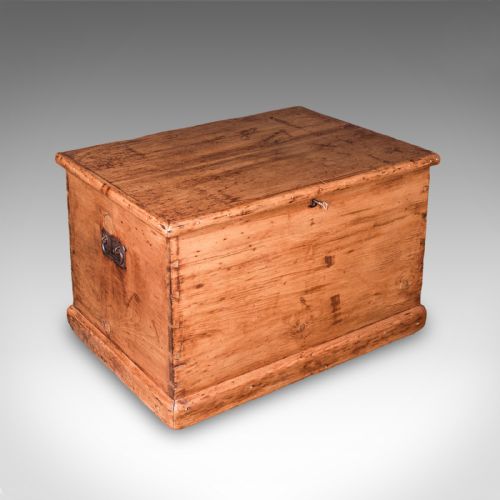
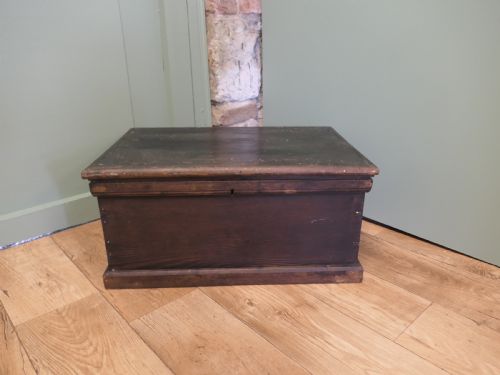
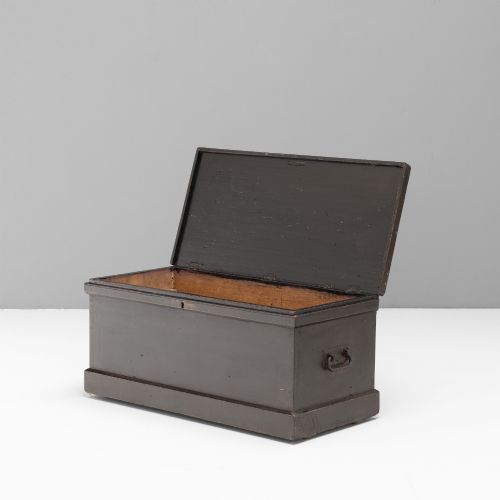
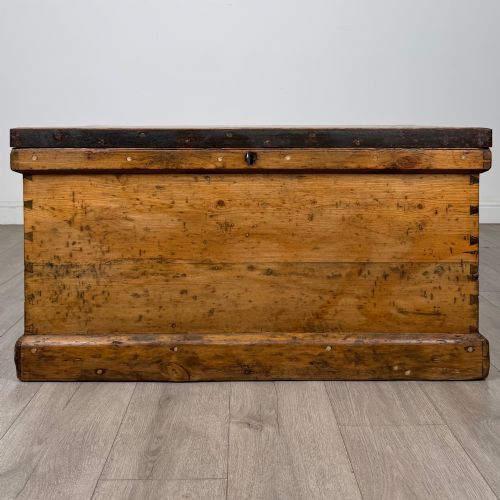
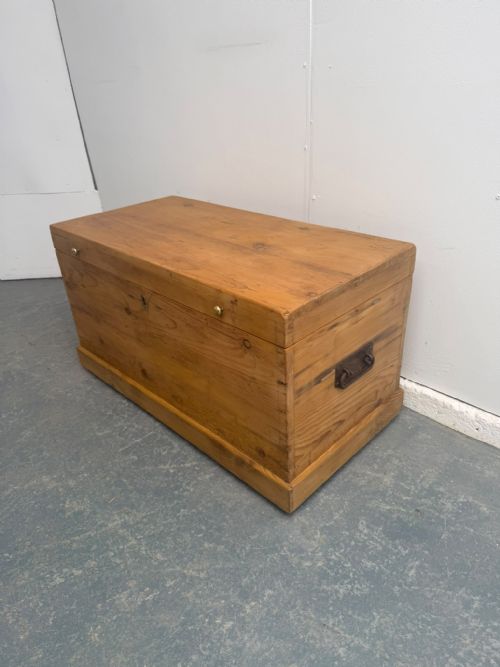
A victorian tool box represents robust working containers built from solid timbers to house manual instruments, carpentry equipment, and trade paraphernalia. The most common examples on this page are constructed from pine, often retaining their original waxed or scumble finishes alongside sturdy side lifting handles.
Many of these chests originate from working environments, including cabinet makers' workshops, shipwrights' yards, and general carpentry trades. They were built for heavy daily use, featuring internal fitted compartments, candleboxes, and functional locks to secure valuable tools.
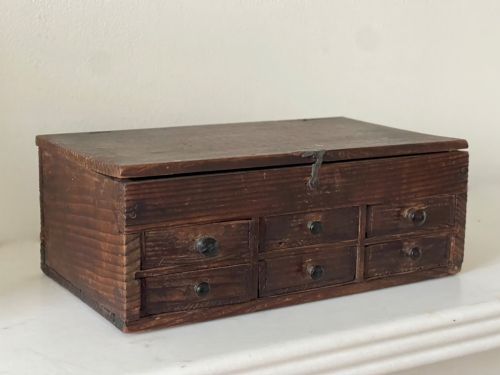
Beyond plain pine utilitarian trunks, the selection also includes specialised cabinetry such as watchmakers' cases and portable tool cabinets in pitch pine. These pieces combine simple vernacular carpentry with practical internal organisation tailored to specific trades.
How they were made
Carpenters utilised durable native and imported woods, relying primarily on pine, pitch pine, elm, teak, and oak for structural carcasses. These timbers provided the necessary strength to withstand heavy iron tools and demanding transit conditions.
Construction relied on robust joinery designed for utility, frequently reinforced with brass bound corners, strap hinges, and inset carrying handles. Surface treatments varied from plain waxed finishes and dark scumble paint to maritime painted exteriors.
Victorian Tool Box Retail Price Guide 2026
Typical asking prices for victorian tool box among the pieces listed under this phrase on Sellingantiques today, from the lower quarter to the upper quarter. They describe what is for sale here now, not the wider market.
Several chests still retain the faint scent of old sawdust and workshop oil from their nineteenth-century working lives.
What varies in quality
Quality in a victorian tool box is defined by the integrity of the original construction and the survival of internal fittings such as sliding trays and locking mechanisms. Simple vernacular trunks show honest wear from trade use, whereas pieces made for specialist watchmakers or cabinet makers exhibit finer joinery and more complex internal layouts.
The preservation of original hardware - including brass bindings, working locks with keys, and side lifting handles - separates standard utility containers from superior examples. Surface condition also dictates distinction, whether through an undisturbed scumble paint finish, patinated waxed pine, or well-maintained ebonised surfaces.
L Casella & Co·Manoah Rhodes & Sons Ltd·John Lilley & Son London
The Victorian Tool Box Glossary
- Scumble
- A decorative paint technique applied over a base coat to imitate the grain of more expensive woods. It creates a mottled or textured surface common on nineteenth-century utility boxes.
- Pitch pine
- A dense, resinous softwood utilised for its exceptional strength and durability. It frequently appears in portable tool cabinets and heavy trunks.
- Candlebox
- A small internal lidded compartment built into the corner of a chest. It originally held tallow candles for illumination in dim workshops.
- Purdonium
- A specialised domestic box or coal bin designed to store fuel near a fireplace. These often incorporated integrated metal linings and companion tools.
- Ebonised
- Timber treated with a chemical stain or black finish to resemble ebony. This treatment was frequently applied to maritime and workshop furniture.
Victorian Tool Box: Frequently Asked Questions
What were these boxes originally used for?
These containers served tradesmen, carpenters, and shipwrights as secure, portable storage for hand tools and precision instruments. They were built to withstand the rigours of daily workshop use and transport.
Many examples feature specialised internal divisions, shallow tills, and sliding trays to keep delicate instruments or chisels organised. Over time, their rugged utility made them popular for general household storage as well.
How do I identify a period piece?
Examination of the construction methods, timber selection, and hardware provides the clearest indication of age. Nineteenth-century examples typically display hand-cut dovetails, stocky iron or brass hinges, and deep natural patina on the wood.
Look for signs of genuine trade use, such as old ink stains, surface scuffs, and tool wear inside the compartments. Machine-cut screws and modern adhesives generally point to later reproductions rather than genuine nineteenth-century work.
Are keys usually included?
Original working locks remain common on many chests, though surviving keys are less frequently guaranteed. When a key is present, it is noted in the individual description.
Even without a key, the presence of the original brass or iron lock mechanism adds historical interest to the piece. Many period locks can be opened or fitted with a replacement key by a specialist locksmith if desired.
How should I clean a wooden trunk?
Maintenance requires minimal intervention to preserve the historic surface and accumulated patina. Gentle dusting with a dry cloth is usually sufficient for everyday care.
Avoid harsh modern detergents or silicone polishes, which can damage original waxed or scumble surfaces. An occasional application of traditional beeswax helps nourish dry pine and maintains the soft lustre of the timber.