


Victorian Tilt Action Table
These Victorian tilt action table examples are clever nineteenth-century furnishings designed to save space when not in use.
Victorian Tilt Action Table
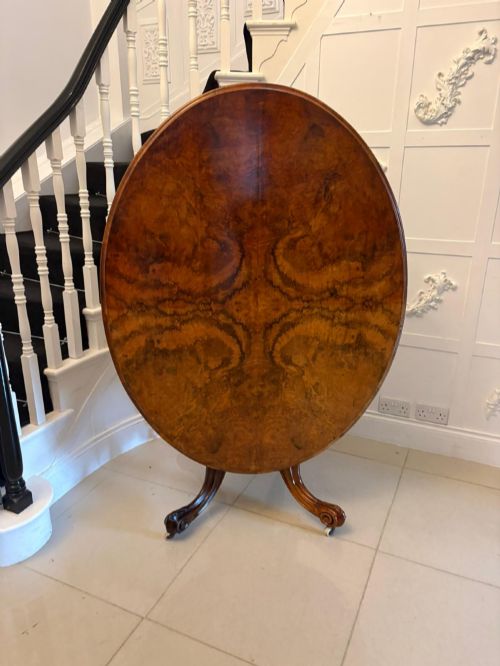
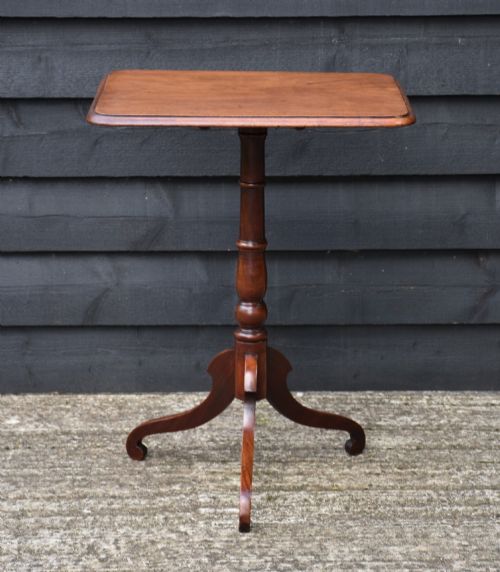
A victorian tilt action table is a functional nineteenth-century piece designed for versatile living spaces, shifting easily from a flat surface to an upright position against a wall. The selections on this page typically appear as occasional tables, wine tables, or larger centre and loo tables.
Most pieces date from the Victorian era and the mid-nineteenth century, spanning years around eighteen sixty. Makers constructed them in forms ranging from compact occasional pieces to large six-seater dining tables.
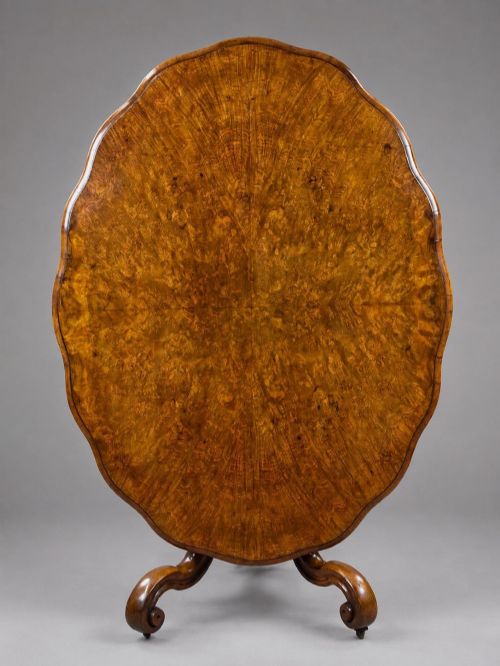
Buyers frequently encounter oval and serpentine shapes alongside traditional round tops. These configurations suited drawing rooms and dining parlours alike.
How they were made
Cabinet makers utilised dense timber stocks including mahogany, rosewood, and walnut for these constructions. Many examples feature burr walnut or flame mahogany veneers applied over stable secondary woods.
The pivoting mechanism relied on sturdy brass catches and hinges fitted beneath the top to allow smooth rotation. A central pedestal, often supported by three or four carved legs, anchors the weight of the tilting top.
Mahogany and walnut dominate the listed woods, appearing alongside decorative burr veneers.
What varies in quality
Quality rests heavily on the selection of timber veneers and the crispness of any carved detailing around the edge or base. Figured walnut and flame mahogany exhibit striking natural grain patterns that elevate the visual presence of the furniture.
The engineering of the tilt mechanism dictates how securely the top locks into the horizontal position without wobble. Superior examples operate smoothly and remain rigid in use, whereas lesser items show wear in the pivot joint.
The Victorian Tilt Action Table Glossary
- Tilt top
- A table surface hinged to a central pillar so it can pivot vertically. This clever design enabled servants to store the furniture flat against room perimeters.
- Loo table
- A large round or oval Victorian centre table originally intended for card games. They frequently feature the tilt action for convenient storage.
- Pie crust edge
- A decorative moulded rim carved with small flowing curves reminiscent of pastry work. It appears on finer occasional and wine tables.
- Snap top
- An alternative term for a tilt mechanism involving a spring catch that locks the surface flat. The mechanism releases with manual pressure.
Victorian Tilt Action Table: Frequently Asked Questions
Why did they make tables tilt?
Victorian homes required flexible spaces where rooms served multiple functions throughout the day. Tilting the top allowed bulky tables to be tucked away against walls when meals or gatherings ended.
This practical innovation preserved valuable floor space in nineteenth-century drawing rooms and parlours.
Can I use a tilt table for dining?
Larger oval examples, particularly loo tables and six-seater dining versions, provide ample surface area for meals. Their pedestal bases also offer generous legroom compared to four-legged dining furniture.
Buyers should check the height and diameter to ensure standard chairs fit comfortably beneath the apron.
How do I identify a Victorian piece?
Look for timber choices characteristic of the period, such as solid walnut, rosewood, or rich mahogany veneers. Construction methods often combine hand-cut joinery with early machine-sawn components typical of nineteenth-century workshops.
Hardware components like brass pivot catches also reflect nineteenth-century manufacturing standards.
Are wine tables stable when tilted?
Smaller wine tables and occasional pieces balance securely on their pedestal feet when upright. The brass mechanism locks the surface firmly in place to prevent accidental movement.
Users simply release the catch beneath the top to lower the surface for use.