



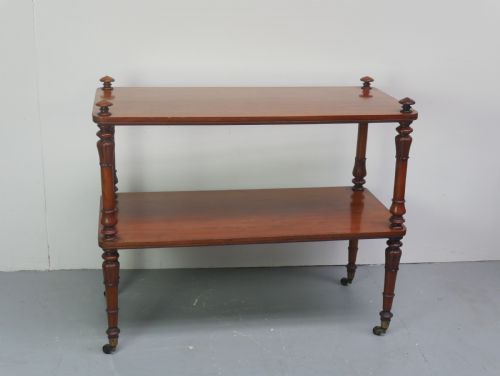

Victorian Tier Waiter
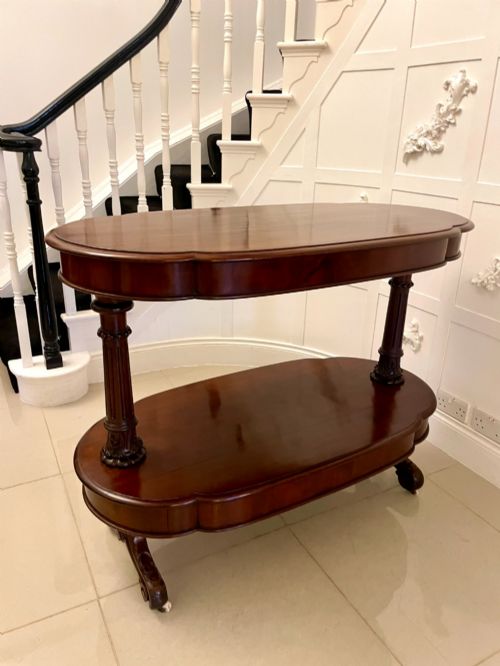
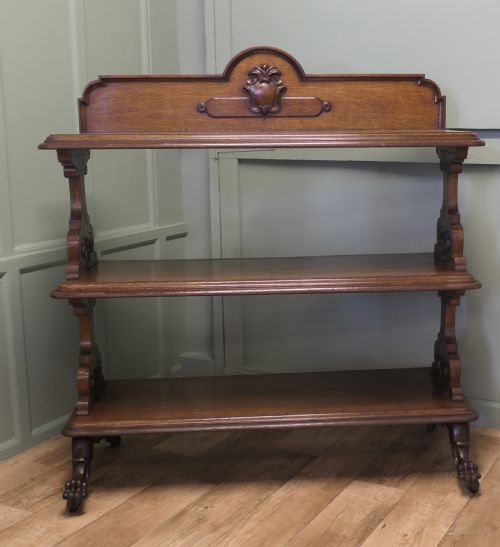
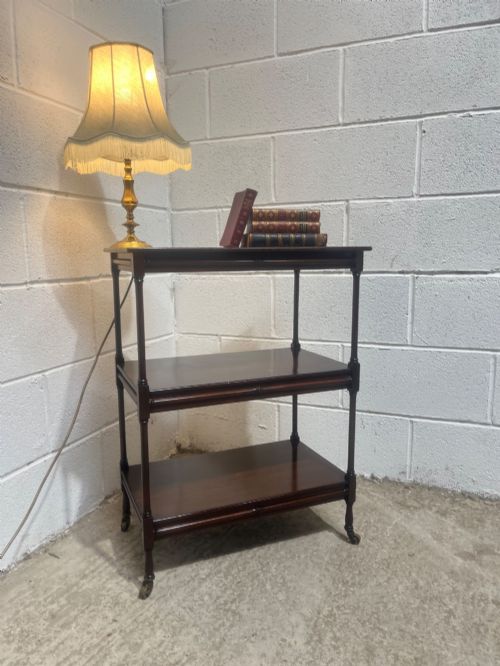
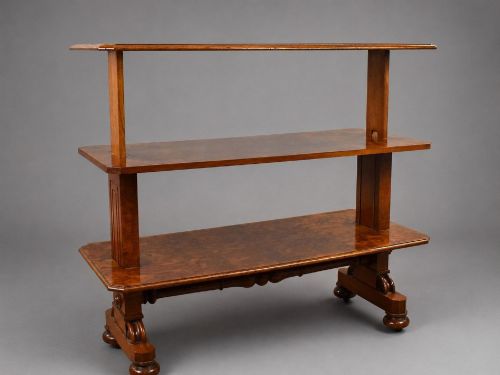
A victorian tier waiter brings tiered shelving and practical serving surfaces into a room, offering multiple levels to hold dishes, books or decanters.
Victorian Tier Waiter
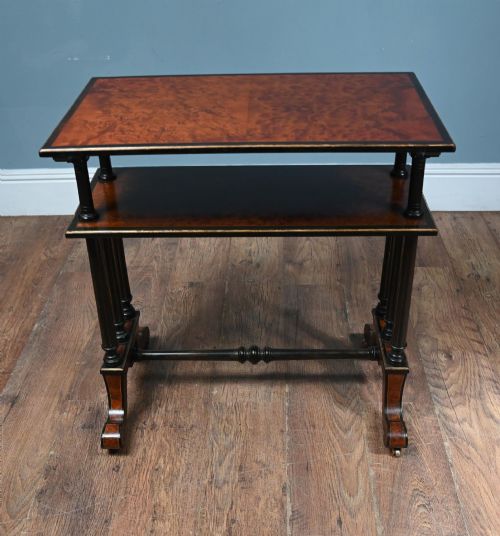
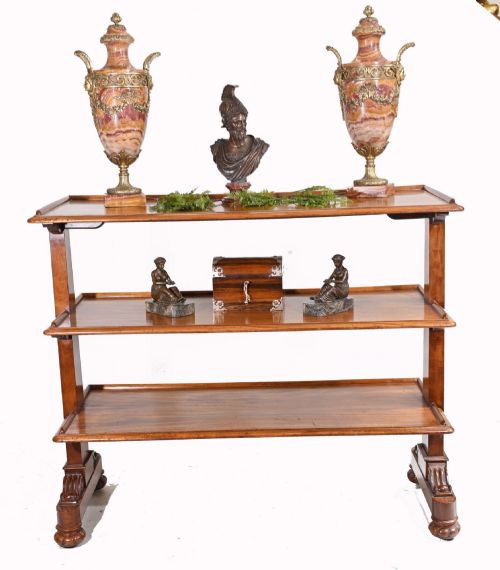
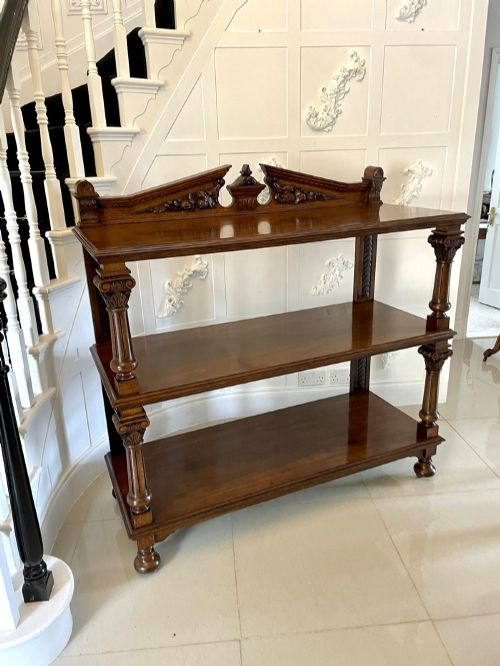
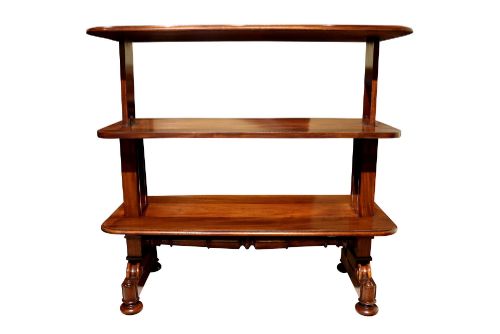
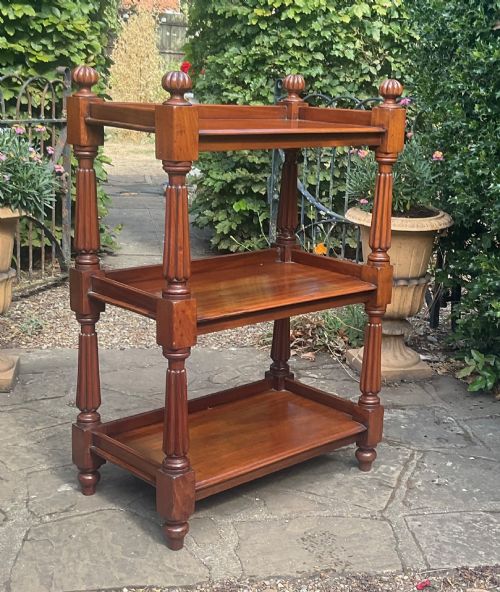
A victorian tier waiter is typically encountered as a multi-tiered piece of dining furniture designed for serving food, holding decanters, or displaying books. The form encompasses items described as dumb waiters, buffets, etageres, and serving tables.
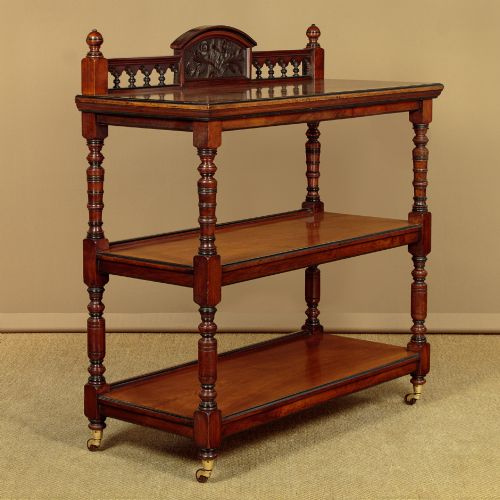
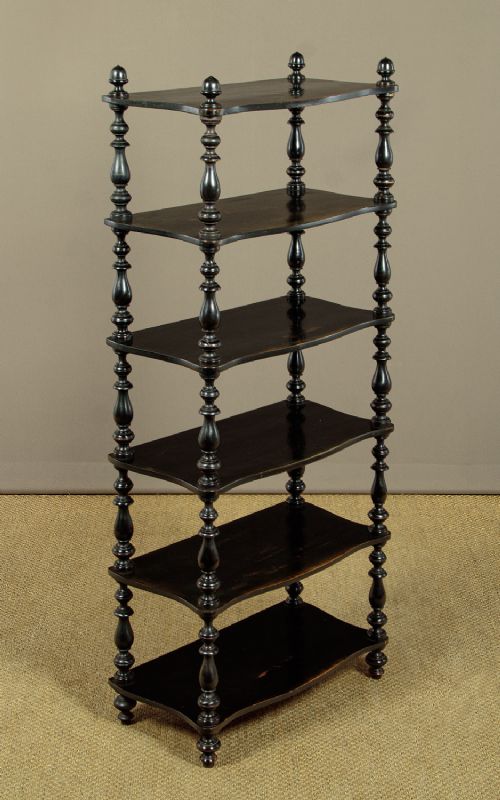
Most examples found here date from the nineteenth century, spanning periods from William IV through the Victorian era and into the Aesthetic Movement. These pieces frequently feature two, three, or even up to six stacked tiers supported by turned columns or tripod bases.
The primary forms serve as mobile or stationary side tables, occasionally incorporating revolving sections, drop leaves, or castors for movement. Buyers encounter mahogany most often, alongside walnut, oak, and rosewood constructions.
Materials and Construction
Cabinet makers built these pieces using dense hardwoods like mahogany, walnut, oak, and rosewood, frequently incorporating brass for castors, galleries, and mechanical fittings. Timber selection dictated the structural integrity required to support multiple heavy tiers loaded with ceramics, glass, or silver.
Joinery methods included turned and block supports, barley twist columns, and tripod pedestals to distribute weight evenly across the tiers. Many designs utilised mobile elements such as original castors, rise and fall mechanisms, or revolving trays.
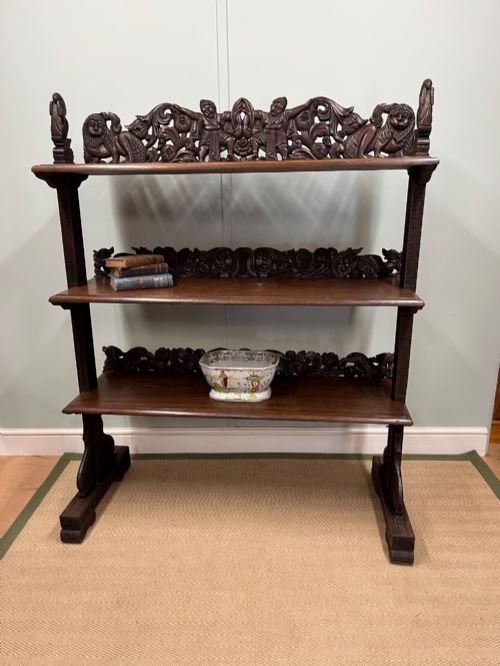
Surfaces were finished to highlight the natural grain of the timber, utilising burr veneers, ebonised treatments, or carved detailing particularly seen in oak and Aesthetic Movement pieces.
Victorian Tier Waiter Retail Price Guide 2026
Typical asking prices for victorian tier waiter among the pieces listed under this phrase on Sellingantiques today, from the lower quarter to the upper quarter. They describe what is for sale here now, not the wider market.
The furniture spans the 19th century through the early 20th century, encompassing William IV, Victorian, and Edwardian periods.
Distinctions in Standard
Quality in a victorian tier waiter rests upon the selection of timber, such as figured mahogany or burr walnut, and the crispness of any carved ornamentation. Superior examples display thoughtful proportions where the thickness of each shelf balances the weight of the supporting columns.
The integration of mechanical or functional elements, including smooth revolving tiers, rise and fall actions, or original brass castors and gallery rails, separates standard utility items from finer workshop output.
The Victorian Tier Waiter Glossary
- Dumb waiter
- A multi-tiered piece of furniture used for holding food, tableware, or decanters without the need for a servant. These items typically feature two or three stacked shelves.
- Etagere
- A set of open shelves used for displaying ornaments, books, or small objects. This form shares similarities with tiered serving furniture.
- Buffet
- A sideboard or serving table designed to hold dishes and food during meals. In nineteenth-century pieces, this often overlaps with tiered dumb waiter designs.
- Castor
- A small wheel fixed to the legs of a piece of furniture to allow easy movement. Original brass castors indicate the piece retains its initial mobility fittings.
- Gallery
- A raised rim or railing around the edge of a shelf. This feature prevented items from sliding off when the tiers were moved or loaded.
Victorian Tier Waiter: Frequently Asked Questions
What is a victorian tier waiter used for?
These pieces served primarily in dining rooms to hold extra dishes, silverware, decanters, and serving platters during meals. They reduced the need for servants by keeping necessities close to the dining table.
Today, owners utilise them in living areas and hallways as display stands for books, plants, and decorative objects.
How do I identify a revolving tier waiter?
Revolving versions incorporate a central pivot mechanism that allows the shelves to turn independently for easy access to items placed upon them. They frequently sit upon a sturdy tripod pedestal base for stability.
Inspect the underside of the tiers to observe the central pivot pin and bearing mechanism connecting the shelves to the main shaft.
What woods were commonly used?
Mahogany represents the most frequent timber found across these listings, appearing in straight-grained, figured, and golden varieties. Walnut, oak, rosewood, and ebonised wood also appear regularly.
Finer examples occasionally showcase burr walnut or amboyna veneers to create decorative patterned surfaces on the shelves.
Are castors original?
Original castors are typically made of brass and show appropriate signs of age, wear, and patination matching the rest of the piece. They are usually securely fitted into the base of the legs.
Replacement castors often look too bright or feature modern screw fittings that differ from nineteenth-century joinery practices.