



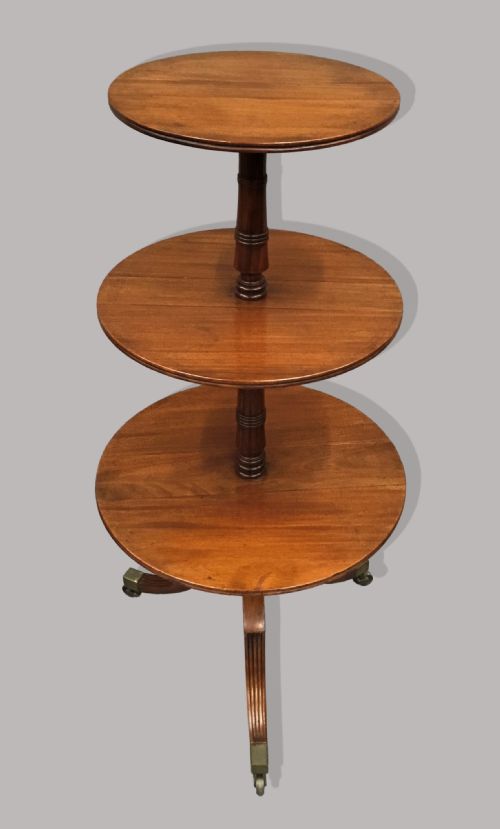


Traditional Mahogany Waiter
These traditional mahogany waiter pieces are practical tiered serving furniture that bring classic timber warmth and tiered display space to a room.
Traditional Mahogany Waiter
When you search for a traditional mahogany waiter, you are looking at practical serving furniture and tiered stands designed for display and utility. The examples on this page span several eras including Georgian, Victorian, and Edwardian periods.
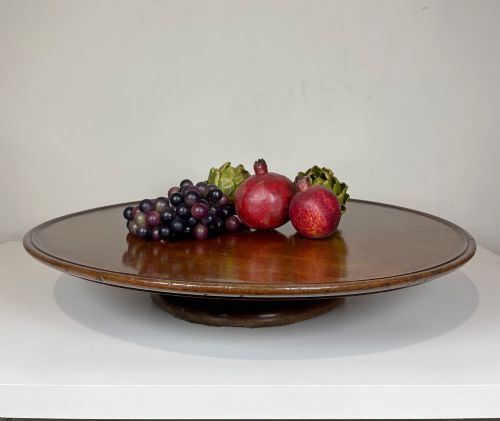
You are most likely to meet multi-tiered cake stands and revolving dumb waiters among these listings. These pieces utilise mahogany timber, often featuring decorative inlay work and sturdy tripod bases.
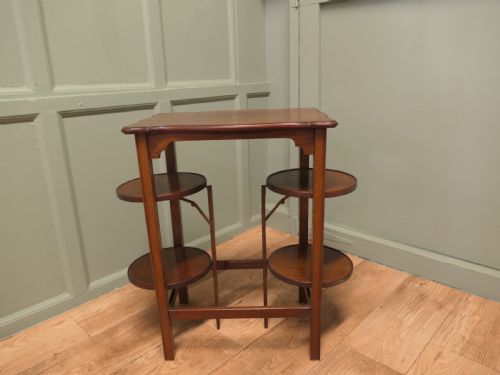
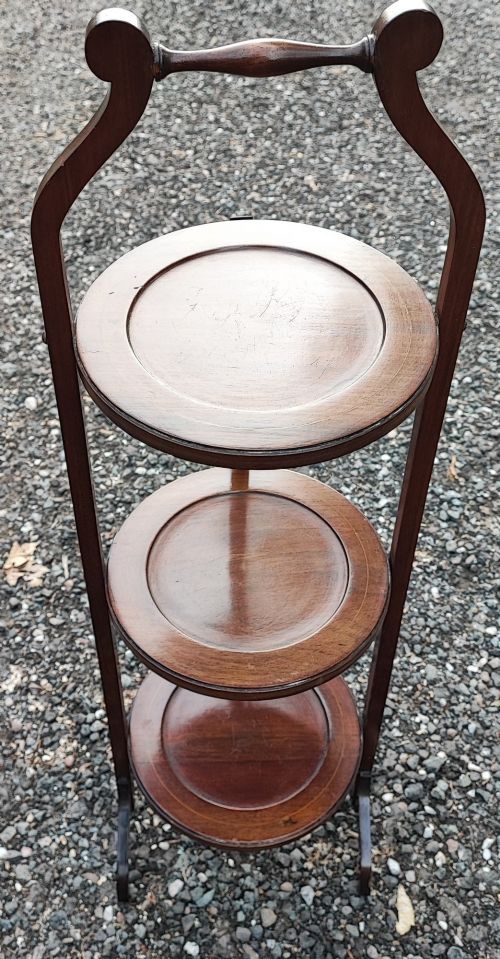
Forms range from simple folding three-tier dumb waiters to four-tier standing cake stands and metamorphic designs. Each object reflects the practical serving needs of its period, from formal dining rooms to drawing rooms.
How they were made
The primary material across these pieces is mahogany, chosen for its rich grain and structural stability. Cabinet makers shaped this timber into slender uprights, shaped shelves, and sturdy tripod bases.
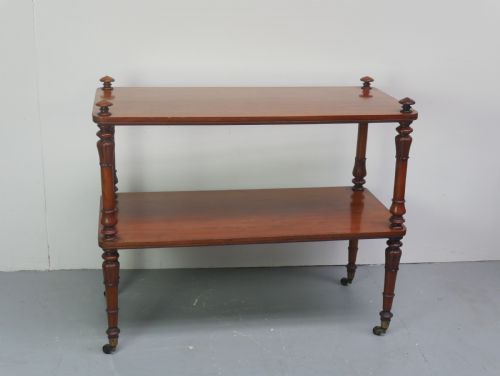
Makers incorporated brass hardware, such as hinges and castors, alongside delicate boxwood and satinwood inlay to add surface detail. Felt surfaces also appear on selected items to protect the timber tiers.
Traditional Mahogany Waiter Retail Price Guide 2026
Typical asking prices for traditional mahogany waiter among the pieces listed under this phrase on Sellingantiques today, from the lower quarter to the upper quarter. They describe what is for sale here now, not the wider market.
Some folding stands manage to look deceptively delicate while carrying several tiers of heavy mahogany.
What varies in quality
Quality in these pieces rests upon the crispness of the timber turning and the precision of any inlay work. Finer examples display meticulous attention to the joinery of multi-tiered structures.
The complexity of the mechanism, such as revolving pivots or folding frames, separates standard items from more ambitious designs. Timber selection and grain continuity across the tiers further distinguish better examples.
The Traditional Mahogany Waiter Glossary
- Dumb waiter
- A tiered serving stand designed to hold food or tableware without the need for a servant. These objects feature multiple revolving or fixed shelves.
- Tripod base
- A support structure with three legs branching from a central column. This design provides stable footing for tall tiered stands.
- Metamorphic
- Describing furniture that transforms from one form into another through mechanical action. These pieces adapt to different spatial requirements.
- Boxwood
- A dense, pale wood utilised for stringing and decorative inlay work on darker timbers. It creates sharp contrast against mahogany surfaces.
Traditional Mahogany Waiter: Frequently Asked Questions
What is a dumb waiter?
A dumb waiter is a tiered serving stand designed to hold dishes or cakes in a dining or drawing room. These pieces allow for tiered display without taking up excessive floor space.
Historical examples often feature revolving trays or folding shelves to assist with serving guests during meals or tea time.
How do I use a cake stand?
Cake stands provide vertical storage and display for afternoon tea, cakes, or decorative objects. Their multi-tiered design makes them practical for corners or small rooms.
Placing items on the different levels creates visual balance while keeping surfaces clear for daily use.
How do I identify a Georgian piece?
Georgian pieces date from the eighteenth and early nineteenth centuries, displaying traditional joinery and restrained classical proportions. The timber grain and construction methods reflect the period's cabinet making standards.
Examining the underside and turning of the central column helps confirm the period of manufacture.
What is satinwood inlay?
Satinwood inlay involves setting contrasting light-coloured timber into recesses carved into the dark mahogany surface. This technique adds geometric or floral patterns to the edges of shelves.
Craftsmen used this method during revival periods to emulate eighteenth-century decorative styles.