



Victorian Carved Dumb Waiter
A Victorian carved dumb waiter brings tiered serving practicality and substantial timber craftsmanship to any dining room.
Victorian Carved Dumb Waiter
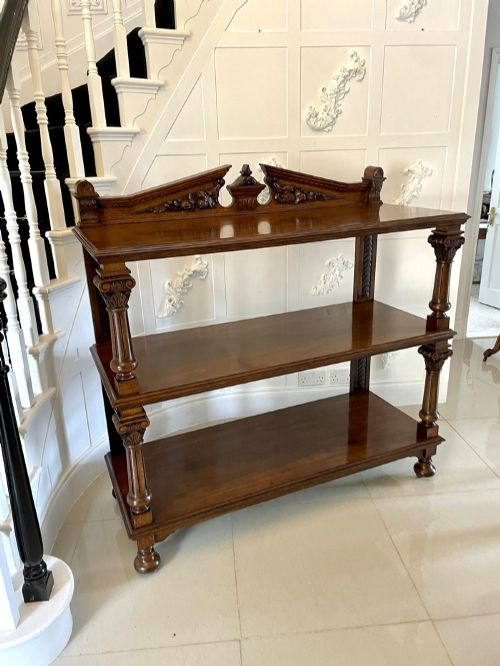
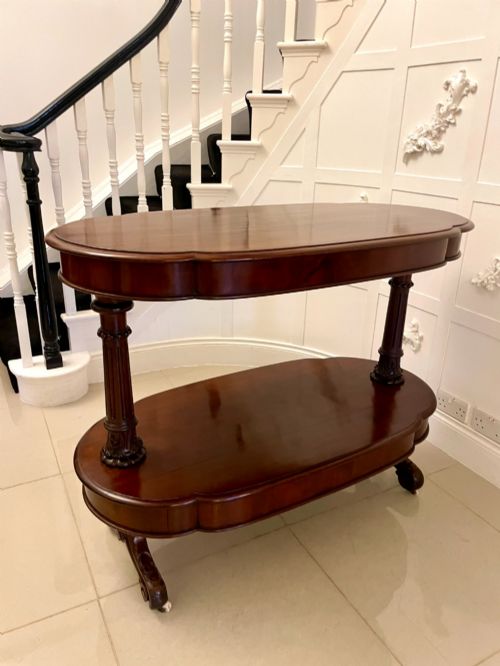
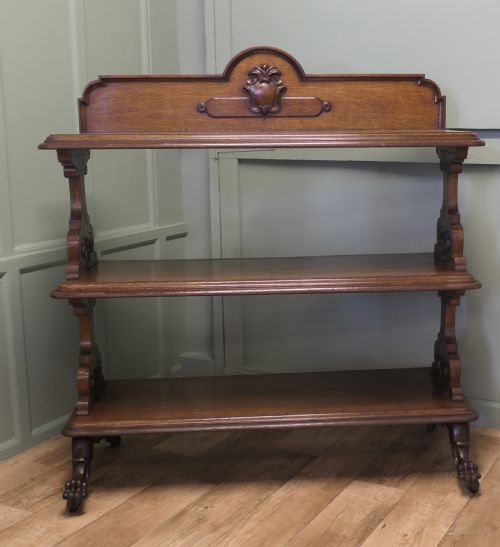
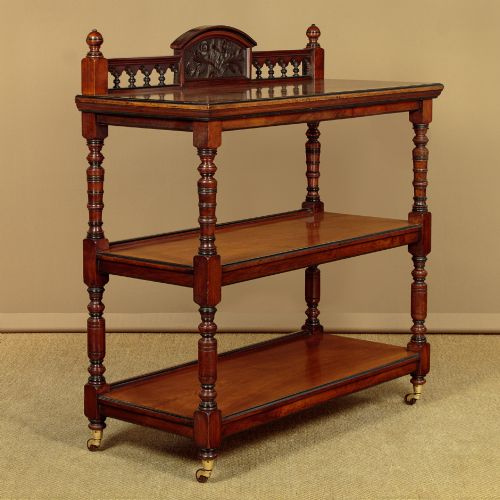
A Victorian carved dumb waiter is a multi-tiered serving piece designed to hold dishes, decanters, or glassware during meals. When searching for a Victorian carved dumb waiter, buyers encounter rotating lazy susans, revolving designs, and tiered stands primarily from the nineteenth century.
The objects listed range from simple two-tier mahogany models to elaborate three-tier oak and walnut buffets. Many incorporate revolving tiers, tripod bases, and carved details that reflect nineteenth-century dining habits.
Alongside standard dumb waiters, the selection includes related serving furniture such as etageres, whatnots, and side tables. These pieces share the characteristic tiered structure intended for practical display and service.
Materials and construction methods
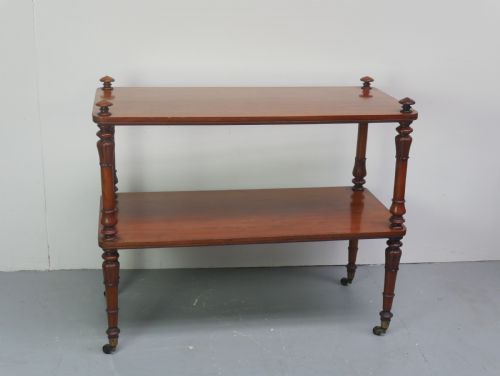
Mahogany, oak, walnut, and rosewood form the structural foundation of these pieces, often complemented by brass hardware and ebonised wood accents. Artisans shaped these dense hardwoods into turned columns, tripod bases, and graduated tiers designed to bear weight.
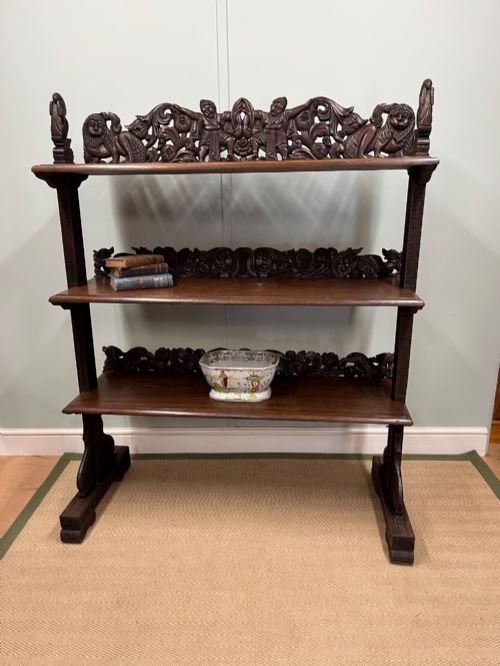
Carving serves as the primary decorative technique, visible in foliage motifs, barley twist supports, and edge mouldings. Joinery methods include rotating mechanisms and telescopic shafts that allowed specific tiers to rise and fall or spin independently.
Victorian Carved Dumb Waiter Retail Price Guide 2026
Typical asking prices for victorian carved dumb waiter among the pieces listed under this phrase on Sellingantiques today, from the lower quarter to the upper quarter. They describe what is for sale here now, not the wider market.
The recorded styles span the Victorian, Edwardian, Regency, William IV, Aesthetic Movement, and Anglo-Indian traditions.
Distinctions in quality
Quality rests in the selection of timber and the precision of the rotating mechanisms. Dense, well-figured mahogany or richly grained walnut commands attention, as does timber with deep, crisp hand-carved detail rather than shallow or mechanical stamping.
The engineering of moving parts separates standard items from superior examples. Smooth rotation on tier pivots, sturdy tripod joints, and reliable telescopic actions indicate superior workshop execution.
Gillows of Lancaster and London·Maple & Co
The Victorian Carved Dumb Waiter Glossary
- Dumb waiter
- A tiered serving stand designed to hold food and drink near a dining table without requiring servant attendance. These pieces typically feature two or three graduated shelves.
- Buffet
- A side table or serving piece used for displaying dishes and storing dining room accessories. They often incorporate enclosed lower cabinets or open tiers.
- Lazy susan
- A revolving tray or tier allowing diners to access items easily from across the table or stand. In nineteenth-century pieces, this mechanism is integrated into the tiered structure.
- Tripod base
- A support structure resting on three feet, commonly utilised on revolving dumb waiters to ensure stability on uneven dining room floors.
- Etagere
- A piece of furniture consisting of a set of open shelves for displaying small objects. They share the multi-tiered upright form seen in many dumb waiters.
Victorian Carved Dumb Waiter: Frequently Asked Questions
What is a dumb waiter?
A dumb waiter is a tiered piece of dining furniture used to hold serving dishes, decanters, and glassware. It allowed diners to help themselves during meals without servants present.
Most examples feature two or three circular or oval shelves supported by a central column or tripod base.
How were these pieces used?
Dining rooms utilised these stands to keep extra wine, plates, and courses close at hand during long meals. The revolving tiers enabled guests to spin the shelves to reach desired items easily.
Some designs incorporated telescopic actions or folding leaves to adjust the height or footprint according to the occasion.
How do I identify a Victorian piece?
Nineteenth-century items typically feature dense timbers like mahogany, walnut, and oak paired with hand-carved details such as foliage or barley twist turnings. Construction methods rely on solid wood framing and mechanical pivots rather than modern fixings.
Maker attribution often points to established nineteenth-century cabinet makers when stamps or distinctive workshop characteristics are present.
Where should I place a dumb waiter?
These pieces suit dining rooms, living spaces, or hallways as serving surfaces and display shelves for glassware or books. Their compact footprint makes them practical for corners or beside sideboards.
Ensure placement allows clearance if the tiers rotate or feature drop-leaf mechanisms.