

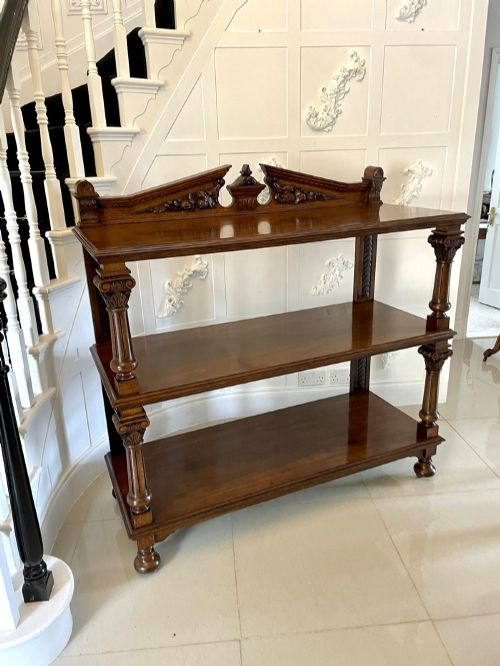
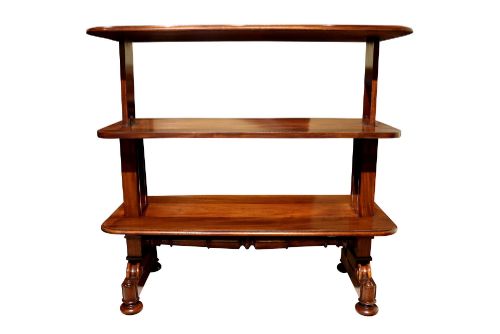
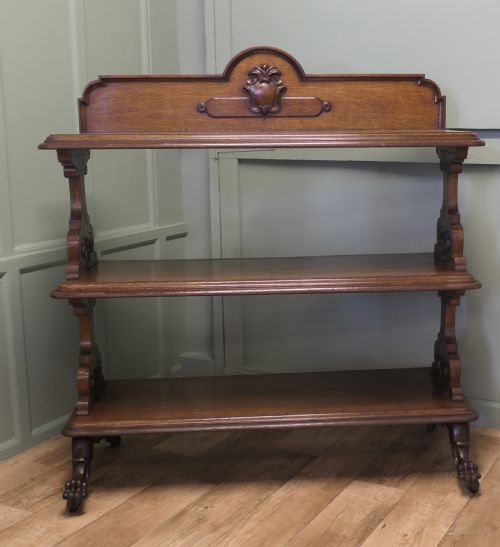
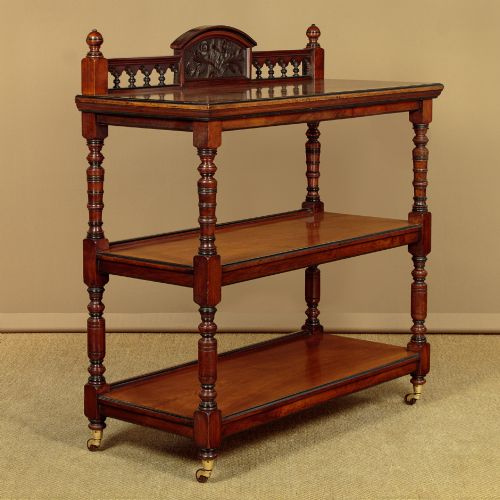


Tiered Dining Room Table
These tiered dining room table pieces, spanning the Georgian to Edwardian periods, provide functional multi-level serving surfaces for the home.
Tiered Dining Room Table
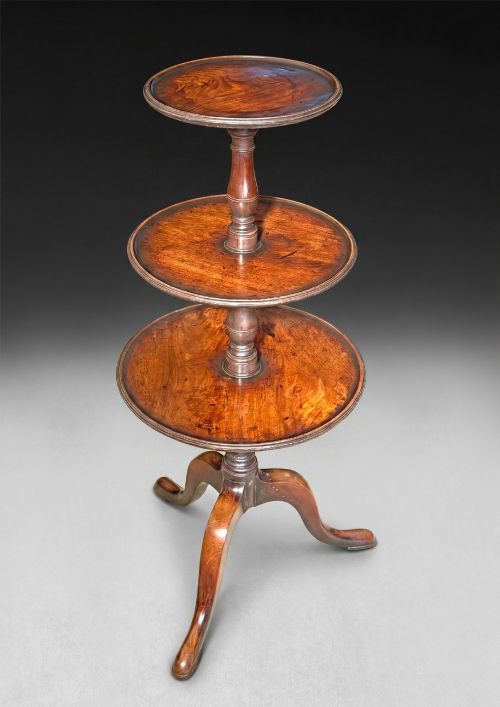
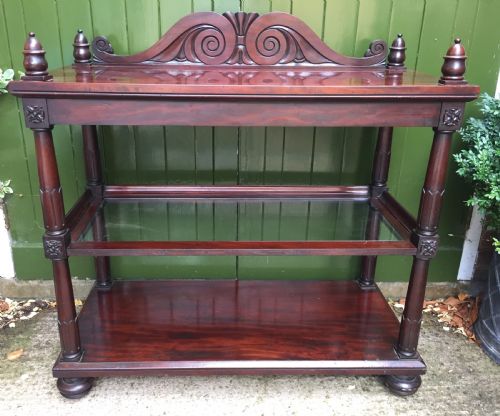
A tiered dining room table search brings up dumbwaiters, buffets, servers, and etageres from the Georgian, Regency, William IV, and Victorian eras. These items typically feature multiple graduating shelves or tiers designed to hold dishes, glassware, and wine bottles during meals without requiring constant attendance by servants.
The most common form on this page is the multi-tier dumbwaiter, frequently appearing in mahogany, walnut, or oak across the eighteenth and nineteenth centuries. Alongside revolving dumbwaiters, buyers encounter stationary serving tables, rise and fall designs, and metamorphic pieces that adapt their configuration for different dining occasions.
Materials and Construction
Cabinetmakers utilised dense hardwoods such as mahogany, walnut, and oak to construct the tiered frames, ensuring stable support across multiple levels of heavy timber or glass. Fiddleback mahogany and pollard oak appear in select pieces to provide striking decorative grain patterns on the shelves and surfaces.
Metal components such as brass mechanisms enable rise and fall functionality or pivoting tiers on specialised dumbwaiters. Carved detailing and applied mouldings define the stylistic shifts from Georgian restraint through Gothic Revival and Aesthetic Movement preferences.
Tiered Dining Room Table Retail Price Guide 2026
Typical asking prices for tiered dining room table among the pieces listed under this phrase on Sellingantiques today, from the lower quarter to the upper quarter. They describe what is for sale here now, not the wider market.
Listings feature items from the Georgian, Regency, William IV, and Victorian periods, constructed primarily from mahogany, walnut, and oak.
Craftsmanship and Proportion
Quality rests in the stability of the tier supports and the selection of timber figures, where finely grained fiddleback mahogany or pollard oak elevates a piece above standard utility items. The precision of the turning on central columns and the crispness of carved oak or walnut details distinguish finer workshops.
Mechanical complexity separates standard servers from metamorphic or rise and fall examples, where smooth operation of the adjusting mechanism is paramount. Proportion and balance across multiple tiers determine how successfully the furniture integrates into a modern dining room.
The Tiered Dining Room Table Glossary
- Dumbwaiter
- A multi-tiered piece of dining furniture designed to hold plates and glasses near the table. These often feature revolving circular shelves stacked on a central pillar.
- Metamorphic
- Furniture engineered to transform from one form or height into another. In these listings, such pieces typically shift between serving heights and table configurations.
- Pollard oak
- Timber taken from trees that have been pollarded, resulting in dense, highly figured wood with clustered growth rings. Cabinetmakers prized this material for decorative veneer surfaces.
- Rise and fall
- A mechanical arrangement allowing tiers or surfaces to be adjusted vertically. This feature is operated by internal screws or counterweights within the central column.
- Etagere
- A set of open shelves for displaying small objects or serving items. These structures provide tiered storage similar to dumbwaiters but emphasise display over dining utility.
Tiered Dining Room Table: Frequently Asked Questions
What is a tiered dining room table?
A tiered dining room table generally refers to multi-level serving furniture such as dumbwaiters, buffets, and etageres rather than a central dining surface. These pieces provide stacked tiers to hold food, drinks, and tableware during meals.
Historically placed beside the main dining table, they allowed diners to serve themselves and reduced the need for household staff during dinner parties.
How were dumbwaiters used?
Dumbwaiters held secondary courses, wine bottles, and spare cutlery within arm's reach of the dining table. Guests could rotate the circular tiers to access dishes without interrupting conversation.
Some variants included cabinets or lower serving tables that functioned as auxiliary sideboards for larger dining rooms.
How do I identify a Georgian tiered piece?
Georgian pieces emphasise clean architectural lines, solid mahogany construction, and understated turned columns. The tiers are typically graduated in size with simple moulded edges.
Later Victorian versions often introduce heavier carving, Gothic Revival influences, or complex mechanical functions like rise and fall actions.
What is a metamorphic dumbwaiter?
A metamorphic dumbwaiter contains hidden mechanisms that alter its height or shelf arrangement. These pieces could transform from a low occasional table into a tall tiered serving stand.
They reflect nineteenth-century ingenuity in designing multifunctional furniture for changing domestic spaces.