
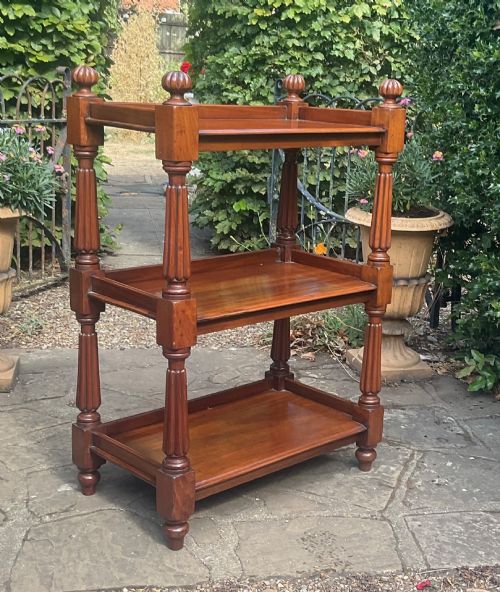

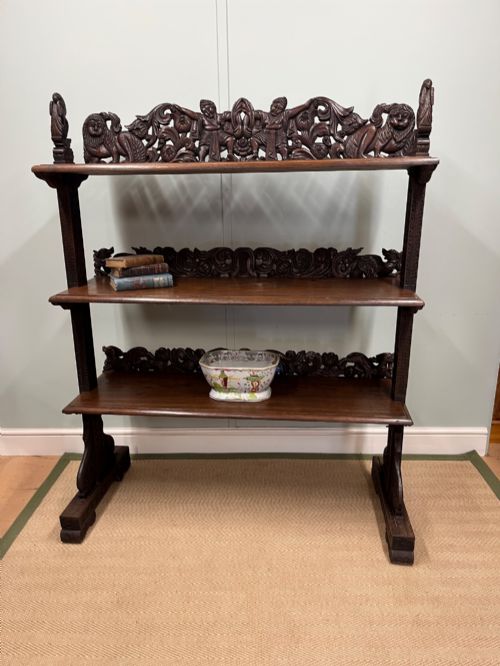
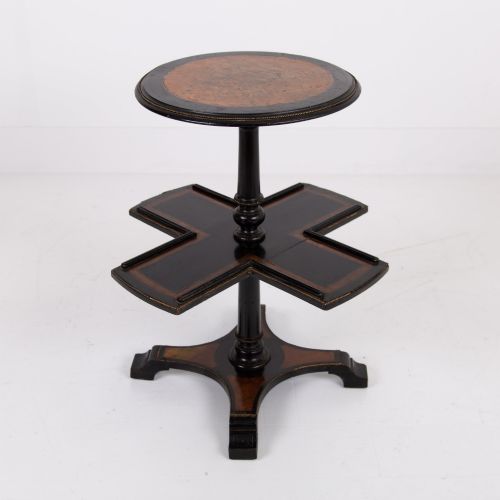
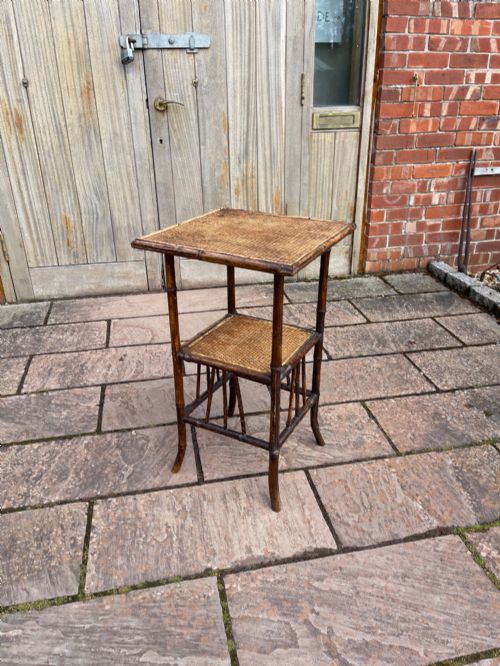


Victorian Tier Display Table
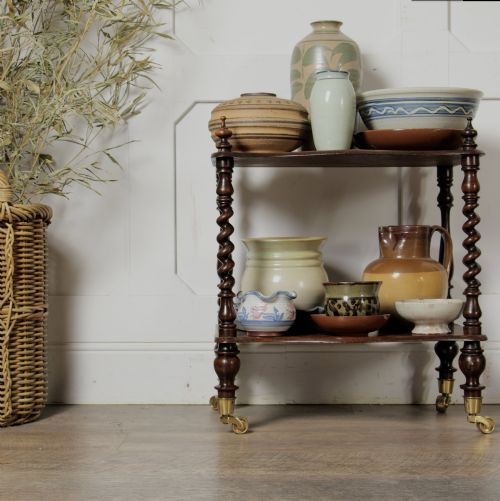
These multi-level pieces serve to exhibit objects and books within domestic rooms.
Victorian Tier Display Table
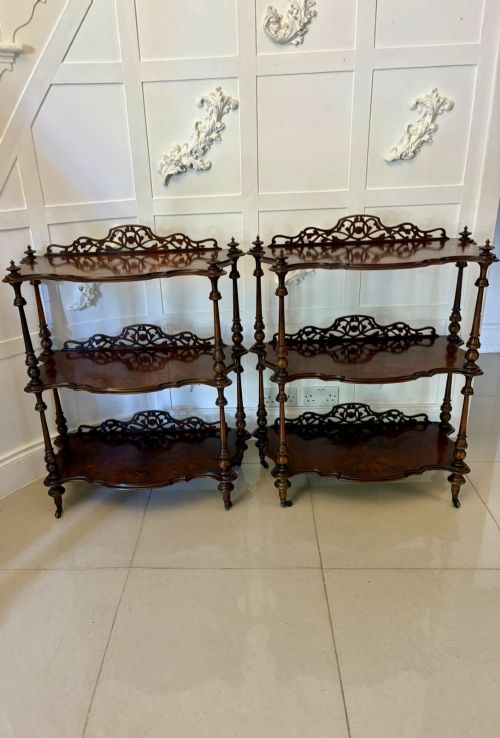
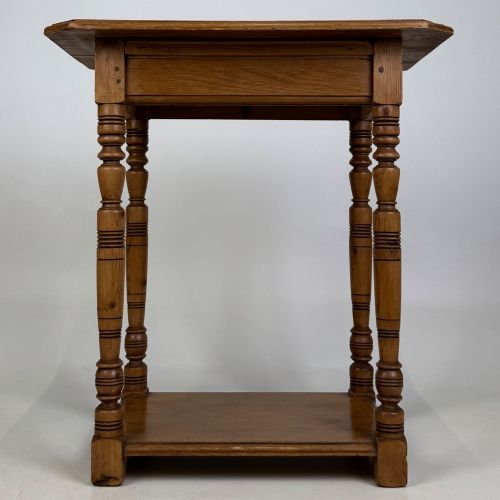
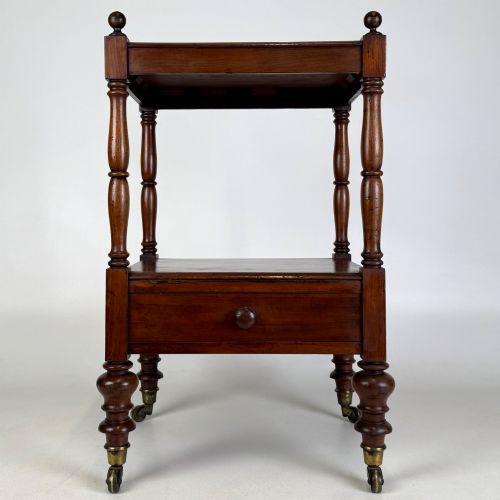
A buyer seeking a victorian tier display table will encounter tiered furnishings principally identified in the evidence as whatnots, etagères, and occasional tables dating from the nineteenth century.
The selections span simple bamboo and pine variants alongside richly figured burr walnut and mahogany pieces featuring multiple platforms for display.
Origins stretch across English, French, and Italian workshops, reflecting diverse aesthetic movements from the Victorian period up to eighteen ninety.
Materials and Construction
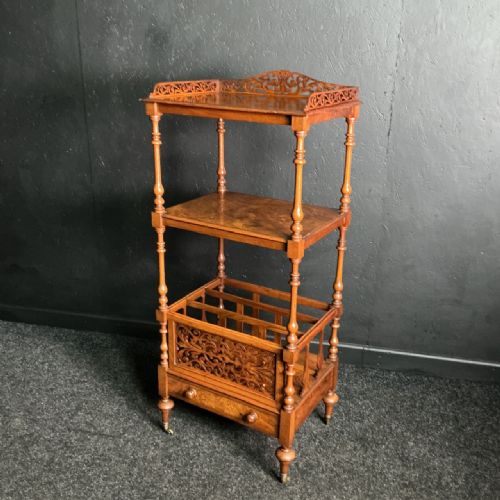
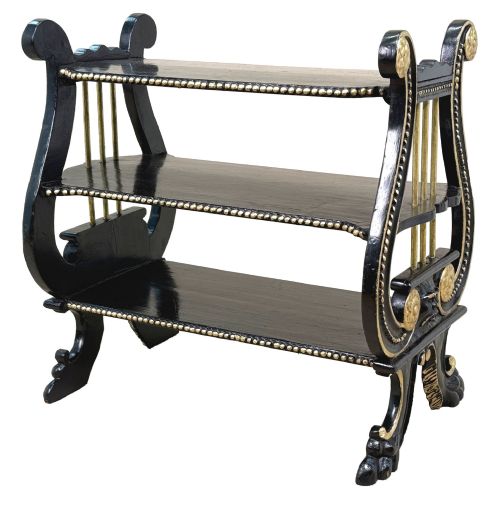
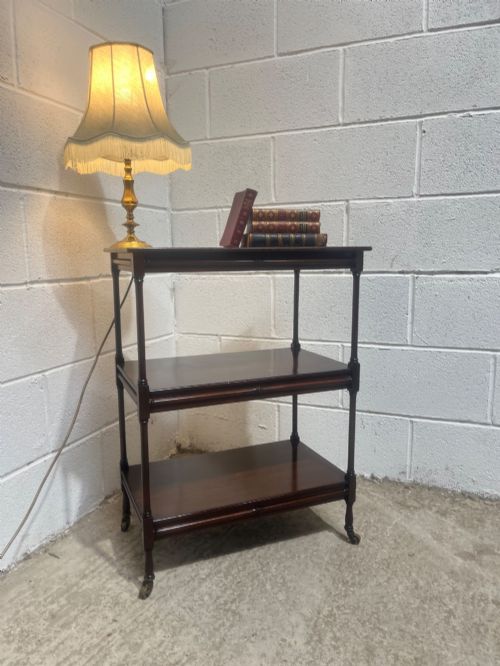
Constructed predominantly from timber timbers such as mahogany, walnut, rosewood, and ebonised wood, these tiers often incorporate marquetry inlay, parcel gilding, and brass mounts.
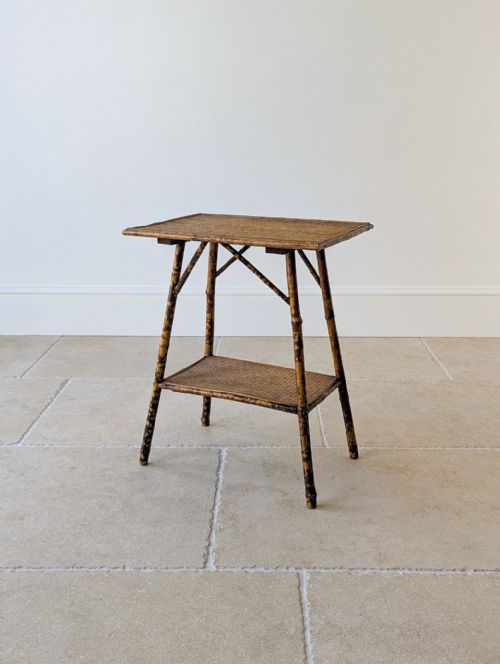
Alternative builds utilise lightweight bamboo and cane for Japanese-influenced or aesthetic movement designs, while supports range from turned barley twist legs to slender pedestals.
Some bamboo tables arrived via the nineteenth-century obsession with all things Japanese, proving that flat-pack bamboo chic predates modern retail by a century.
Craftsmanship and Materials
Variations in quality stem from the selection of timber veneers, such as finely figured burr walnut and amboyna, matched with precise marquetry and inlay work.
Structural refinement shows in the rigidity of the multi-tiered platforms, the crispness of turned or carved supports, and the integration of maker-attributed joinery.
Edwards & Roberts·Gabriel Viardot·Bertram & Son·Liberty and Co
The Victorian Tier Display Table Glossary
- Whatnot
- A piece of furniture consisting of several open shelves for displaying small objects. They became particularly popular during the nineteenth century.
- Étagère
- A French term for a piece of furniture with a set of open shelves for displaying ornaments. These often feature slender supports and decorative inlay.
- Marquetry
- Decorative woodwork where pieces of veneer are fitted into a design on a structural panel. It appears frequently on finer Victorian tables.
- Ebonised
- Wood treated to imitate ebony, usually through staining or painting. This finish was favoured during the aesthetic movement.
- Barley twist
- A type of turning shaped like a helix, resembling a twisted rope. It is commonly found on nineteenth-century table legs and uprights.
Victorian Tier Display Table: Frequently Asked Questions
What are these tiered tables called?
These items appear under various designations including whatnots, etagères, occasional tables, and display stands.
Each term describes a multi-level furnishing intended for holding ornaments, books, or small objects in nineteenth-century interiors.
How were etagères used originally?
Households utilised these multiple tiers to exhibit ceramics, silver, and decorative pieces in drawing rooms and parlours.
The vertical shelving provided a compact way to display collections without crowding surface space.
How do I identify a Victorian piece?
Dating relies on timber selection, structural joinery, and stylistic markers recorded across the nineteenth century.
Evidence points toward dense hardwoods like rosewood and burr walnut alongside characteristic turnings and revival styles.
Are bamboo tables Victorian?
Bamboo variants date from the late nineteenth century, coinciding with the popularity of aesthetic movement and Japonisme.
These pieces brought lighter, exotic materials into British domestic spaces during the eighteen eighties and nineties.