

Victorian Three Tier Stand
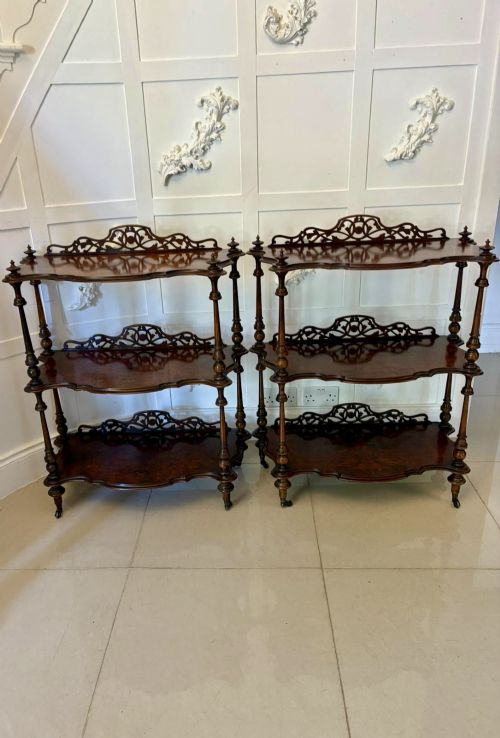
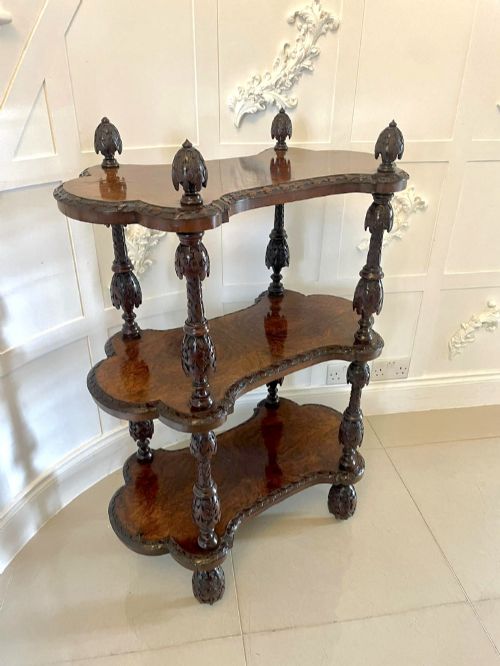
A victorian three tier stand provides tiered open shelving in burr walnut, mahogany, or rosewood, offering practical display space for books and decorative objects.
Victorian Three Tier Stand
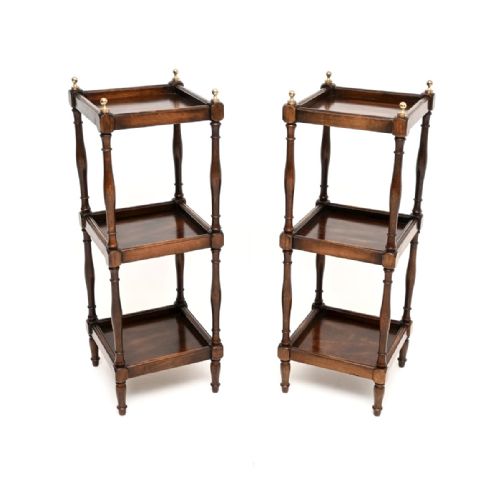
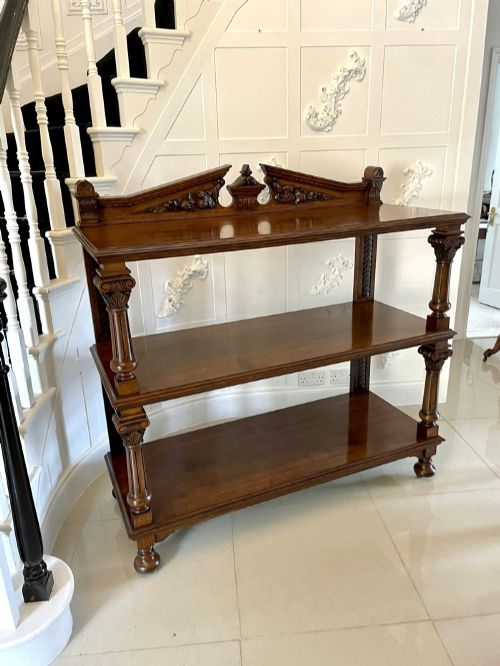
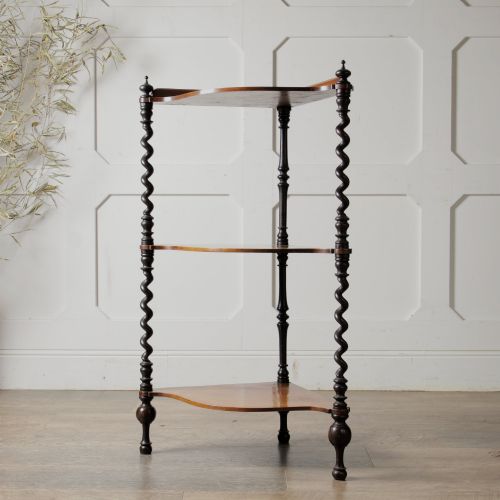
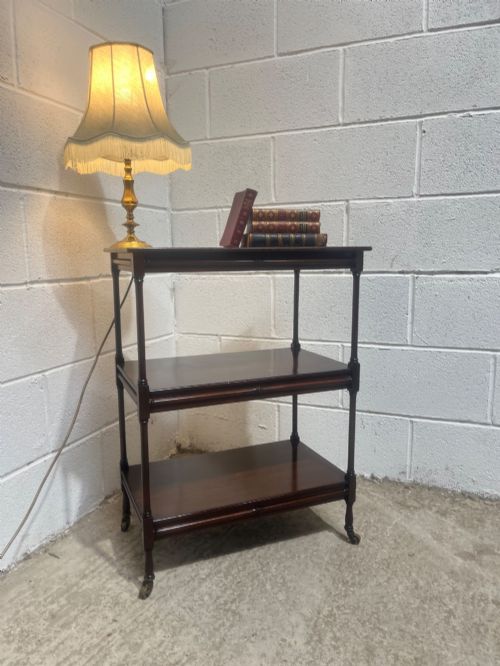
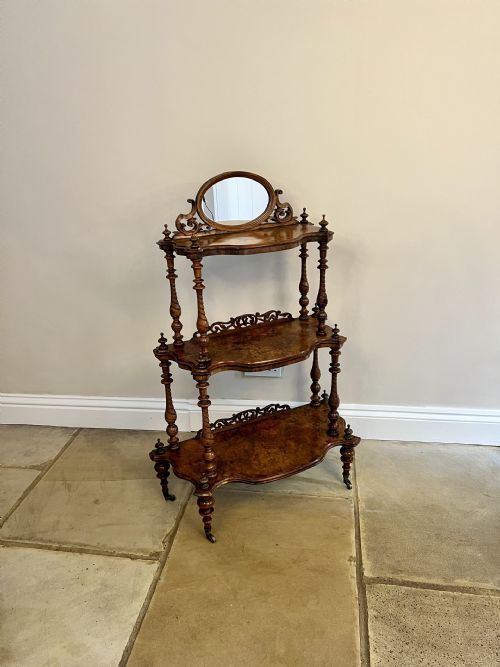
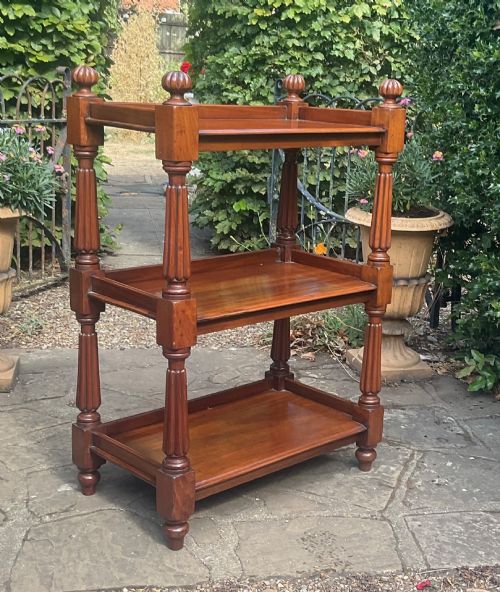
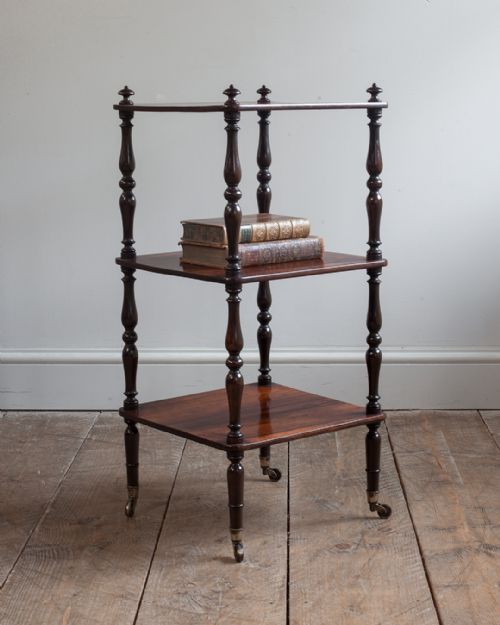
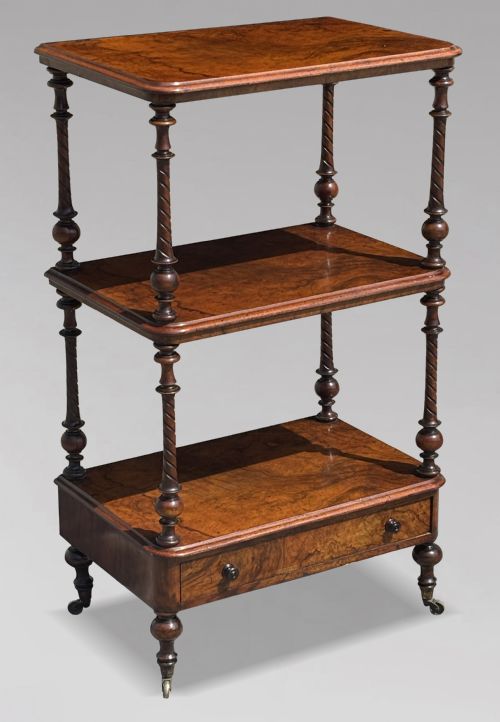
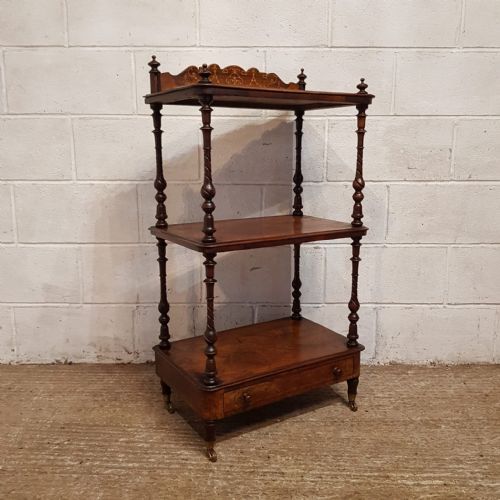
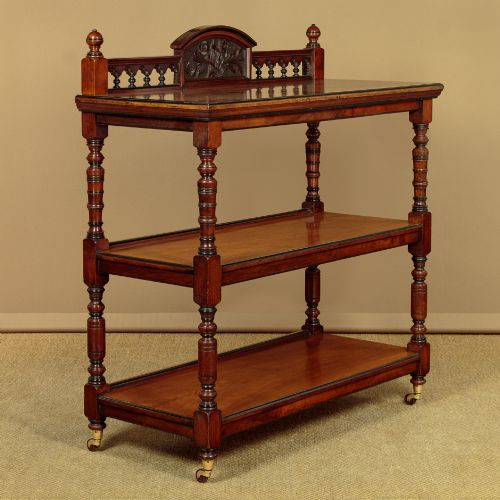
A victorian three tier stand typically takes the form of a whatnot, etagere, or buffet, designed with multiple graduated shelves supported by turned columns or uprights. These pieces appear most frequently in rich timbers such as burr walnut, mahogany, and rosewood, reflecting the periods from the mid-nineteenth century onwards.
The evidence shows these tiered structures serving diverse functions, from central freestanding display units and corner configurations to serving trolleys and plant stands. Makers utilised materials ranging from traditional hardwoods to cast iron and wirework to suit both interior drawing rooms and conservatories.
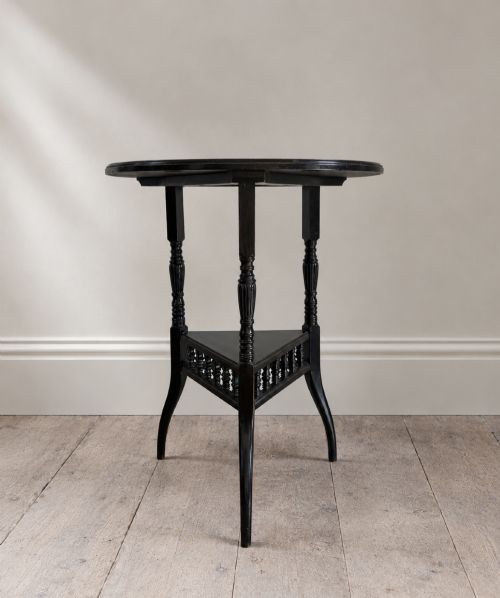
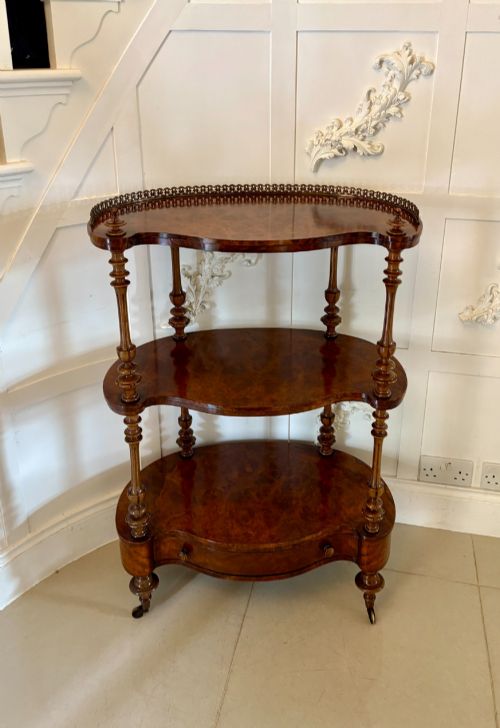
While many examples date firmly to the Victorian era, related forms stretch from the Georgian period into Edwardian times, incorporating styles like the Aesthetic Movement and Arts and Crafts. Buyers encounter everything from slim side tables to large serpentine-shaped display stands.
How they were made
Cabinetmakers constructed these stands using solid and veneered timbers, often selecting figured burr walnut, mahogany, or rosewood to create decorative grain patterns across the shelves. Turning lathes shaped the supporting barley twist columns and upright pillars that divide each tier.
Joinery techniques included fitted shelves secured by slender supports, sometimes supplemented by brass mountings, castors, or drawers integrated into the lower sections. More industrial or utilitarian variants utilised cast iron, wirework, or painted finishes for plant stands and garden furniture.
Some Victorian plants missed the soil entirely, spending their days elevated on three tiers of scrolling wirework.
What varies in quality
The distinction between standard examples and top-tier exhibition pieces rests on timber selection and decorative carving. Highly figured burr walnut veneers, serpentine shaping, and intricate carved detailing elevate a piece well above plain mahogany or simple turned supports.
Construction rigidity and finer hardware also mark out superior items. Stands featuring crisp joinery, well-turned pillars, and original brass details demonstrate the greater skill of the workshop that produced them.
Samson and Son London
The Victorian Three Tier Stand Glossary
- Whatnot
- An open set of shelves used for displaying ornaments and books. It became popular during the nineteenth century for drawing room use.
- Etagere
- A piece of furniture consisting of a set of open shelves for displaying small objects. The term originates from French furniture design.
- Dumb waiter
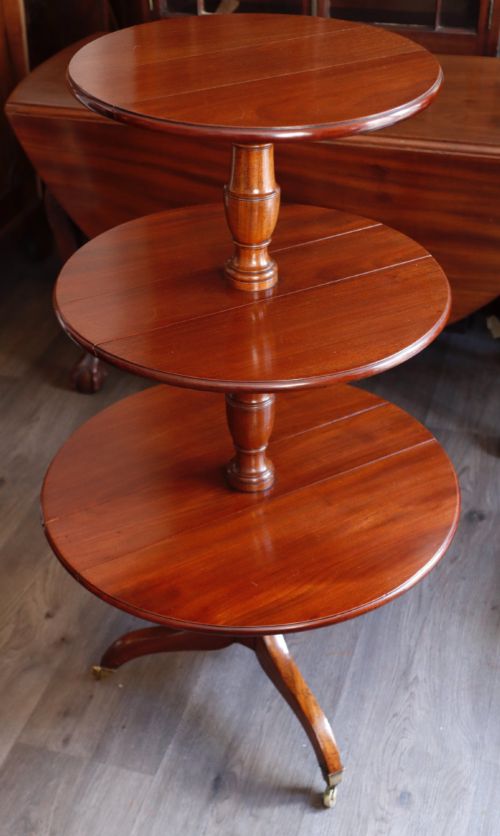
- A tiered stand used in dining rooms for holding food and tableware. These often feature revolving or stationary circular shelves on a central pedestal.
- Buffet
- A tiered shelving unit or sideboard used for serving and display. Examples in the evidence frequently utilise walnut or mahogany.
- Burr walnut
- A wood veneer taken from the wart-like growths on walnut trees. It yields complex, swirling grain patterns highly prized by Victorian cabinetmakers.
Victorian Three Tier Stand: Frequently Asked Questions
What is a three tier stand?
A three tier stand is a piece of open shelving designed to hold books, plants, or ornaments across three distinct levels.
These items were widely used in nineteenth-century interiors to maximise display space without cluttering the room.
Where were these stands used?
They were placed in drawing rooms, parlours, and dining spaces to exhibit decorative objects, porcelain, and reading material.
Some variants, such as plant stands made from cast iron or wirework, were intended for conservatories or garden rooms.
How do I style a whatnot?
A whatnot works well against a wall or freestanding in a room, holding balanced arrangements of books and small collectables.
The graduated shelf depths allow smaller items to sit on top with heavier volumes placed on the lower tiers.
How do I identify the period?
Dating relies on timber choices, turning styles, and construction details associated with specific nineteenth-century design movements.
Heavier rosewood and mahogany pieces often align with earlier decades, while burr walnut and ebonised finishes point towards the middle and late Victorian periods.