
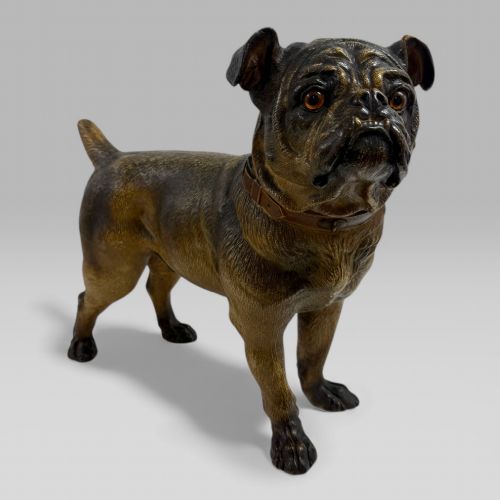
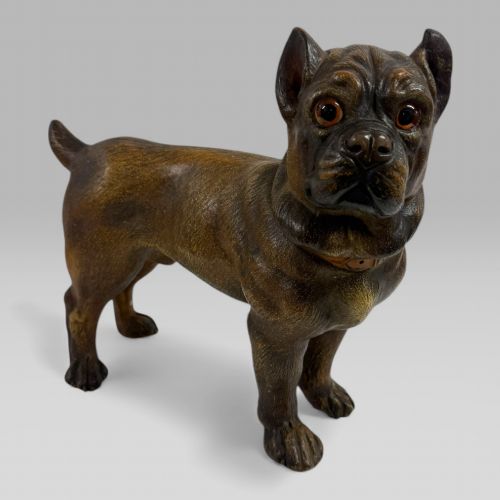


Victorian Terracotta Dog
These Victorian terracotta dog figures range from life-size Austrian pugs to Staffordshire greyhounds, bringing 19th-century domestic charm into modern rooms.
Victorian Terracotta Dog
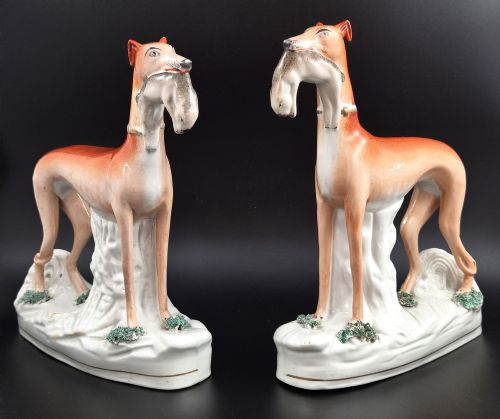
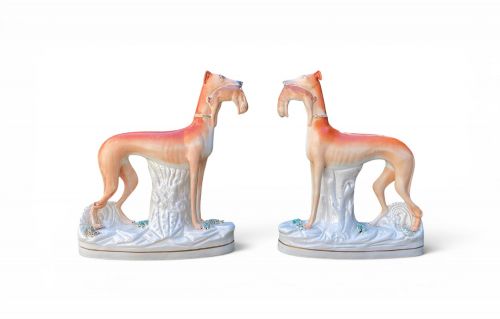
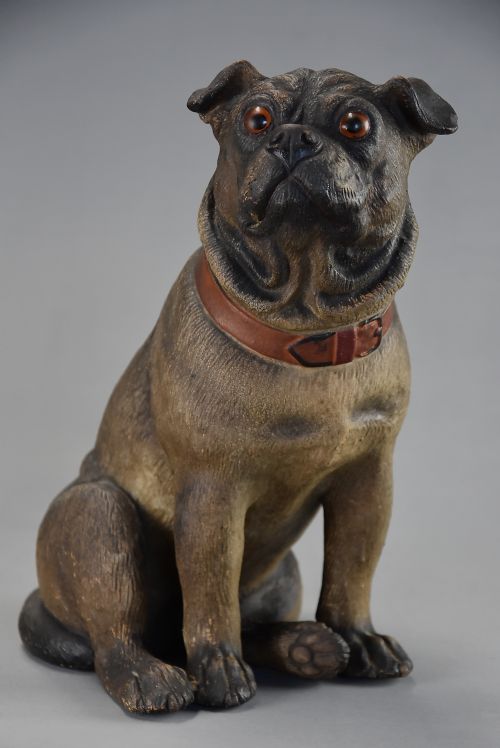
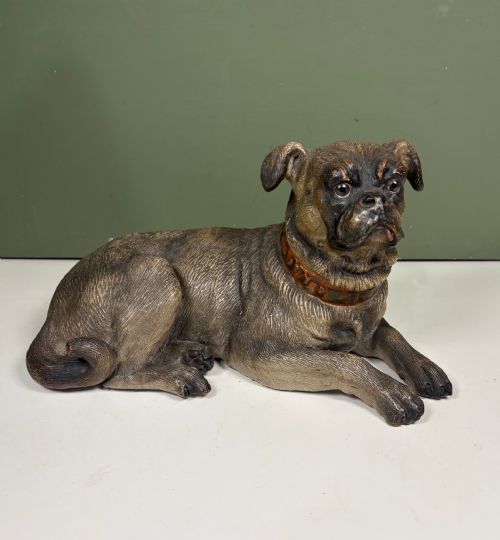
A victorian terracotta dog brings the robust character of nineteenth-century ceramics into a room, spanning from cabinet figurines to substantial life-size sculptures. Buyers searching for a victorian terracotta dog will encounter various forms, including seated pugs, greyhounds with hares, and whippet quill holders.
The objects seen here originate primarily from British potteries and Austrian workshops during the nineteenth century. Staffordshire works and Austrian makers dominate the selection, offering both glazed earthenware and painted terracotta models.
Materials and construction
Moulds formed the body of these figures, allowing workshops to produce symmetrical pairs of greyhounds and spaniels. Artisans then refined the surface details by hand before firing and painting.
Assessing quality and finish
Scale also dictates distinction, as life-size sculptures demand greater technical skill in firing than smaller decorative ornaments. The presence of identifiable maker details or well-preserved cold painting elevates a piece.
Thomas Parr·Bernard Bloch Austria
The Victorian Terracotta Dog Glossary
- Terracotta
- A porous fired clay body ranging in colour from orange-brown to buff. This material served as the primary medium for Austrian life-size sculptures.
- Staffordshire pottery
- Earthenware produced in the industrial region of Staffordshire, famous for producing pairs of spaniels and greyhounds. These figures typically featured glazed finishes.
- Cold painted
- A method where paint is applied to a cured terracotta object without subsequent firing. This technique was frequently utilised on Austrian pug dog models.
- Quill holder
- A domestic desk accessory incorporating a modelled figure with a tray or channel for writing implements. Whippets and dogs often appeared in this functional form.
- Lead glaze
- A shiny glass-like coating applied to pottery before firing to waterproof the vessel and add sheen. It creates the characteristic glossy surface on Staffordshire greyhounds.
Victorian Terracotta Dog: Frequently Asked Questions
Where were these dog figures displayed?
Victorian households placed these ceramic and terracotta dogs across mantelpieces, side tables, and desks. Smaller figures sat in pairs as decorative ornaments, while functional versions like quill holders served practical roles in studies.
Larger life-size sculptures stood directly on the floor in hallways or beside hearths. Their presence reflected both a fondness for domestic animals and the Victorian taste for figurative ornament.
How do I care for terracotta dogs?
Keep terracotta and earthenware figures out of direct sunlight and away from damp environments to protect the porous clay. Dust them gently with a dry, soft brush rather than using wet cloths.
Cold-painted surfaces require particular caution, as moisture or harsh cleaning agents can lift the original paint. Handle larger sculptures with care to avoid chipping the extremities.
Are these figures glazed or painted?
The finish depends on the origin and workshop of the piece. British Staffordshire figures commonly feature glossy lead glazes, enamel paint, or gold leaf highlights.
Austrian terracotta dogs more frequently employ cold painting techniques over the porous clay body. Each method yields a distinct surface texture characteristic of its period.