






Victorian Teak Campaign Furniture
Victorian teak campaign furniture comprises portable officers' pieces designed for travel, prized for their modular construction and robust brass reinforcement.
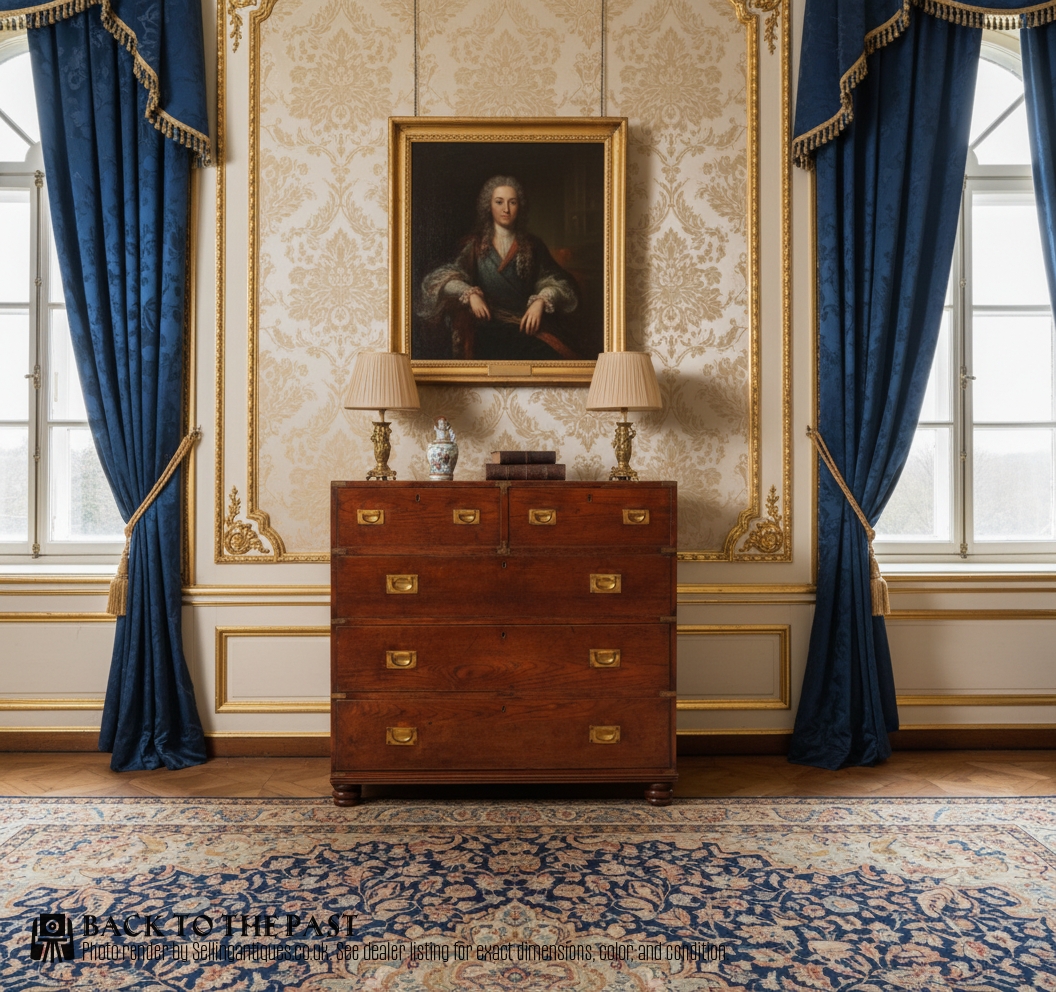
Victorian Teak Campaign Furniture
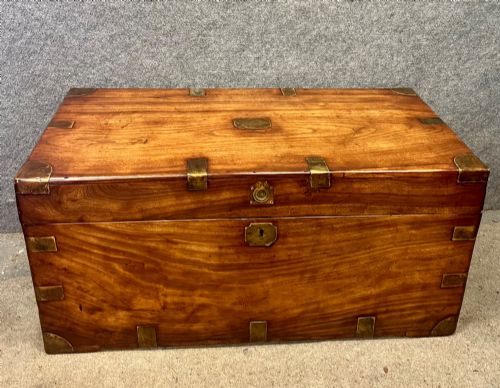
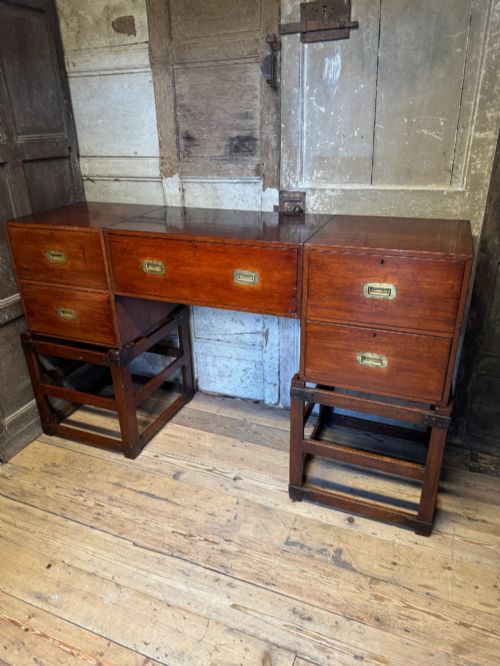
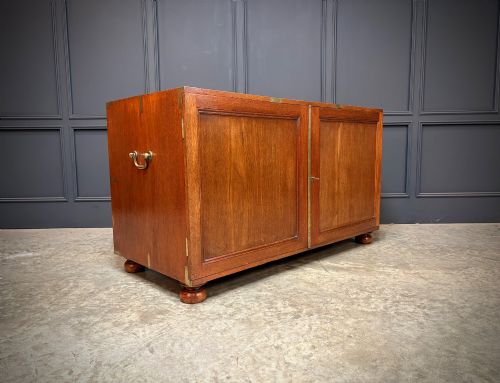
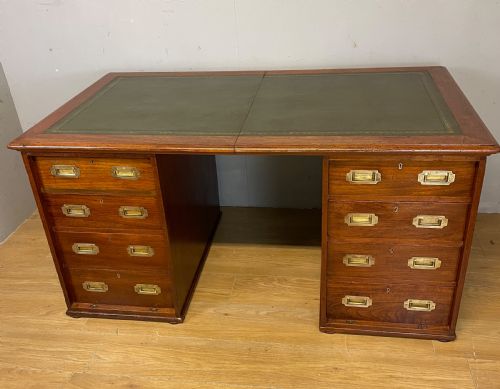
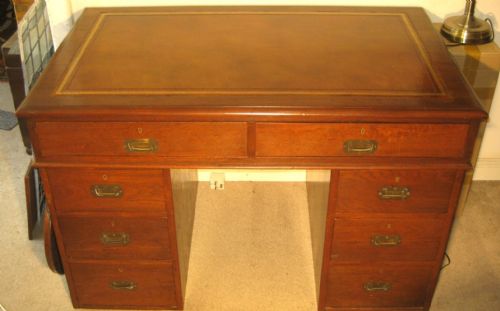
Victorian teak campaign furniture encompasses portable chests of drawers, secretaire chests, desks, tables, and cabinets designed for officers on the move during the nineteenth century. Buyers encounter two-part chests, folding tables, and side cabinets built to dismantle easily for transport.
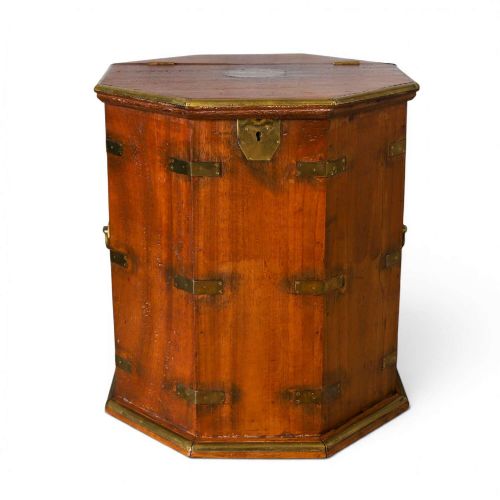
The pieces originating from this search phrase span forms such as merchants trunks, miniature chests, side tables, and washstands. Many items reflect Anglo-Indian and colonial influences alongside strict military specifications.
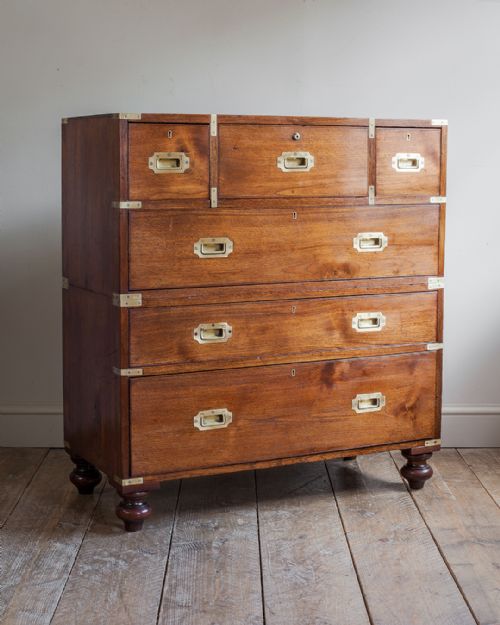
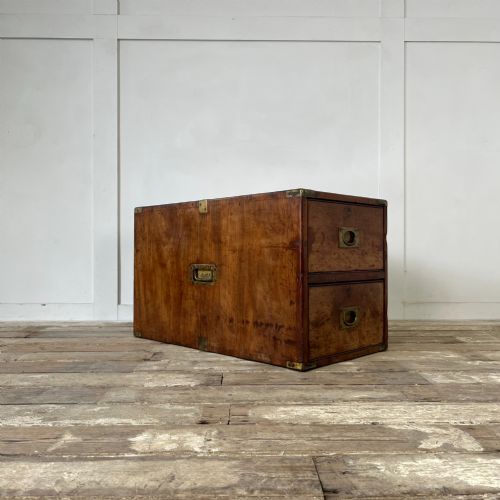
The most prevalent forms on this page are chests of drawers split into stacking sections, accompanied by desks and folding tables. These items combine utilitarian portability with the warm grain of tropical hardwoods.
How they were made
Craftsmen utilised dense teak, padouk, and other hardwoods selected for durability in extreme climates, joining sections with precision so they could withstand frequent assembly and disassembly. Timber surfaces were frequently paired with rich leather inserts on writing desks and tabletops.
Makers reinforced corners, edges, and drawers with solid brass binding and flush-fitting brass corner plates to protect the timber during transit. Recessed drop handles and cast iron carrying handles allowed items to be packed tightly without protruding hardware.
Listings feature items dated from 1850 through to 1920, predominantly constructed from teak, brass, and leather.
What varies in quality
The degree of subdivision defines the complexity of the piece, separating standard two-part chests from intricate three-part desks and fitted secretaire chests with multiple internal compartments. Superior examples integrate clever secret drawers, folding mechanisms, and bone escutcheons.
The quality of construction rests upon the precision of the brass hardware integration and the matching of the timber grain across separable sections. Original folding components and matching flush mounts elevate the integrity of the piece.
Army And Navy
The Victorian Teak Campaign Furniture Glossary
- Campaign chest
- A modular chest of drawers built in two or more stacking sections designed for military transport. These units feature recessed brass handles and corner brackets to prevent snagging during travel.
- Secretaire
- A cabinet or chest featuring a pull-down writing flap that conceals small drawers and pigeonholes. This multi-purpose form allowed officers to carry a functional desk within a standard chest module.
- Padouk
- A heavy tropical hardwood with a reddish-brown hue utilised alongside teak for colonial and military items. Its density provided exceptional resistance to splitting and warping in humid climates.
- Escutcheon
- A protective plate surrounding a keyhole, typically cast in brass on these items. On better examples, these plates are embedded flush with the wood surface.
- Anglo-Indian
- A style blending British form with traditional craftsmanship from the Indian subcontinent. Pieces often display distinctive panelled backs and elaborate woodwork.
Victorian Teak Campaign Furniture: Frequently Asked Questions
Why did officers use modular campaign furniture?
Modular construction allowed heavy wardrobes and desks to separate into manageable sections for baggage animals, carts, and ships. Recessed brass fittings ensured the pieces withstood repeated packing without damage.
This practical design meant an officer could maintain a fully functional study or bedroom while moving across distant territories.
How do two-part chests separate?
Two-part chests divide horizontally into upper and lower carcases that lock together using internal brass pins or side hooks. The division allowed each half to be handled independently by a single person during transit.
When reassembled, the seam is often concealed behind flush brass straps that run vertically down the corners.
What is a secretaire chest?
A secretaire chest combines the outward appearance of a standard set of drawers with a pull-down writing desk at the top level. The upper drawer front drops forward on hinges to reveal pigeonholes and small storage compartments.
This kept writing materials and correspondence organised for travelling officials.
Why is teak the primary timber?
Teak contains natural oils that resist moisture, humidity, and insect damage, making it ideal for tropical environments and sea voyages. The timber maintains structural stability despite extreme temperature shifts.
Its dense grain also allowed cabinetmakers to plane panels thin enough to reduce weight without compromising strength.