
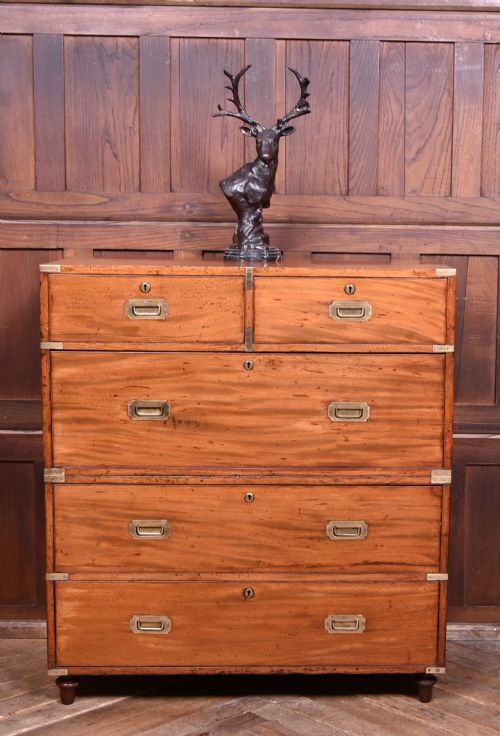
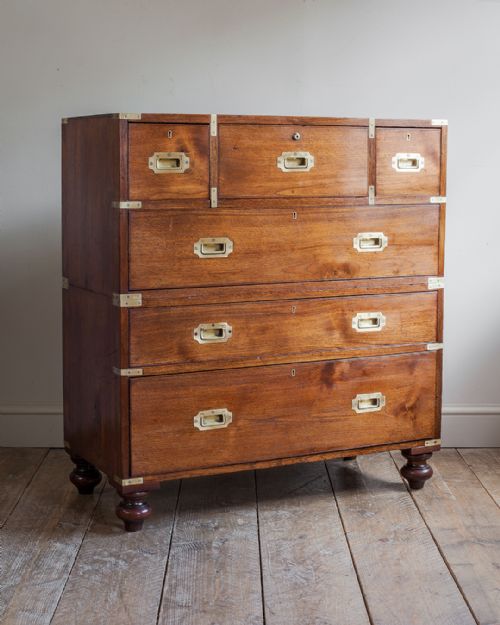
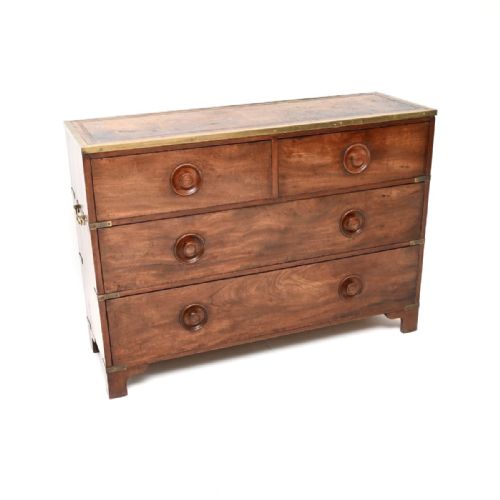
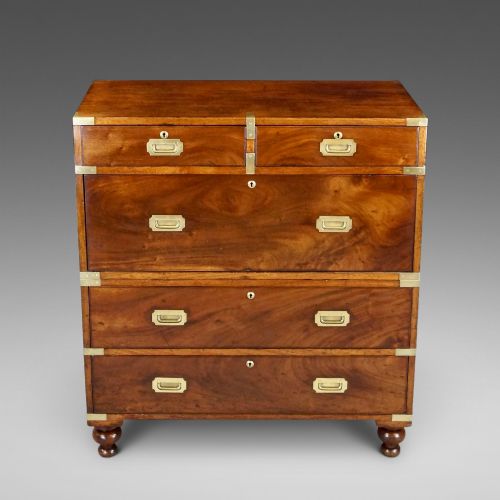
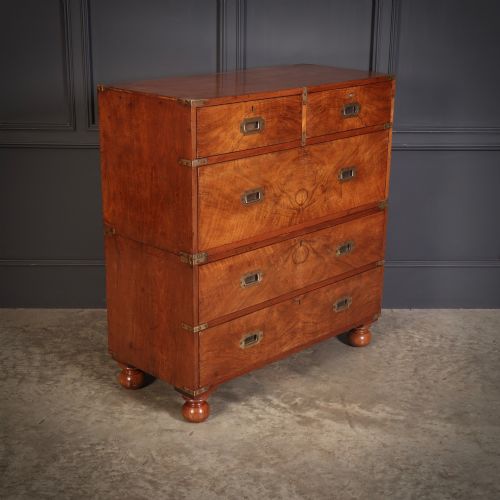

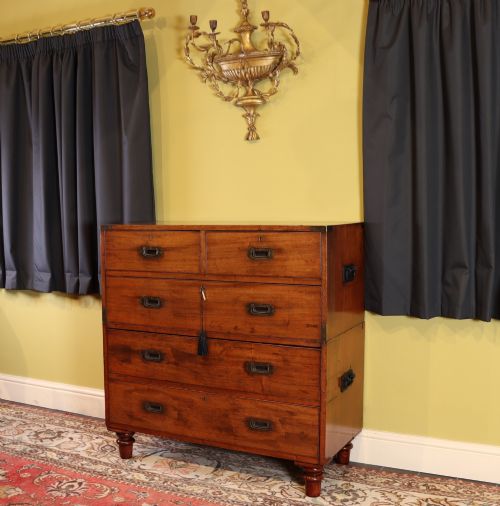

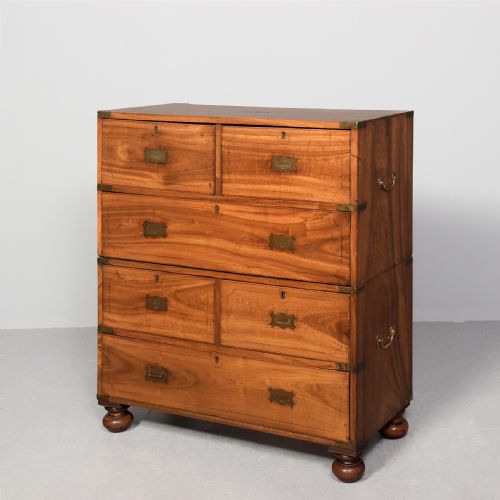
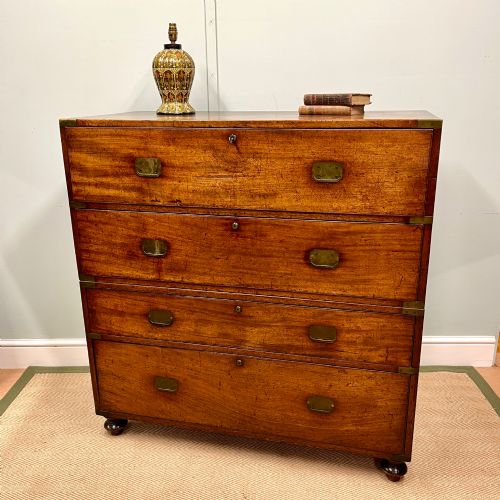
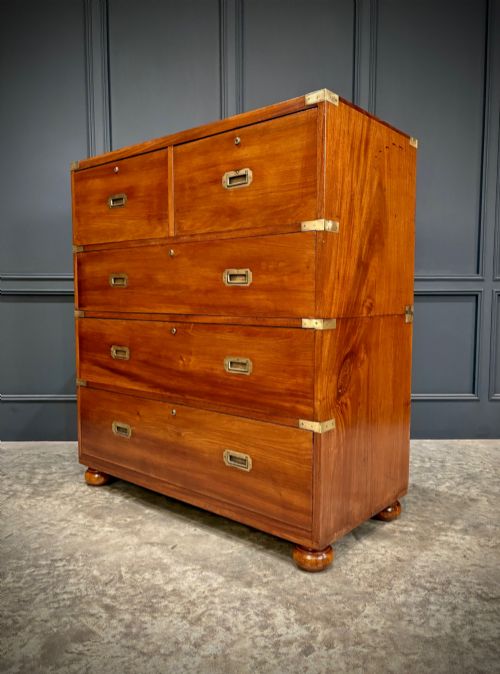


Split Campaign Chest Drawers
Split campaign chest drawers are modular two-part carcases designed for transit, offering rugged portability and clever storage.
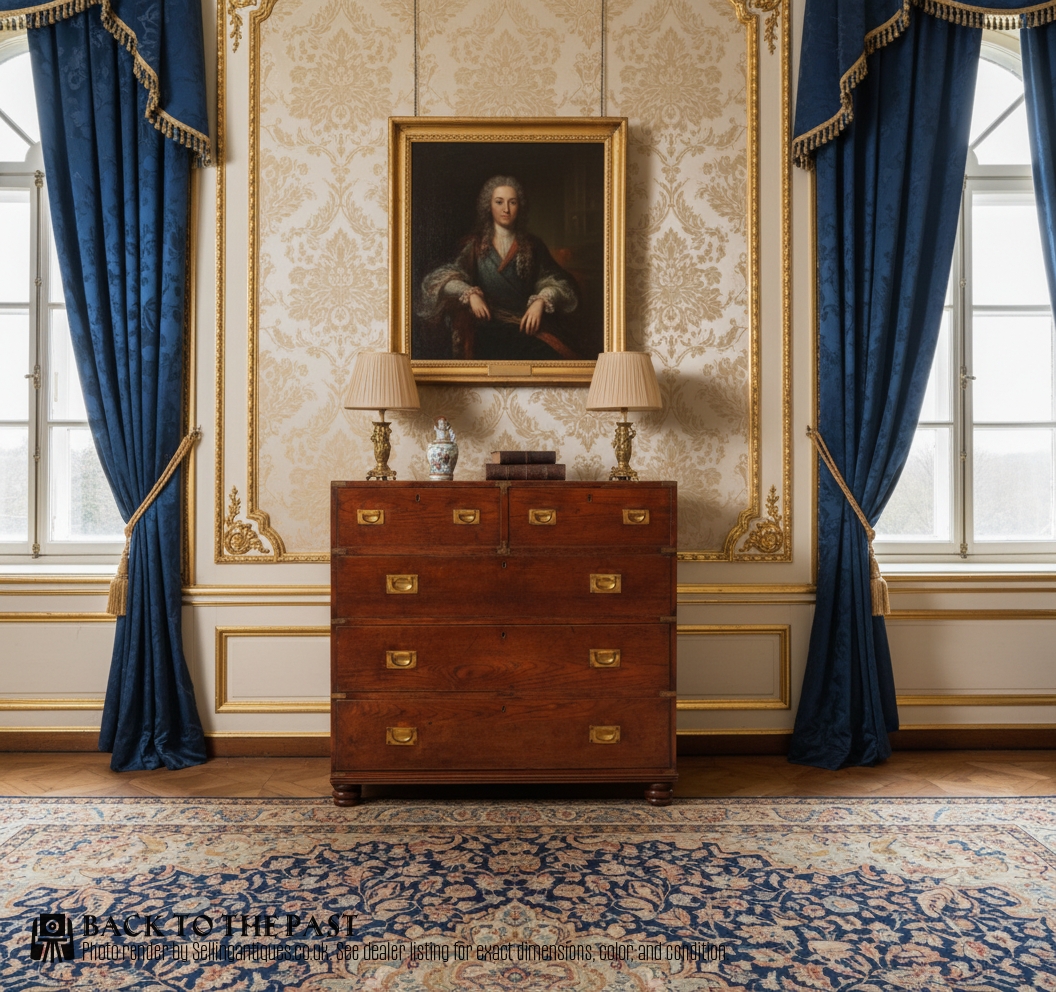
Split Campaign Chest Drawers
Split campaign chest drawers are portable storage units built in two separate stacking sections for military officers and travellers on the move. When you search for split campaign chest drawers, you encounter sturdy timber carcases designed to separate easily for transport on horseback, carts or ships.
The versions most commonly met on this market span the Victorian and Georgian eras, taking the form of chest of drawers or secretaire chests. These pieces balance utilitarian durability with domestic refinement, making them practical for modern interiors.
Materials and Construction
Cabinet makers built these chests from dense tropical hardwoods such as mahogany, teak, camphor wood and padouk to withstand harsh climates and heavy transit. Timber selection prioritised stability and resistance to warping over simple decorative grain.
Brass corners, strapping and flush-mounted recessed handles protect vulnerable edges and prevent snagging during movement. The two-part construction relies on internal locking pins or brackets to secure the upper and lower sections firmly together.
Listings feature camphor wood, teak, mahogany, walnut, oak, padouk and rosewood across Georgian and Victorian periods.
Assessing Quality and Execution
Quality rests in the precision of the brass work, the tightness of the drawer dovetails and the integrity of the secondary timbers used inside. Superior examples display seamless integration of brass hardware flush with the wood surface and well-fitted secretaire drawers that slide smoothly.
The choice of primary timber also dictates the character of the piece, with dense exotic woods and figured walnut marking the upper tier of production. Maker attribution through stamps or labels elevates a piece by documenting its official military supply history.
S. W. Silver and Co·Army and Navy
The Split Campaign Chest Drawers Glossary
- Campaign chest
- A modular chest of drawers built in sections with recessed handles and protective brass corners for easy transport. These pieces were originally commissioned by military officers for active service abroad.
- Secretaire chest
- A chest of drawers featuring a fitted writing drawer with a drop-front fall. This internal section usually contains small compartments and pigeonholes for correspondence.
- Flush handle
- A metal pull inset into the drawer face so it does not project beyond the wood. This prevents the hardware from catching on covers or tight spaces.
- Chinese Export
- Furniture produced in China for Western markets, often utilising local camphor wood. These pieces frequently feature traditional brass work and regional joinery methods.
Split Campaign Chest Drawers: Frequently Asked Questions
Why do these chests separate into two parts?
The two-section design allowed officers to pack and transport their heavy belongings more easily during frequent military relocations and long sea voyages.
Splitting the carcase reduced the weight and awkwardness of each individual load when moving across difficult terrain.
What is a secretaire campaign chest?
A secretaire campaign chest includes a pull-out middle drawer with a drop-front desk surface. Inside, small pigeonholes and secret drawers provided space for writing letters and storing documents.
This eliminated the need for a separate writing desk in campaign quarters.
Which woods were commonly used?
Cabinet makers relied on durable tropical hardwoods like mahogany, teak, padouk and camphor wood. These materials resisted shrinking, swelling and insect damage in tropical climates.
Camphor wood also imparted a distinct aromatic scent that helped deter moths from stored uniforms.
How do I identify a Victorian piece?
Victorian examples often feature darker mahogany or teak timbers paired with robust brass binding and turned feet. Construction details like machine-cut dovetails or specific brass stamps help narrow down the production era.
Many of these chests date from the mid to late nineteenth century during active periods of British military expansion.