






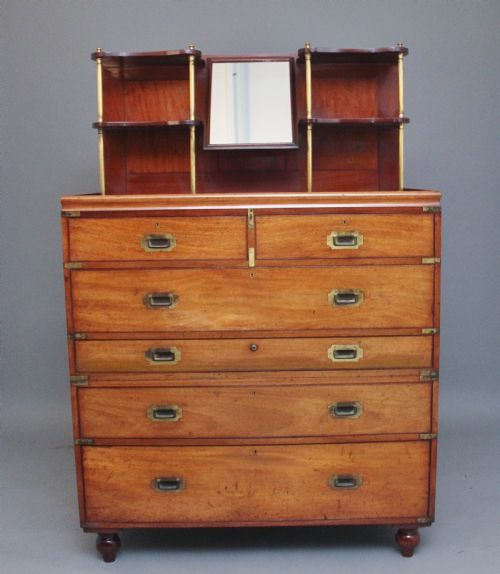


Naval Officer Chest Drawers
A naval officer chest drawers provides clever modular storage built for life at sea.
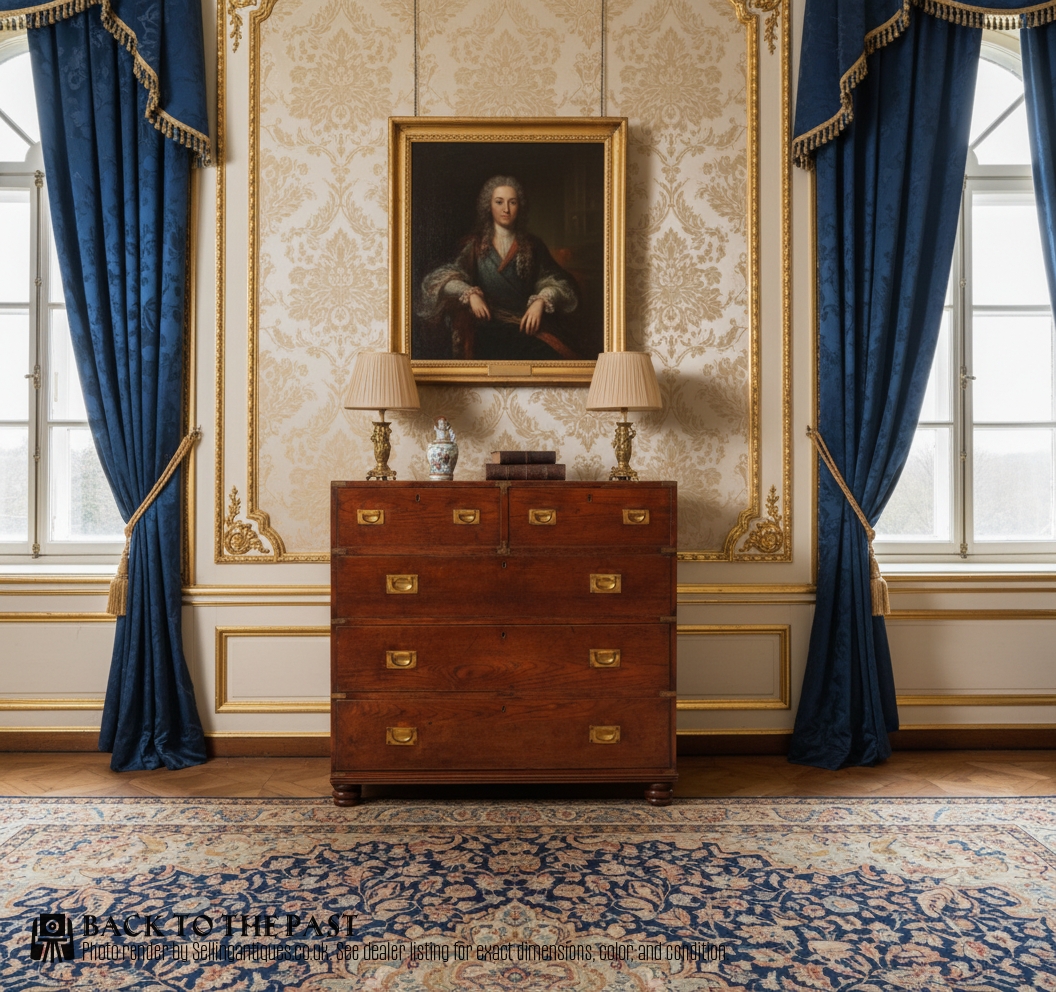
Naval Officer Chest Drawers
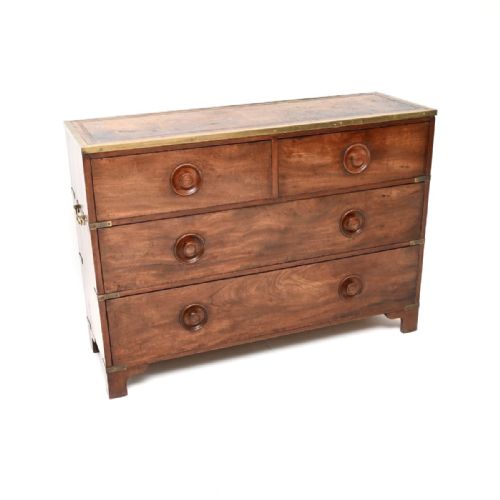
When you search for naval officer chest drawers, you encounter sturdy modular furniture designed for transport during military and naval campaigns. The pieces on this page span the nineteenth century and the Edwardian period, often following Victorian military or British colonial styles.
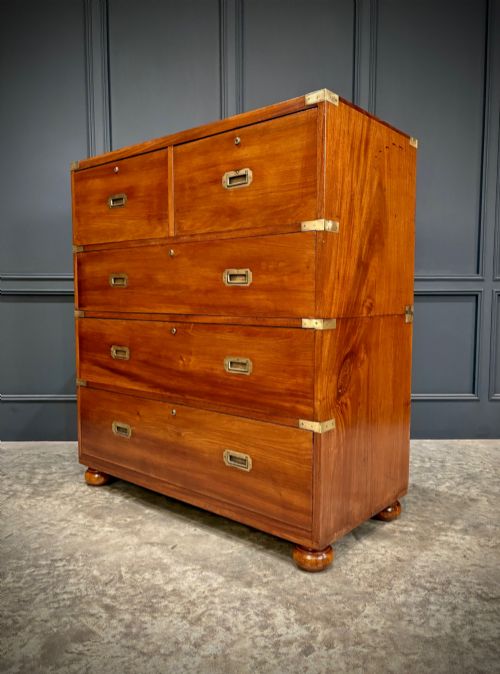
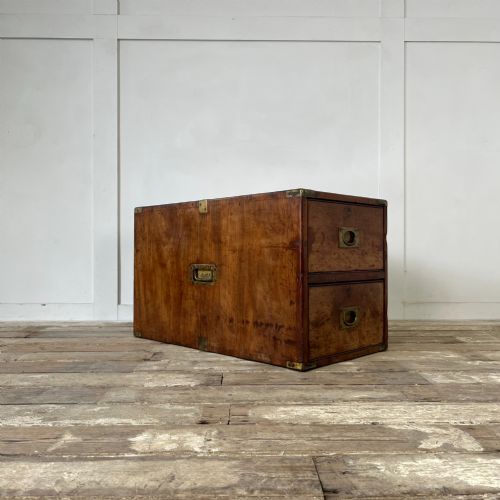
You are most likely to meet two-part chests of drawers constructed for easy dismantling on ships and in transit. These frequently take the form of camphor wood, teak, or mahogany chests, alongside occasional desktop storage pieces.
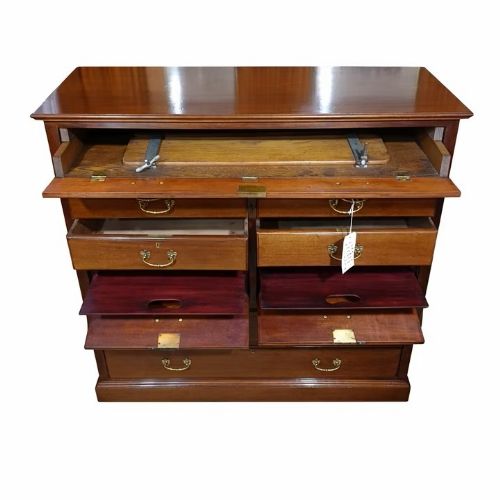
Many examples incorporate secretaire drawers equipped with fitted writing surfaces and compartments for paperwork. Low configurations and painted finishes also appear among the chests of drawers listed here.
Materials and Construction
Cabinetmakers utilised dense timbers such as mahogany, teak, and camphor wood to withstand tropical climates and rough handling at sea. Camphor wood offered the added benefit of natural insect resistance for stored uniforms and papers.
Construction relies heavily on two-part sectional carcases that separate cleanly for relocation. Brass binding protects the corners and edges from heavy impacts during transport, while recessed brass handles prevent snagging.
Secretaire variants feature drop-front writing desks backed by small drawers and pigeonholes. Leather inserts sometimes surface on desktop storage and campaign writing surfaces.
Listings feature nineteen-century and Victorian camphor wood, teak, and mahogany campaign chests alongside Edwardian ship's chests and desktop storage.
Judging Quality
Quality rests in the precision of the joinery and the integrity of the modular locking mechanism between sections. Finer pieces retain original flush brass fittings, inset carrying handles, and secret locking drawers that operate smoothly.
The choice of timber dictates the presence and depth of the grain, with well-figured mahogany and solid camphor wood commanding attention. Secondary timbers and the neatness of internal dovetailing reveal the care taken by the original maker.
The Naval Officer Chest Drawers Glossary
- Campaign chest
- A modular chest of drawers built in two or more sections with recessed hardware for military transport. These pieces were designed to be packed quickly for officers on active service.
- Secretaire
- A cabinet or chest featuring a pull-out or drop-front drawer fitted with a writing surface and small compartments. It served as a portable desk for managing official correspondence.
- Camphor wood
- An aromatic timber prized for its resilience and insect-repellent properties, frequently utilised for campaign furniture originating in colonial regions. The wood carries a distinctive natural scent.
- Brass-bound
- A technique of reinforcing corners, edges, and joints with brass straps to protect timber from knocks during transit. This adds both structural rigidity and a characteristic visual rhythm to the piece.
- Two-part
- A carcase divided horizontally into upper and lower sections held together by internal bolts or brass locking pins. This division made heavy storage manageable for transport.
Naval Officer Chest Drawers: Frequently Asked Questions
What is a naval officer chest drawers?
A naval officer chest drawers is a modular piece of furniture made in sections so it could travel easily aboard ships. These chests provided practical storage for uniforms and personal documents during long voyages.
Cabinetmakers built them using robust timbers like mahogany, teak, and camphor wood to endure harsh marine environments.
How were these chests used at sea?
Officers used them in cabins and campaign tents to keep clothing and navigation papers organised despite rough seas and constant relocation. The sectional design allowed servants to pack and move quarters with minimal effort.
Many included fold-down secretaire compartments that doubled as a desk for writing reports.
Why are some chests split into two parts?
Dividing the chest horizontally into two separate boxes made heavy furniture manageable for transport through narrow ship hatches. Each half was fitted with carrying handles on the sides.
Metal brackets and pins secured the sections together safely when assembled.
How do I care for camphor wood furniture?
Camphor wood benefits from gentle dusting and protection from direct sunlight and extreme humidity changes. The natural oils within the timber help preserve the wood over generations.
Avoid harsh chemical polishes that can alter the natural finish and aroma of the timber.