



Victorian Tapestry Stool
A victorian tapestry stool brings texture and period character to a room, offering low seating or a place to rest tired feet.
Victorian Tapestry Stool
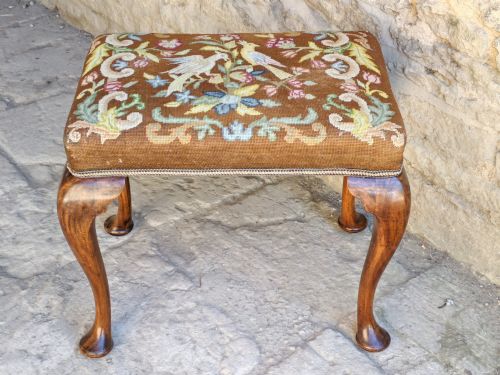
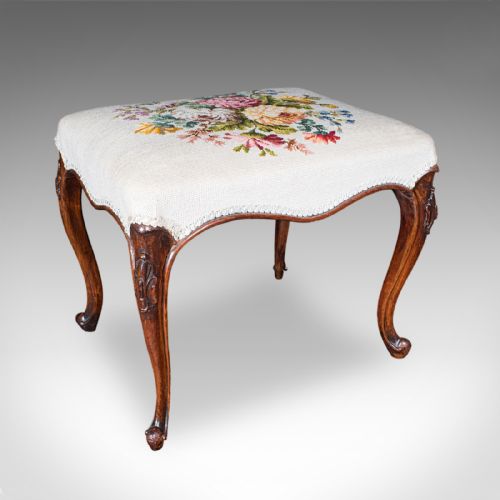
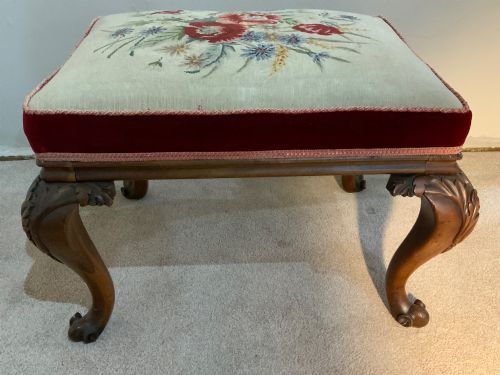
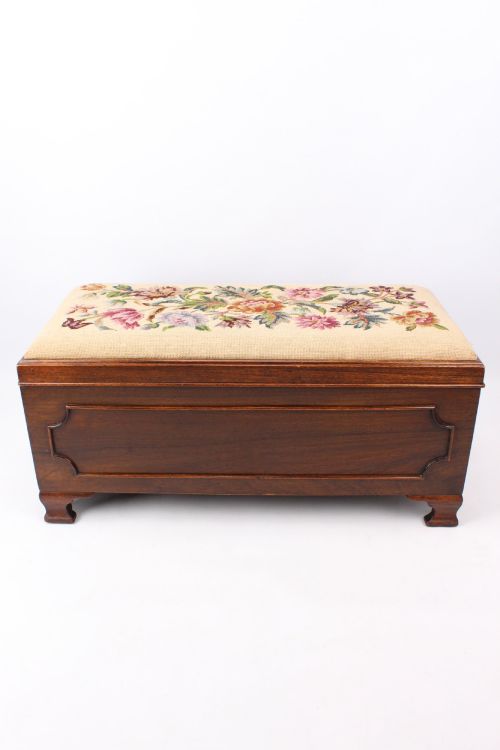
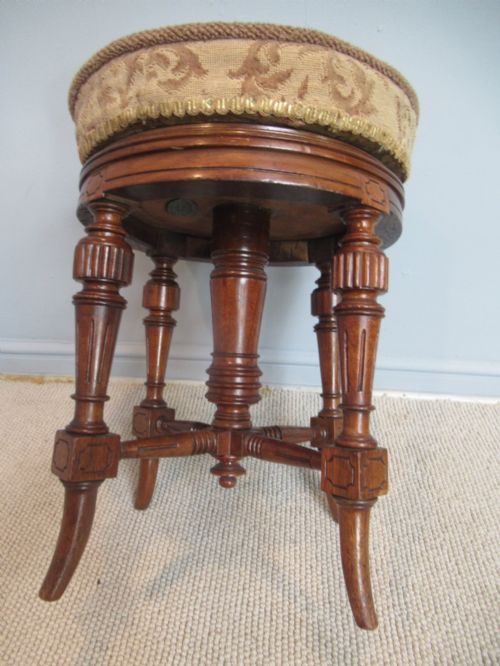
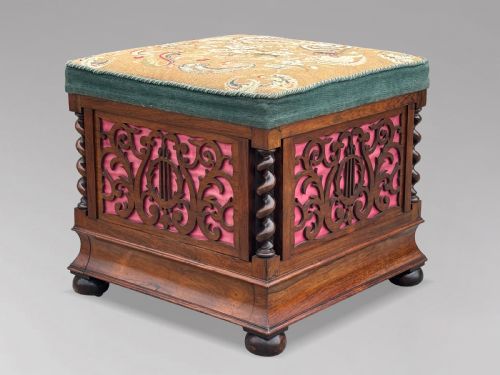
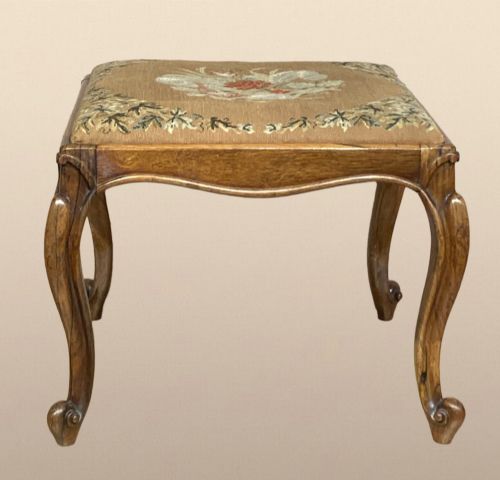
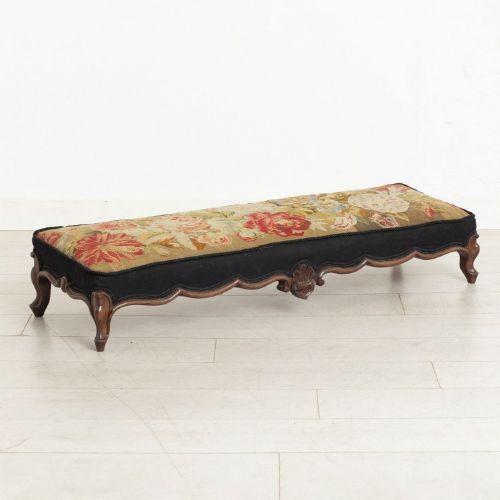
A victorian tapestry stool is a low-slung seating piece featuring a needlework, wool, or textile top mounted on a wooden frame. These pieces span the nineteenth century, appearing in forms such as small fireside footstools, piano stools, and large ottomans.
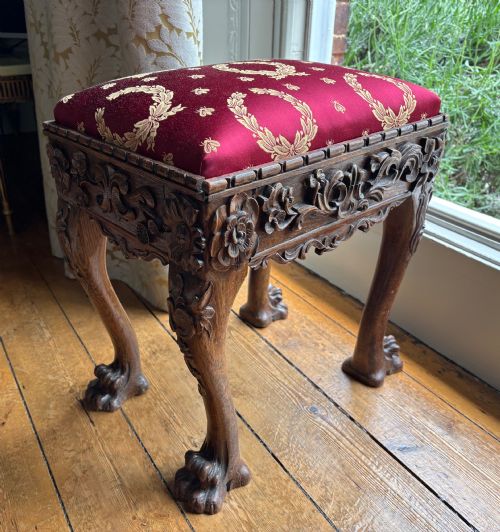
The walnut and mahogany frames on this page often display revival styles, including Chippendale, Carolean, and Scottish Baronial alongside standard Victorian designs. Low footstools and revolving piano seats dominate the selection.
Buyers encounter everything from simple round footstools with geometric kilim covers to large country house storage ottomans upholstered in needlepoint. Many retain their original fabric or beadwork tops from the period.
Materials and Construction
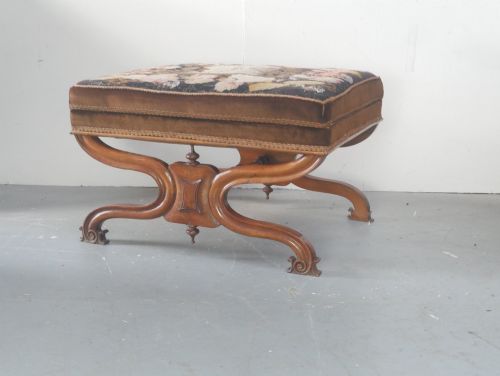
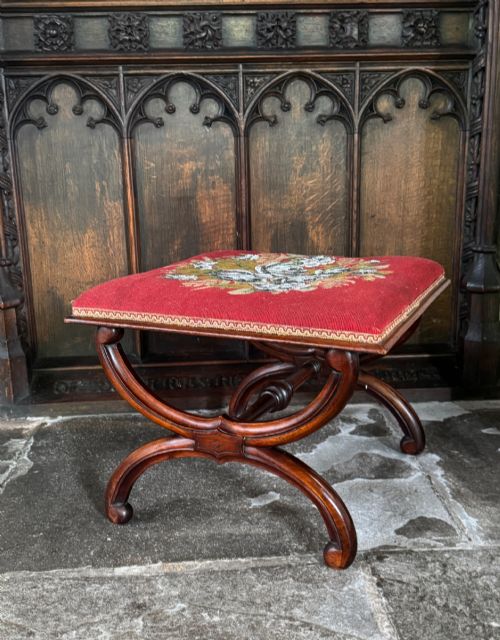
Makers built the structural frames using dense hardwoods like walnut, mahogany, and rosewood, occasionally employing oak. These timbers were carved, turned, or shaped into cabriole legs and x-frames.
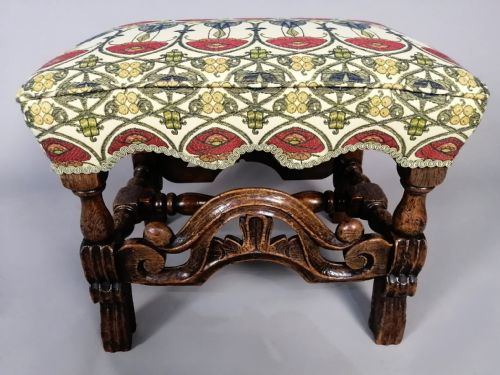
Upholstery involved hand-stitched tapestry, needlepoint, wool, velvet, and beadwork secured over padded seats. Some specialised examples incorporated mechanisms for height adjustment or internal storage boxes.
Hunting dog heads peer out from carved walnut x-frames, keeping a silent watch over the nineteenth-century parlour.
Distinctions in Quality
Quality rests in the crispness of the timber carving and the complexity of the wood selection, such as figured walnut or rosewood. Tunbridge ware inlay and robust x-frame joints indicate higher workshops.
The condition and tightness of the needlework or tapestry top heavily influence the piece. Original fabrics intact on the frame carry distinct appeal compared to later re-webbed replacements.
Jas Shoolbred·Hallett & Sons·Harrington
The Victorian Tapestry Stool Glossary
- Needlepoint
- A type of canvas work embroidery using wool or silk thread. It forms the patterned tops seen on many period footstools.
- X-Frame
- A cross-legged structural support shaped like the letter X. This form provides sturdy rigidity to dressing stools and window seats.
- Cabriole Leg
- A furniture leg that curves out and then in, resembling an animal's leg. It appears frequently on walnut and mahogany Victorian frames.
- Tunbridge Ware
- Small decorative items decorated with tiny wood mosaics forming geometric patterns. It marks specific inlaid nineteenth-century pieces.
- Petit Point
- A fine needlepoint stitch worked on a single-mesh canvas. This technique allows for highly detailed pictorial tapestry designs.
Victorian Tapestry Stool: Frequently Asked Questions
How were these stools used?
These pieces served multiple domestic purposes, acting as low footrests by the fireside, dressing seats in bedrooms, and adjustable revolving stools for piano players. Larger versions doubled as storage ottomans for blankets and sewing supplies.
Their portable size allowed servants to move them easily around nineteenth-century drawing rooms as needed for comfort.
How do I style a victorian stool?
Place a low needlework footstool beside an armchair to add tactile warmth and historical contrast to a modern interior. Larger ottomans function well as informal coffee tables or window seats when topped with a flat tray.
Keep them out of direct sunlight to protect the fragile wool and textile tapestry surfaces from fading over time.
How do I spot original tapestry?
Original nineteenth-century needlework exhibits natural wool dyes, hand-spun texture, and wear consistent with age. The canvas underneath is typically aged linen or hemp secured with handmade tacks.
Inspect the tension and stitching around the wooden tacking margins to see how the textile meets the frame.
What is an x-frame stool?
An x-frame stool utilises intersecting wooden stretcher legs that form a stable scissor shape beneath the upholstered seat. This classical form supports weight efficiently while offering an elegant profile.
Cabinetmakers often carved the intersecting points with animal heads or foliate motifs during the Victorian revival periods.