




French Tapestry Ottoman
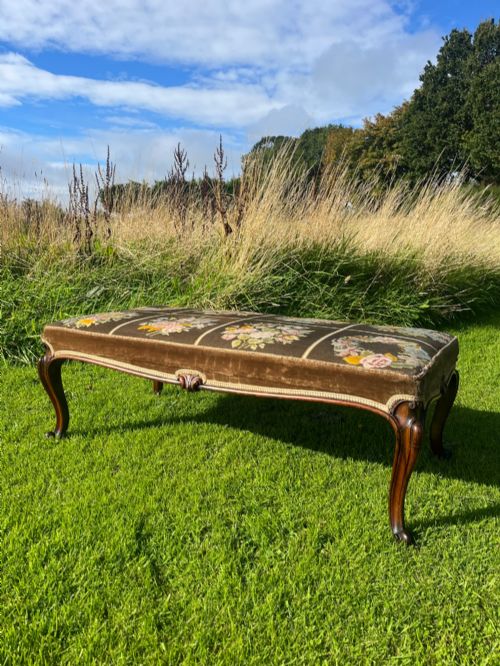
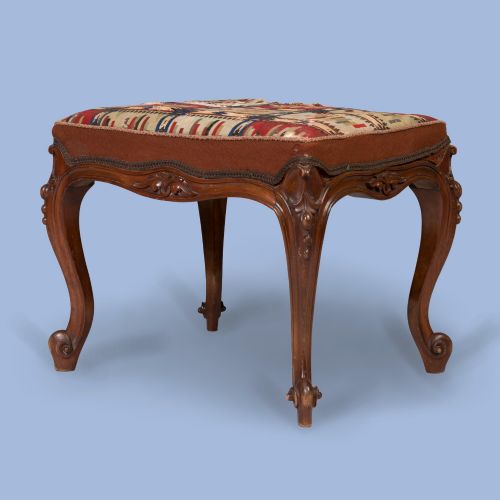
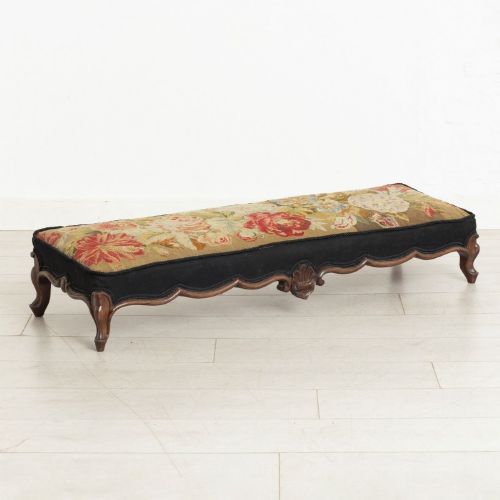
These French tapestry ottoman pieces bring nineteenth-century continental elegance into a room through carved walnut frames and rich needlework upholstery.
French Tapestry Ottoman
A french tapestry ottoman is a low seat or footstool designed for nineteenth-century drawing rooms, combining practical comfort with decorative upholstery. Buyers searching for this phrase encounter Victorian footstools, low stools, and larger footstools and ottomans originating from the nineteenth century.
The pieces listed on this page span the 1870s to the 1890s, capturing revival movements such as Louis XV, Louis XIV, and Victorian Rococo. Walnut, painted wood, and giltwood form the structural bases for these textiles, resulting in low seating designed to sit gracefully before larger drawing room chairs.
How they were made
Makers fashioned the frames of these ottomans from solid walnut, giltwood, or painted wood, employing carved cabriole legs to mirror French Rococo and Louis-style revivals. Joinery methods of the period prioritized sturdy construction to support the dense weight of upholstery and daily use as a footstool.
Upholstery involved heavy wool tapestry and needlework textiles stretched tightly over internal padding. Artisans secured these decorative panels onto the wooden bases using brass tacks, completing the piece with durable woven fabrics designed to withstand regular domestic pressure.
French Tapestry Ottoman Retail Price Guide 2026
Typical asking prices for french tapestry ottoman among the pieces listed under this phrase on Sellingantiques today, from the lower quarter to the upper quarter. They describe what is for sale here now, not the wider market.
What varies in quality
Quality rests primarily in the crispness of the wood carving on the cabriole legs and the tightness of the joinery. Frames shaped from solid walnut or rich giltwood command greater attention than simple painted alternatives, showing deeper relief and more confident curves.
The condition and execution of the tapestry textile dictate the upper tiers of the range. Needlework that retains tight tension and rich wool colour without heavy restoration represents superior workshop output from the period.
The French Tapestry Ottoman Glossary
- Cabriole leg
- A furniture leg that bends outward in a convex curve and tapers inward in a concave curve to a small foot. This design defines French Rococo and Victorian revival seating.
- Giltwood
- Timber coated with a thin layer of gold leaf or gilt paint. It provides a bright, reflective surface popular in formal nineteenth-century interior schemes.
- Needlework
- Hand-stitched textile art using yarn on a canvas mesh backing. It forms the decorative top of many nineteenth-century footstools.
- Rococo Revival
- A nineteenth-century design movement imitating the ornate, asymmetrical ornamentation of the mid-eighteenth-century French court. It employs scrolling foliage and shell motifs.
- Tapestry textile
- A thick, heavy fabric woven with pictorial or geometric designs on a loom. This material provides durable and decorative surfaces for antique seating.
French Tapestry Ottoman: Frequently Asked Questions
What is a french tapestry ottoman?
A french tapestry ottoman is a low nineteenth-century stool featuring a carved wooden frame and a hand-stitched needlework top. These pieces functioned as footrests or casual seats in period drawing rooms.
They combine French stylistic revivals with durable woolen textiles, making them practical low seating for modern living spaces.
How do I date these stools?
Dating relies on examining the timber, the style of the carved cabriole legs, and the character of the upholstery. Nineteenth-century examples often display Louis XIV or Louis XV revival motifs.
Construction details like older brass tacks and patinated walnut timber help separate nineteenth-century pieces from later reproductions.
Are these ottomans comfortable to use?
These pieces provide low, firm seating well suited for resting feet or sitting briefly by a fireside. Their dense traditional padding offers solid support rather than sink-in softness.
Placing them before a low chair creates a functional resting place that aligns with their original nineteenth-century purpose.
Where should I place an ottoman?
These compact stools fit easily before armchairs, beside fireplaces, or beneath console tables when not in active use. Their low profile ensures they do not crowd a room.
The decorative tapestry top adds texture and colour to traditional or eclectic interiors.