


Victorian Tapestry Panel
A victorian tapestry panel brings warmth and texture to a room, offering stitched scenes and intricate needlework framed for display.
Victorian Tapestry Panel
A victorian tapestry panel comprises embroidered textiles, needlework pictures, and framed needlepoint pieces originating mostly from the nineteenth century. Buyers encounter these works mounted in various formats, ranging from wall hangings and decorative panels to inserts within fire screens and room dividers.
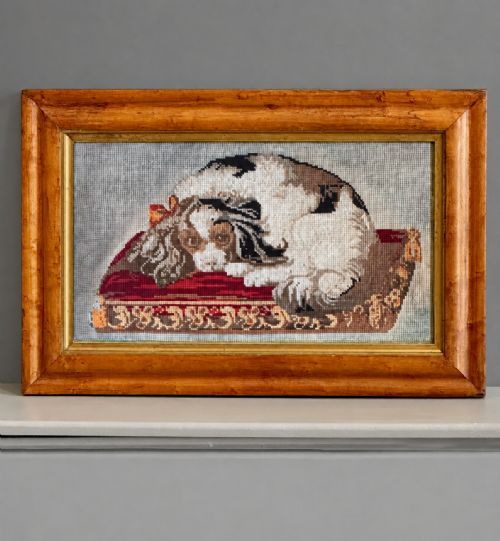
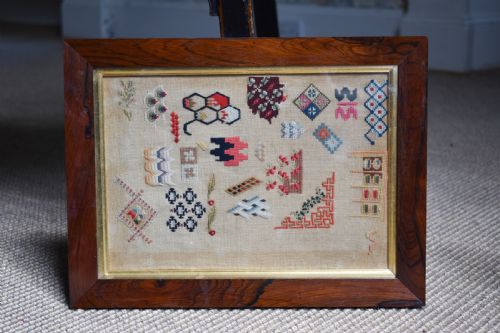
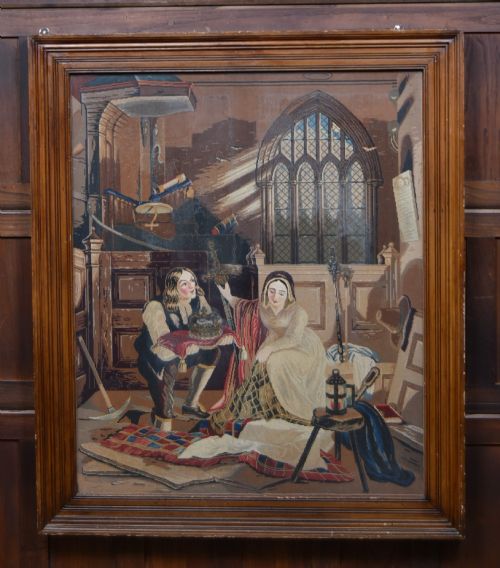
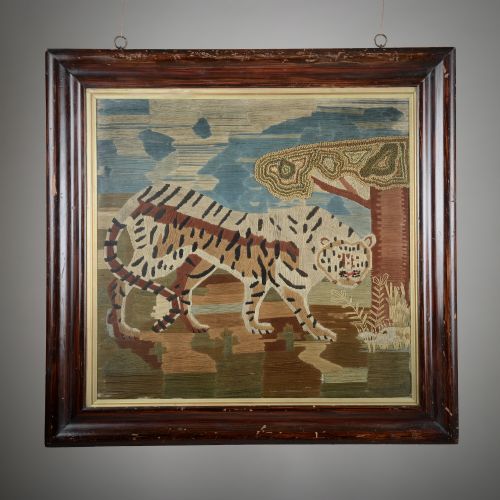
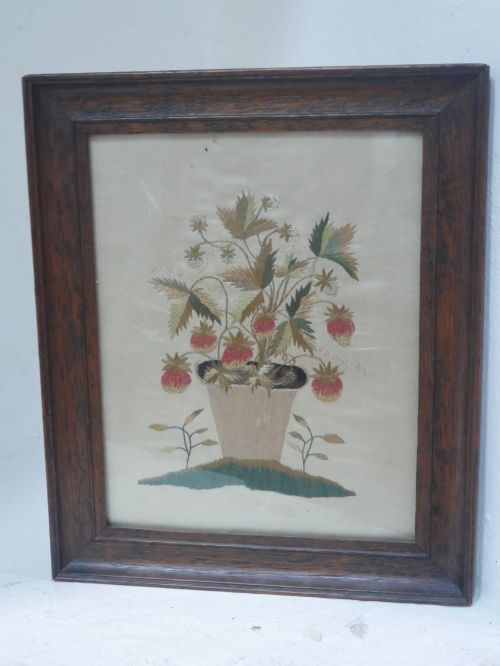
The selection on this page leans heavily toward domestic needlework, samplers, and framed pictorial wool work. Many examples incorporate floral motifs, armorial designs, or pastoral scenes created by stitchers working in wool and silk on canvas.
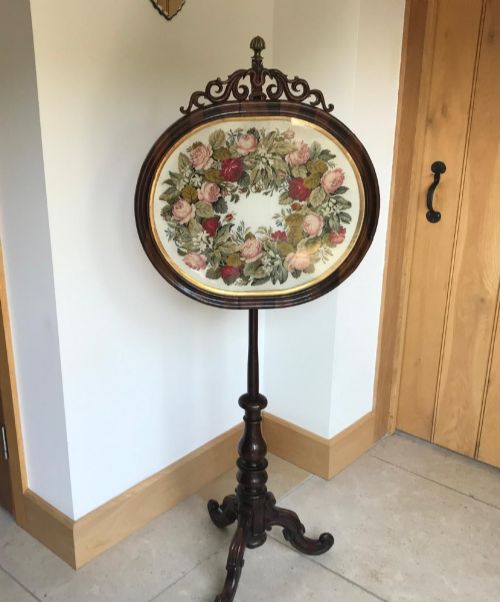
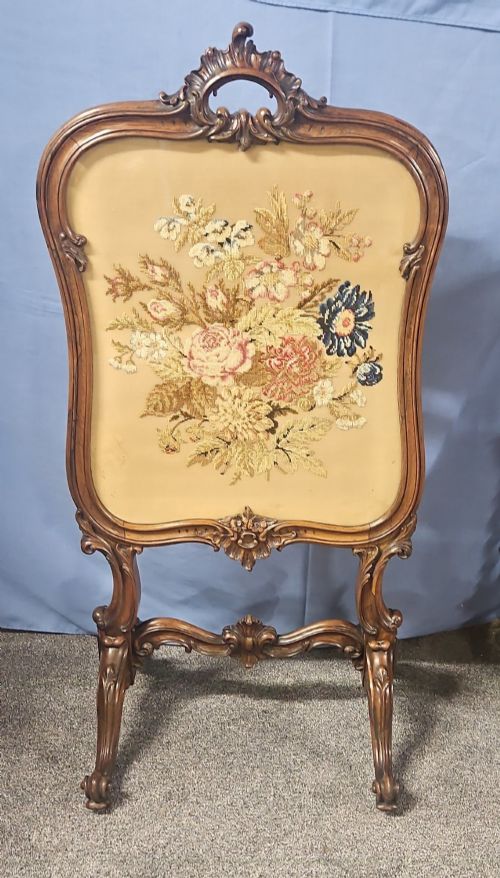
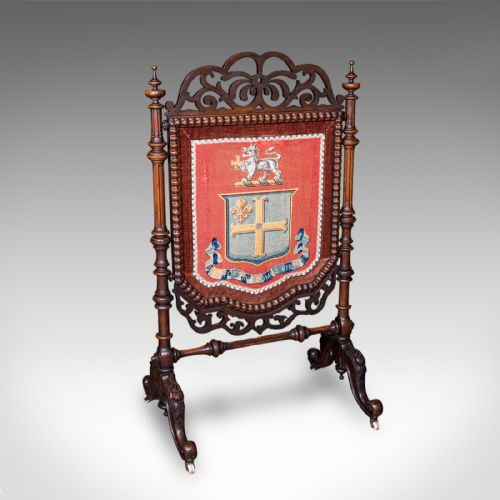
Beyond wall art, a significant proportion of these textiles function as structural elements in furniture. Pole screens, cheval screens, and multi-fold room dividers house these panels to deflect fireplace heat or section off private spaces.
Materials and Technique
Makers utilised canvas as the primary foundation for stitching, working wool, silk, and gros-point yarns to build up dense pictorial surfaces. The framing often involved traditional timber species such as rosewood, mahogany, walnut, and burr maple, sometimes accented with giltwood or brass details.
Needlework techniques varied from fine silk embroidery and cross-stitch samplers to heavier Berlin work and petit-point wool panels. Wooden frames were constructed using standard period joinery, housing the textile securely behind glass or within panelled mounts.
Assessing Quality
The distinction between standard examples and superior pieces rests on the precision of the needlework and the complexity of the design. Finer stitch density and sophisticated tonal shading in wool or silk indicate a more accomplished hand.
The quality of the surrounding woodwork and framing further defines the piece. Timber frames featuring carved details, original burr maple veneers, or sturdy rosewood and mahogany construction elevate the overall standard of the textile assembly.
The Victorian Tapestry Panel Glossary
- Berlin work
- A popular nineteenth-century style of needlepoint embroidery worked on canvas using brightly coloured wools from charted patterns. This technique allowed makers to produce vivid pictorial scenes with relative ease.
- Pole screen
- A vertical wooden stand featuring an adjustable framed panel designed to protect a person's face from the radiant heat of an open fire. The panel slides up and down on a central turned pole.
- Gros-point
- A coarse-gauge needlepoint stitch worked on canvas, creating a durable and textured surface suitable for heavy domestic use. It frequently appears on fire screens and floor-standing room dividers.
- Sampler
- A piece of needlework demonstrating a maker's proficiency in various stitches and alphabets, often including dates and personal details. These works were historically produced by young stitchers to record their skill.
- Cheval screen
- A floor-standing screen supported by two lateral feet, holding a large pivoting tapestry panel. This form provides a stable display for expansive needlework compositions.
Victorian Tapestry Panel: Frequently Asked Questions
How were fire screens used?
Fire screens served a practical purpose in nineteenth-century rooms by shielding occupants from the intense heat of coal or wood fires. The adjustable panels allowed individuals to block radiant warmth while seated.
Over time, these screens evolved into decorative furnishings. As heating methods improved, the integrated tapestry panels became valued primarily for their artistic display rather than thermal protection.
What is Berlin work?
Berlin work refers to a distinct style of needlepoint embroidery that gained immense popularity during the Victorian era. It relied on printed paper charts filled with coloured squares, similar to modern cross-stitch patterns.
Stitchers used these guides with vibrant wool threads to produce detailed pictures, portraits, and floral motifs. The style is recognised by its bright palette and structured grid appearance.
Are these panels mounted in original frames?
Many panels remain in their period timber frames, constructed from species such as rosewood, mahogany, or walnut. Original framing often matches the estimated manufacturing decade of the textile.
Some needlework pieces have been reframed over the decades to suit changing interior tastes. Examining the backboards, fixings, and timber wear helps determine whether the frame and panel have a shared history.
How do I care for a textile panel?
Textile panels require protection from direct sunlight to prevent the silk and wool threads from fading. Keeping them away from excessive moisture and fluctuating temperatures preserves the integrity of the fibres.
Dusting the wooden frames gently and avoiding harsh cleaning agents on the exposed canvas ensures the longevity of the piece. Glazed frames offer additional protection against ambient dust and handling.