


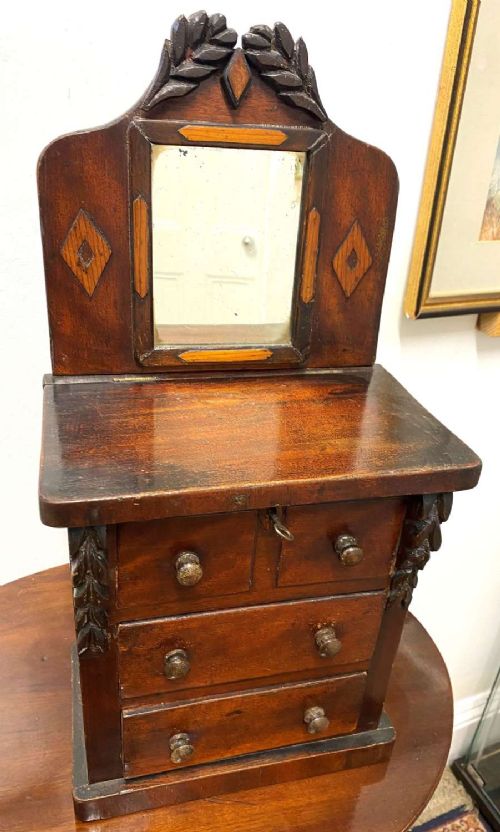
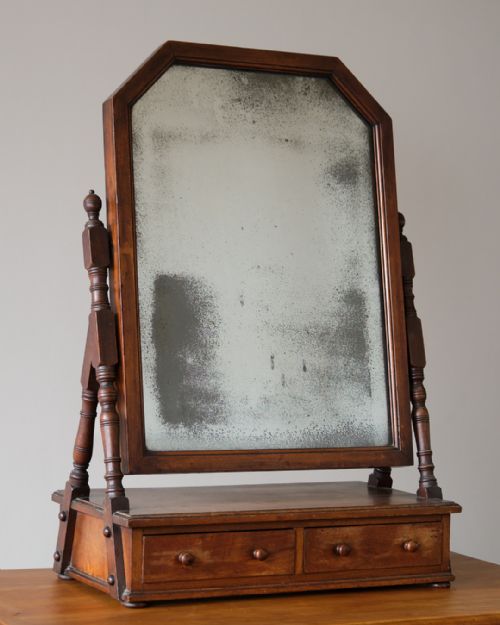
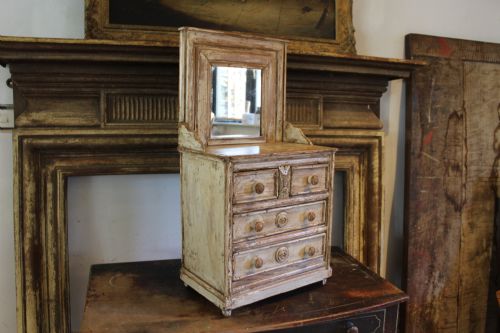

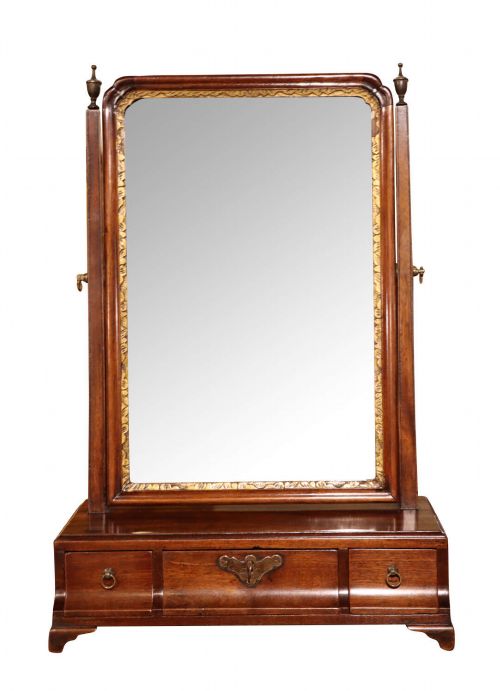


Victorian Table Mirror Drawers
These Victorian table mirror drawers combine a functional swing glass with integrated storage, offering a practical centrepiece for a period bedroom dressing surface.
Victorian Table Mirror Drawers
Victorian table mirror drawers combine a compact tilting glass with a small bank of compartmented storage built into the base, designed for tabletops and dressing chests. They emerge primarily across the nineteenth century in various forms, ranging from simple swing plates on box stands to substantial dressing mirrors with bureau fitments or multiple small drawers.
The pieces appearing on this page span the Victorian and Edwardian eras, alongside related nineteenth-century examples and occasional earlier interpretations. Common formats include mahogany and walnut toilet mirrors with serpentine or plain drawer bases, alongside larger dressing chests and compact miniature chests equipped with mirrors.
How they were made
Cabinetmakers utilised dense timbers such as mahogany, walnut, and satin birch, often selecting figured veneers for the drawer fronts and mirror supports. Glass plates were silvered and held within adjustable swing frames, secured by brass pivot screws or pins that allowed the angle of reflection to shift.
Joinery techniques relied on dovetailed drawer construction and turned wooden supports or brass mounts. Surfaces were finished with polished French polish, scumble glazes, or painted treatments, occasionally incorporating inlaid details or brass candle scones.
Victorian Table Mirror Drawers Retail Price Guide 2026
Typical asking prices for victorian table mirror drawers among the pieces listed under this phrase on Sellingantiques today, from the lower quarter to the upper quarter. They describe what is for sale here now, not the wider market.
Listings feature woods including mahogany, walnut, satin birch, maple, and pine, reflecting the diverse material palette of the nineteenth century.
What varies in quality
The standard of timber selection and veneer matching largely dictates the visual weight of the piece, with richly figured burr walnut or closely grained mahogany sitting at the upper end. Finer examples display meticulous dovetailing on the drawer boxes and substantial, well-cast brass hardware rather than stamped or plated replacements.
Structural integrity in the swing mechanism and the stability of the upright supports separate robust pieces from those prone to leaning or looseness. The clarity of the mirror glass and the depth of the hand-applied polish further distinguish workshop execution.
Heal And Sons·Wright And Hunter Of Belfast·Harris Lebus Of London·Jas Shoolbred·Maple And Co
The Victorian Table Mirror Drawers Glossary
- Swing mirror
- A glass plate suspended within a frame on pivots, allowing it to tilt forward or backward. This mechanism sits atop a box base or set of drawers.
- Burr walnut
- A prized timber harvested from the wart-like growths on walnut trees, yielding intricate, swirling grain patterns. It was frequently used for veneering drawer fronts.
- Dovetail
- A traditional wood joint formed by interlocking wedge-shaped fingers, securing drawer corners with high tensile strength. Its neatness often indicates workshop skill.
- Scumble glaze
- A decorative surface treatment applied over a painted base to imitate the rich grain of more expensive hardwoods. It appears on pine and alternative utilitarian timbers.
- Toilet mirror
- A traditional term for a smaller dressing mirror designed to sit on a table, chest, or washstand. These units typically incorporate one or more small drawers for trinkets.
Victorian Table Mirror Drawers: Frequently Asked Questions
How were these mirrors used?
They were placed on top of dressing tables, chests of drawers, or washstands to provide a reflective surface for grooming and styling hair. The integrated drawers held small personal items, jewellery, and daily cosmetics.
In period bedchambers, they served as key functional items before fitted wardrobes and built-in vanity units became common. Their portability allowed them to be shifted to catch the best morning light.
Where should I place one?
They sit comfortably on top of a sturdy chest of drawers, a large sideboard, or a dedicated dressing table. Ensure the supporting surface is deep enough to bear the footprint of the drawer base.
Because the glass tilts, positioning the piece near a natural light source helps maximise its practical use. Avoid damp areas to protect the antique wood polish and the silvering behind the glass plate.
How do I date a mirror?
Dating relies on timber choices, construction methods, and the style of the base supports. Earlier nineteenth-century examples often feature simple mahogany frames and delicate brass fittings, while later Victorian and Edwardian pieces might incorporate inlaid oak, satin birch, or elaborate carved details.
The backing boards, drawer dovetailing, and screw types offer further clues. Hand-cut dovetails and older secondary woods generally point towards the earlier decades of the Victorian era.
Can the mirror glass be replaced?
While original glass is preferred by collectors, cracked or heavily degraded plates can be replaced by a specialist glazier. Many surviving pieces retain their original mercury or early silvered glass, which often exhibits minor foxing.
Foxing and light speckling are accepted signs of age rather than faults. When a replacement is necessary, traditional thin glass helps maintain the correct balance within the adjustable frame.