


Victorian Swivel Games Table
A Victorian swivel games table combines dual-purpose engineering with high-status timber, offering a folding surface that rotates to reveal a hidden storage well.
Victorian Swivel Games Table
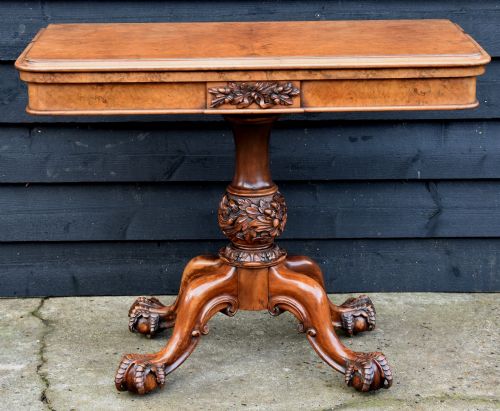
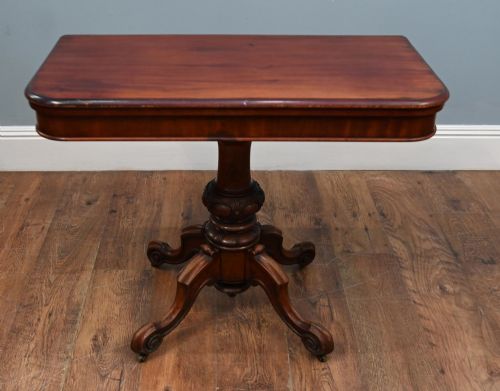
A Victorian swivel games table functions primarily as a side or console piece before opening into a larger surface for cards or gaming. These tables span several decades of the nineteenth century, utilising clever folding mechanisms operated by pivoting the top above a fixed frieze.
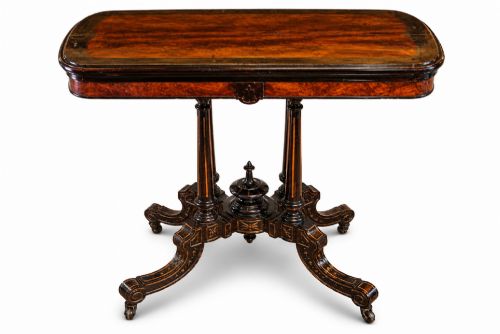
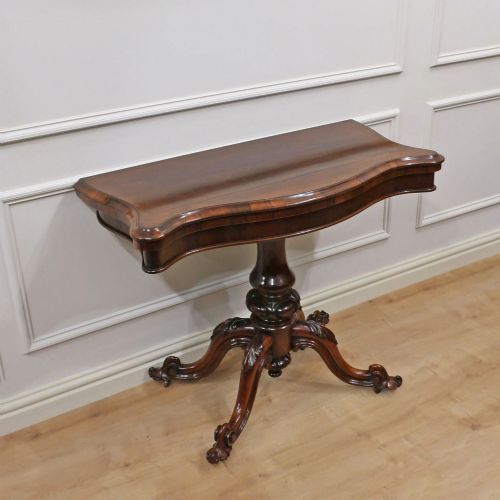
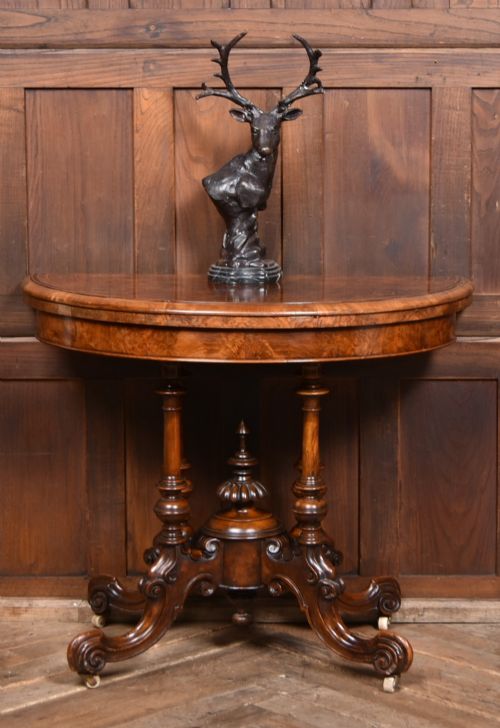
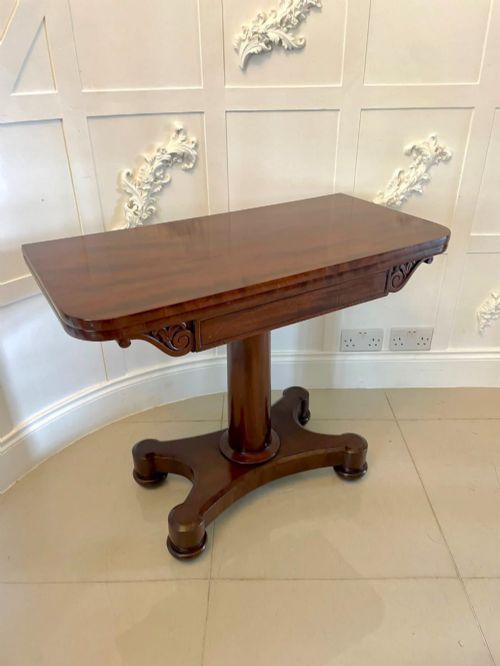
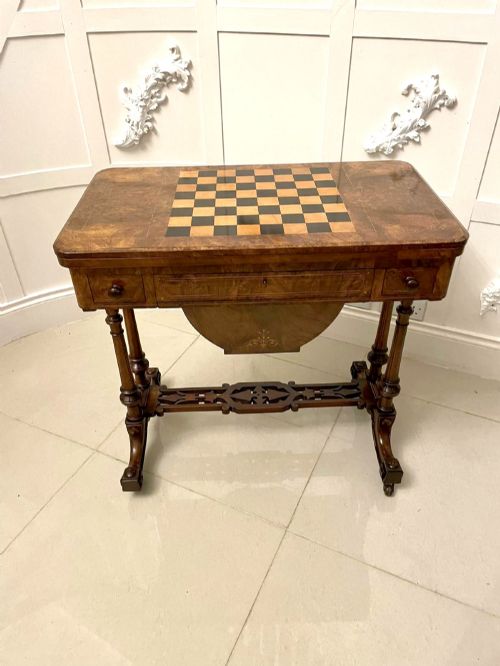
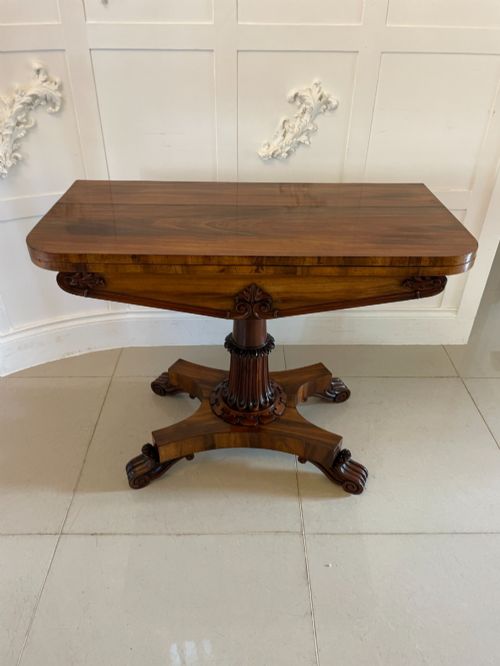
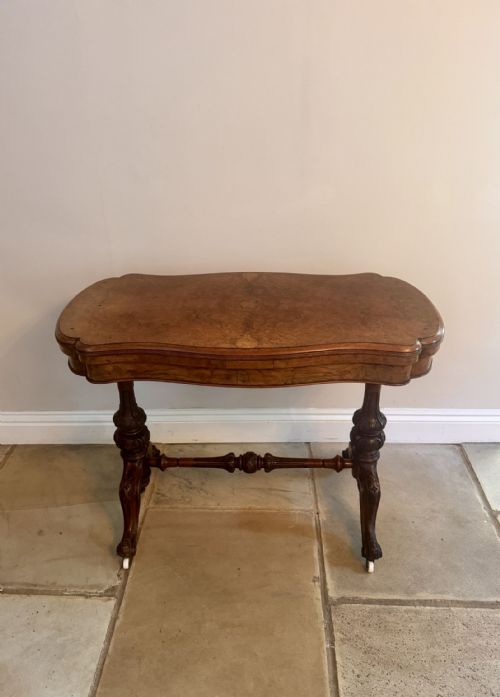
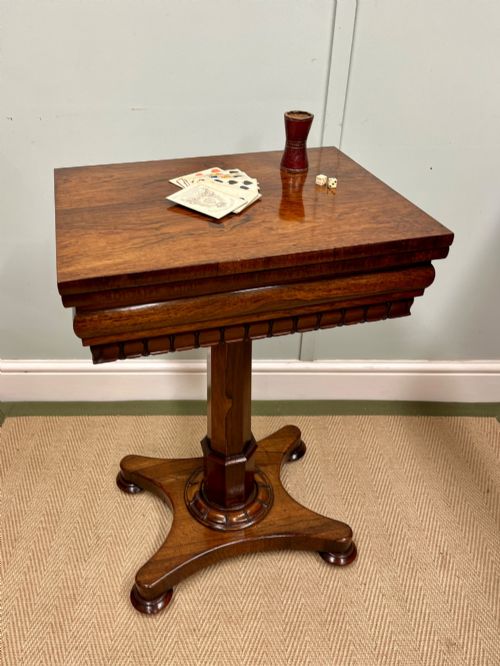
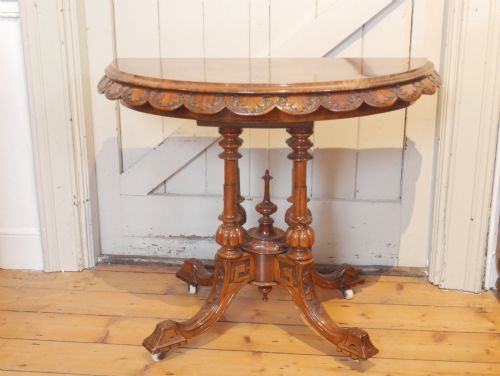
The versions most commonly met here feature burr walnut or rosewood veneers, often shaped in serpentine contours or straight demi-lune formats. Makers designed them to sit against a drawing room wall until needed for evening entertainment.
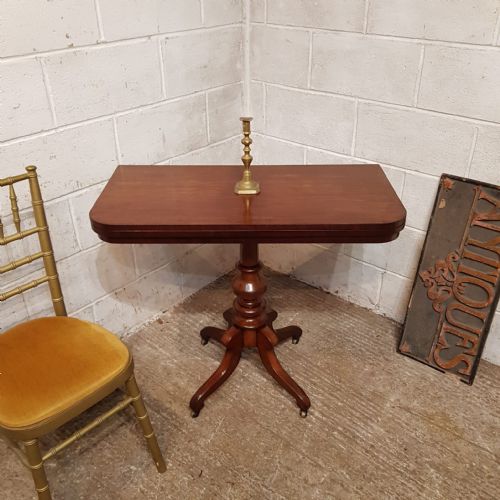
Card tables, tea tables, and combined tea and card formats share this mechanical ancestry, utilising the same pivoting action to stabilise the folded leaf. Buyers encounter variations ranging from plain mahogany to heavily carved rosewood and marquetry-inlaid walnut.
How they were made
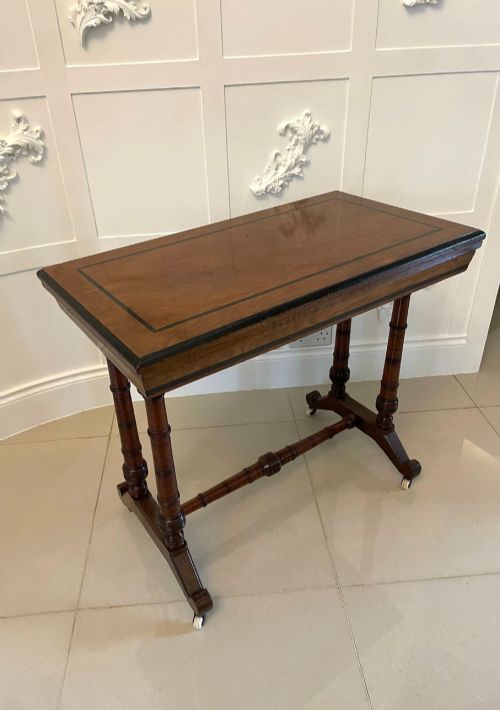
Cabinet makers constructed these pieces using solid timber frames faced with figured veneers like burr walnut, rosewood, and mahogany. Wood inlay and floral marquetry decorated the top surfaces of finer examples.
The swivel mechanism relies on a pivoting hinge block secured to the top of the frieze, allowing the upper section to rotate ninety degrees and support the unfolded leaf. Brass hinges and locking catches concealed within the framework ensured the double-layered top remained rigid during play.
Victorian Swivel Games Table Retail Price Guide 2026
Typical asking prices for victorian swivel games table among the pieces listed under this phrase on Sellingantiques today, from the lower quarter to the upper quarter. They describe what is for sale here now, not the wider market.
Card tables and tea tables share identical pivoting mechanisms, demonstrating how functional engineering crossed multiple table categories.
What varies in quality
The choice of veneer sets the baseline for visual appeal, with richly figured burr walnut and dense rosewood commanding higher regard than standard mahogany. Figured grain patterns matched symmetrically across the fold indicate greater care in selection by the cabinet maker.
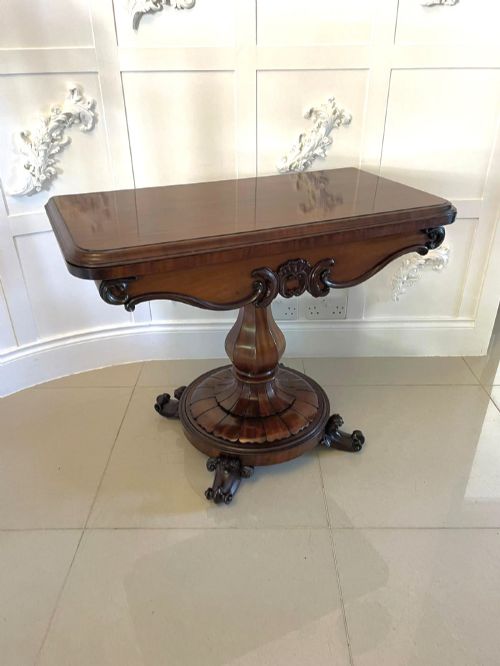
Carved details such as cabriole legs, acanthus leaf motifs, and turned pillar supports distinguish workshop output. Solid structural alignment in the swivel action separates refined pieces from simpler utility furniture.
Edwards and Roberts·Gregory and Co
The Victorian Swivel Games Table Glossary
- Burr walnut
- A prized timber veneer sourced from walnut tree growths, displaying swirling, highly decorative grain patterns. It forms the primary surface decoration on many mid-century examples.
- Demi-lune
- A half-moon shape characteristic of tables designed to sit flush against a wall. When opened, the top forms a full circle or square for card playing.
- Marquetry
- The art of applying pieces of veneer to a structure to form decorative patterns or pictures. Floral motifs in lighter woods frequently adorn walnut card table tops.
- Turn-over top
- A hinged table top that folds flat and swivels to double its surface area. This mechanism provides a stable playing surface while concealing compartments inside the frame.
Victorian Swivel Games Table: Frequently Asked Questions
How do you open a Victorian swivel games table?
The upper leaf lifts slightly and rotates on a central pivot pin fitted into the frieze below. Once turned ninety degrees, the folded leaf drops open to rest flat upon the frame.
Underneath the top, a concealed well provides storage for cards, counters, and small gaming accessories. The mechanism relies on gravity and close-fitting hinges rather than complex latches.
What were these tables used for?
Victorians utilised these versatile pieces as console or side tables during the day, placing them against drawing room walls with ornaments on top. In the evening, the tables moved outward to accommodate card games, board games, or afternoon tea.
The dual-purpose design suited smaller entertaining spaces where dedicated gaming furniture would otherwise occupy too much room.
How do you tell rosewood from walnut?
Rosewood presents a dark, heavy appearance with contrasting purple and black streaks running through a deep brown body. Walnut exhibits a warmer brown tone with intricate, undulating grain lines and lighter figuring.
Burr walnut further differs by showing dense, clustered knot patterns across the surface rather than linear wood grain.
Are all Victorian card tables shaped the same?
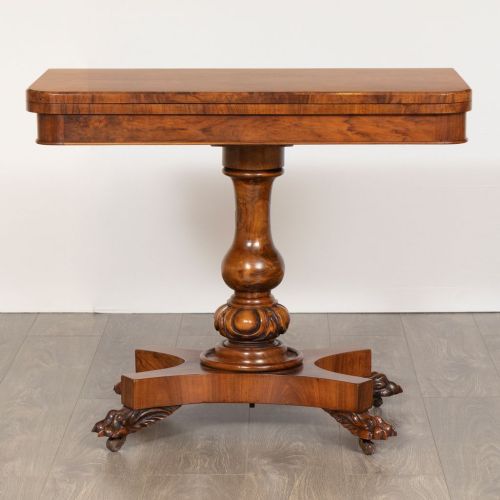
Table shapes vary considerably, ranging from rectangular and serpentine outlines to semi-circular demi-lune formats. Some sit on single carved pillars with quatrefoil bases, while others utilise four legs joined by stretchers.
Edge profiles and skirt designs also differ according to the prevailing taste of the decade in which the piece was constructed.