

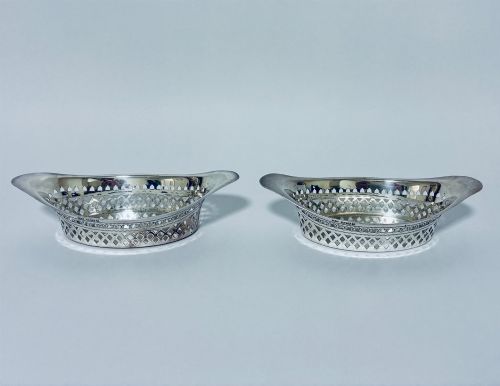


Victorian Sweet Basket
These Victorian sweet basket examples bring pierced silver and coloured glass to the table, offering a glimpse into nineteenth-century entertaining.
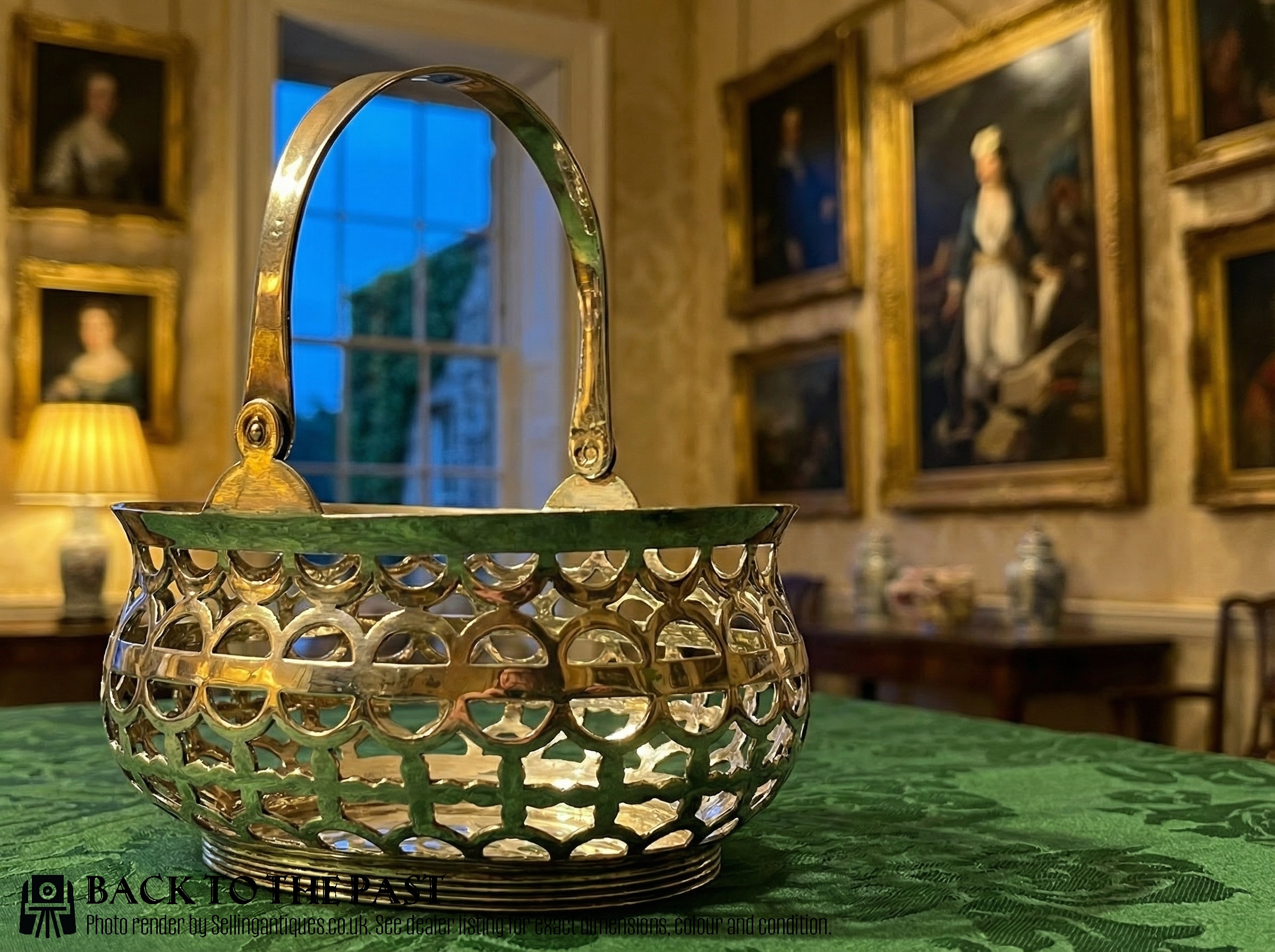
Victorian Sweet Basket
A Victorian sweet basket serves small confections, bonbons, and preserves during formal dining and drawing-room gatherings. The pieces on this page span the mid to late nineteenth century, predominantly taking the form of bonbon dishes, sweet bowls, and pedestals.
Makers produced these items in sterling silver, silver plate, and hand-blown glass such as cranberry and pink opaque varieties. Common styles range from standard Victorian manufacturing to the distinct lines of the Aesthetic Movement.
Materials and construction
Silversmiths utilised sterling silver and silver plate, often employing piercing techniques to create openwork lattice designs on baskets and bowls. Manufacturers also combined silver gilt with cranberry glass to form contrasting preserve and bonbon dishes.
Glassmakers shaped hand-blown and cut crystal vessels, pairing them with metal stands and handles. These combinations required precise fitting between the glass liner and the surrounding metal framework.
Victorian Sweet Basket Retail Price Guide 2026
Typical asking prices for victorian sweet basket among the pieces listed under this phrase on Sellingantiques today, from the lower quarter to the upper quarter. They describe what is for sale here now, not the wider market.
Listings feature sterling silver, silver plate, cranberry glass, and cane across the Victorian period.
Judgments of quality
Quality rests on the crispness of the piercing work and the weight of the metal utilised in the basket body. Heavier sterling silver pieces and those bearing clear hallmarks demonstrate superior domestic manufacture.
The integration of materials dictates distinction, particularly in how well hand-blown glass liners sit within silver gilt or plated frames. Attribution to documented designers or silversmiths elevates specific examples above standard production items.
Dr Christopher Dresser·Roberts and Belk·Charles Stuart Harris
The Victorian Sweet Basket Glossary
- Bonbon dish
- A small vessel designed specifically for holding sweets or small confectionery. These items often feature low sides and decorative piercing.
- Silver gilt
- Silver covered with a thin layer of gold, providing a rich yellow tone. This finish protected the underlying metal from tarnishing when in contact with acidic foods.
- Cranberry glass
- A rich red glass coloured by the addition of gold chloride during melting. It appears frequently in nineteenth-century tableware and preserve dishes.
- Sweetmeat
- An archaic term for a sweet, confection, or preserved fruit served at the end of a meal. Tableware designed for these items often bears this descriptor in historic records.
Victorian Sweet Basket: Frequently Asked Questions
What were sweet baskets used for?
These baskets held small confections, sugar plums, and preserved fruits served during dessert courses or drawing-room receptions. They allowed guests to help themselves to bite-sized treats during formal gatherings.
Over the decades, their domestic role shifted as dining customs evolved, turning them eventually into display objects or mantelpiece containers.
How do I clean silver baskets?
Cleaning requires warm water, a mild soap, and a soft cloth to remove dust without damaging the metal surface. Harsh abrasives will wear away silver plate and scratch the polished finish.
For pieces with glass liners, removing the glass prior to cleaning protects both materials from accidental damage.
Are all these items solid silver?
The inventory includes both sterling silver and silver plate items, alongside pieces made entirely from glass or cane. Hallmarks stamped into the metal help distinguish solid silver from plated alternatives.
Makers often used silver plate to offer decorative tableware at a lower cost than solid sterling.
How can I tell the date?
British silver typically carries hallmarks indicating the assay office, standard of metal, and a date letter corresponding to the year of manufacture. Stylistic markers such as Aesthetic Movement motifs also point towards the final decades of the nineteenth century.
Glass items without metal hallmarks rely on manufacturing techniques and colour formulas characteristic of the eighteen-sixties through the eighteen-nineties.