
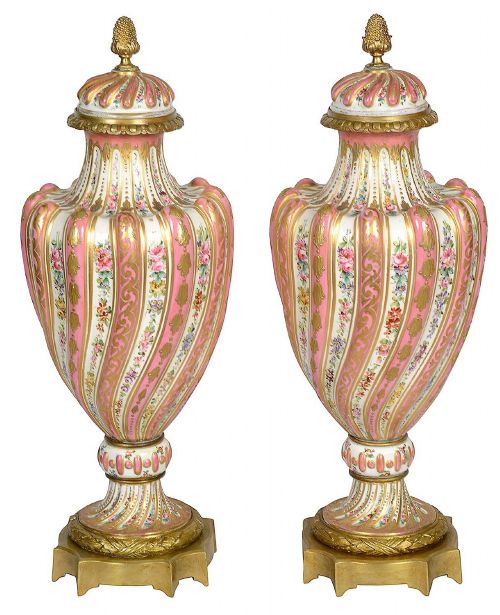


Victorian Style Ceramic Urn
These nineteenth-century pieces offer ornamental presence through classical forms and painted decoration.
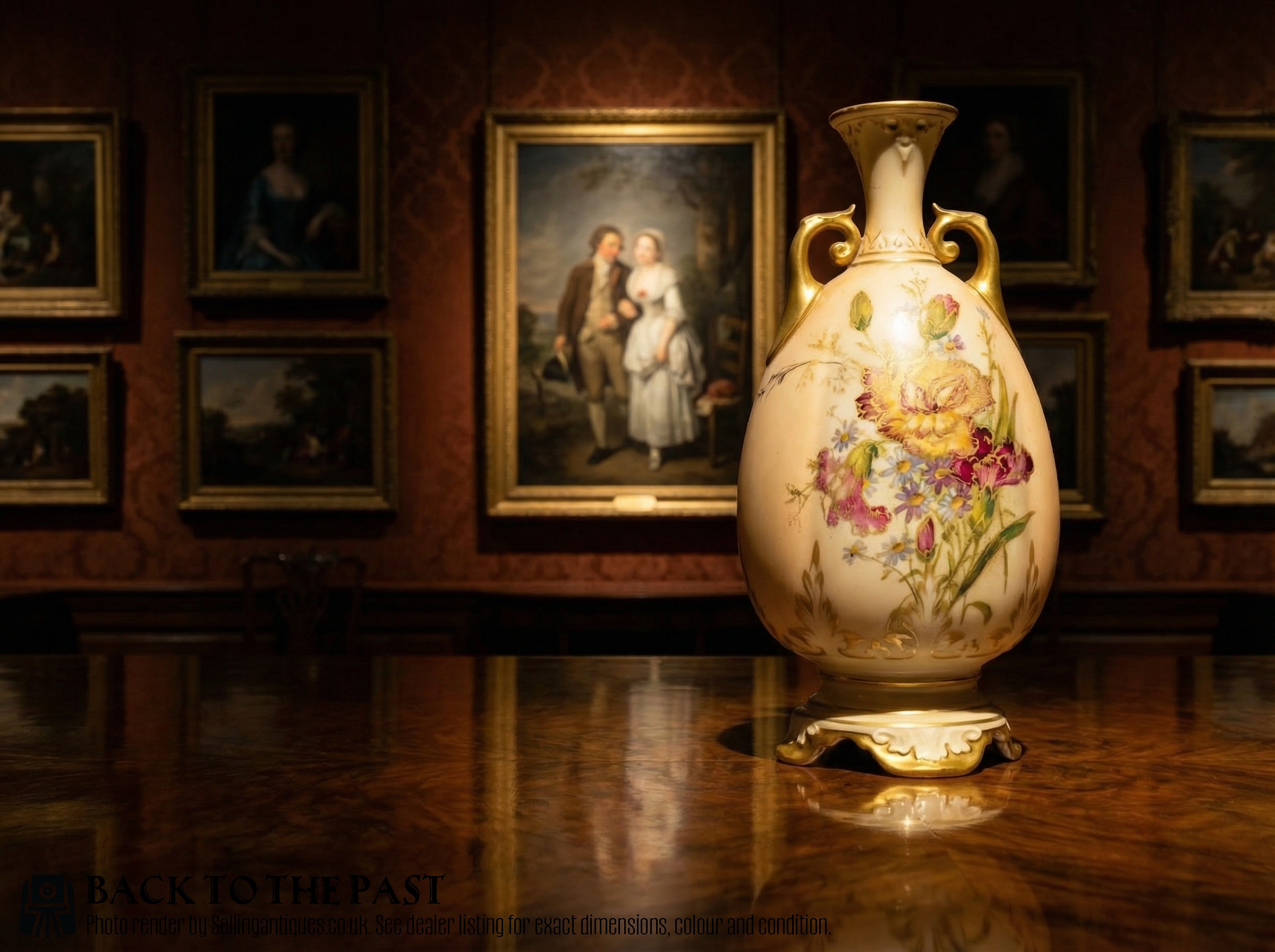
Victorian Style Ceramic Urn
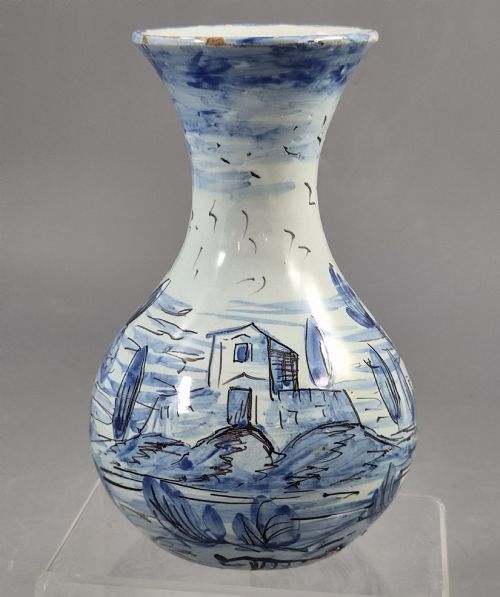
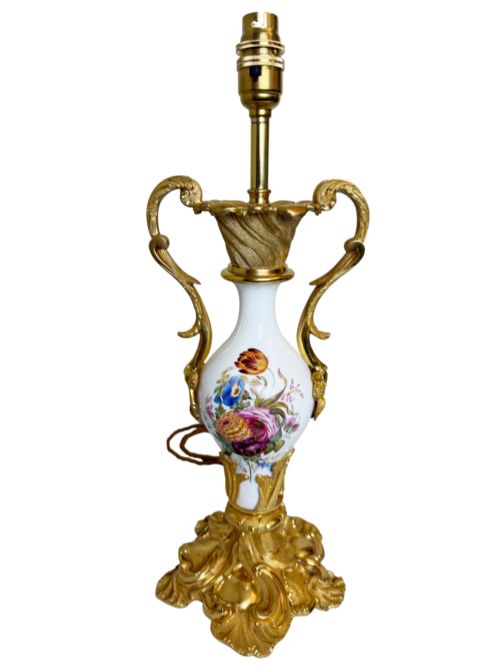
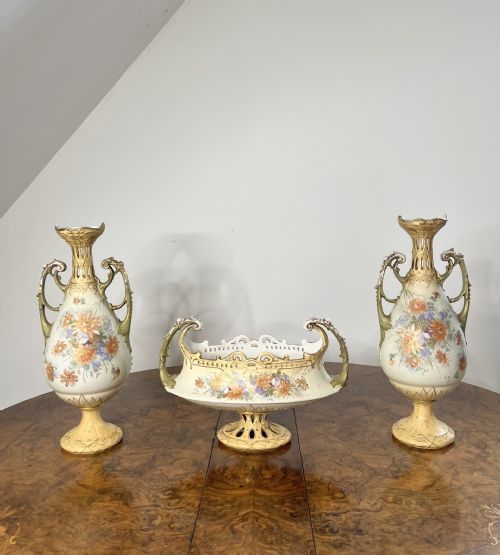
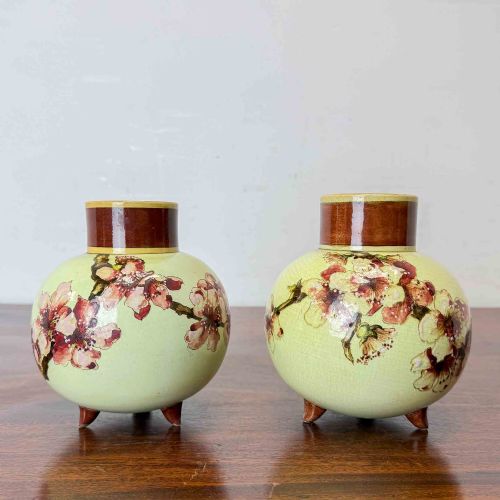
A victorian style ceramic urn typically takes the form of a lidded vessel, centrepiece, or decorative vase rooted in historical revival aesthetics. The inventory ranges from substantial continental porcelain jars to pairs of classical vases bearing hand-painted scenes and gilt bronze mounts.
Makers and factories of the nineteenth century frequently drew inspiration from earlier traditions, producing wares in French, Italian, and Orientalist idioms. Buyers encounter everything from majolica and faience to bisque porcelain and earthenware fashioned into ewers, garnitures, and table lamps.
How they were made
Potters and ceramists shaped these vessels using porcelain, earthenware, and stoneware, often finishing surfaces with intricate glazes and enamel painting. Artisans applied gold leaf, gilding, and gilt bronze mounts to enhance the decorative profile of the ceramic body.
Specialised techniques such as pate-sur-pate allowed makers to build up layers of slip in low relief against a contrasting ground. Hand-painting remained central to the production of portrait vases, floral designs, and pictorial scenes.
Several Victorian pieces tuck cheerful porcelain cherubs directly into the mouths of decorative vases.
What varies in quality
The refinement of the hand-painted detailing and the crispness of the porcelain or earthenware body dictate the distinction between standard production and exceptional work. Superior examples exhibit precise brushwork in portraiture or botanical motifs alongside carefully cast mounts.
The integration of decorative elements, from applied cherubs to balanced handles and matching covers, reveals the ambition of the maker. Complete pairs and intact garniture sets hold greater sculptural coherence than isolated vessels.
Cantagalli·Doulton Lambeth·Royal Vienna·Royal Worcester·Helena Wolfsohn·Jacob Petit·Wedgwood·Sitzendorf·Minton·Vion et Baury·Mason's
The Victorian Style Ceramic Urn Glossary
- Maiolica
- Tin-glazed earthenware produced in Italy and later adopted across Europe during revival periods. It provides an opaque white ground for colourful painted decoration.
- Pate-sur-pate
- A ceramic technique where wet white slip is painted layer upon layer onto a coloured clay body to create a cameo-like relief effect. This method demands immense skill from the decorator.
- Garniture
- A set of matched ornamental vases or jars designed to be displayed together on a mantelpiece or sideboard. They typically comprise a central larger vessel flanked by matching pairs.
- Bisque
- Unglazed porcelain fired once to produce a matte, porous surface resembling white marble. It was frequently utilised for sculptural figures and classical vases.
- Ewer
- A large jug with a wide spout and curved handle, often rendered in ceramic or porcelain for decorative display rather than utility.
Victorian Style Ceramic Urn: Frequently Asked Questions
How do I date a nineteenth century urn?
Dating relies on factory marks, glaze characteristics, and stylistic hints pointing to periods like the aesthetic movement or rococo revival. Comparing the painted motifs and ceramic bodies against known nineteenth-century production helps narrow the decade.
Many pieces carry specific factory ciphers or impressed registry marks on the base. Examining these secondary indicators alongside the style of gilding clarifies the manufacturing era.
Are these urns suitable for holding water?
Most decorative nineteenth-century vessels function primarily as ornamental objects rather than functional water holders. Their interior glazes and historic construction are intended for dry display on tables or mantels.
Utilising them for fresh flowers risks damaging interior surfaces or historic earthenware bodies. Protective liners are recommended if floral arrangements are necessary.
What is the difference between porcelain and earthenware?
Porcelain is fired at much higher temperatures, resulting in a vitrified, non-porous body that often exhibits translucency when held to light. Earthenware remains more porous and opaque, requiring a glaze to seal the ceramic structure.
Nineteenth-century makers utilised both materials depending on the desired aesthetic, with porcelain favoured for fine portrait work and earthenware for majolica.