



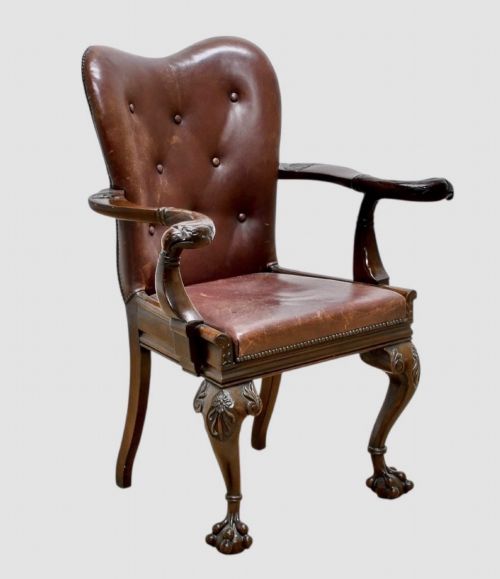
Victorian Study Chair
A victorian study chair is a heavy, timber-framed seat designed for focused reading and office work, combining period craftsmanship with practical comfort.
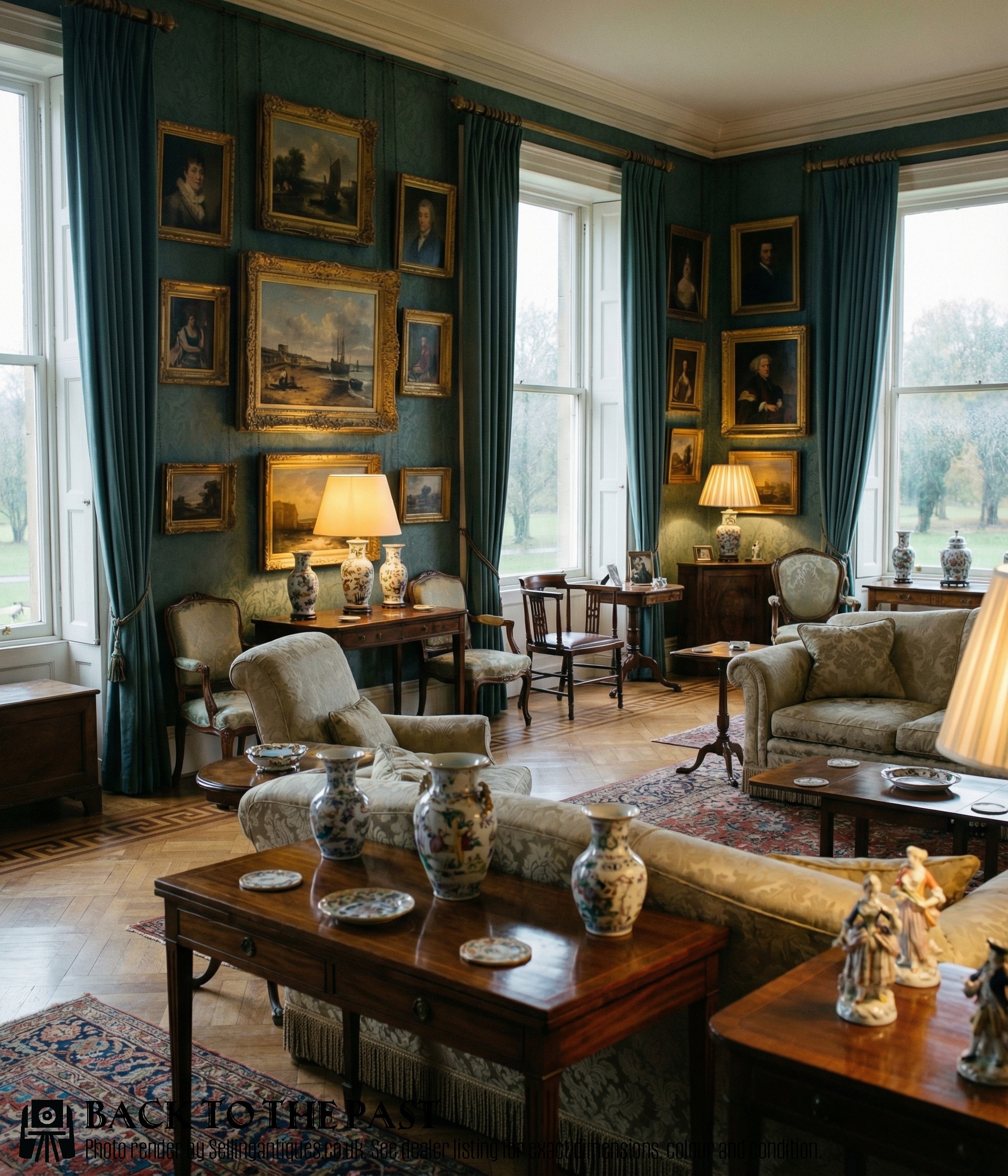
Victorian Study Chair
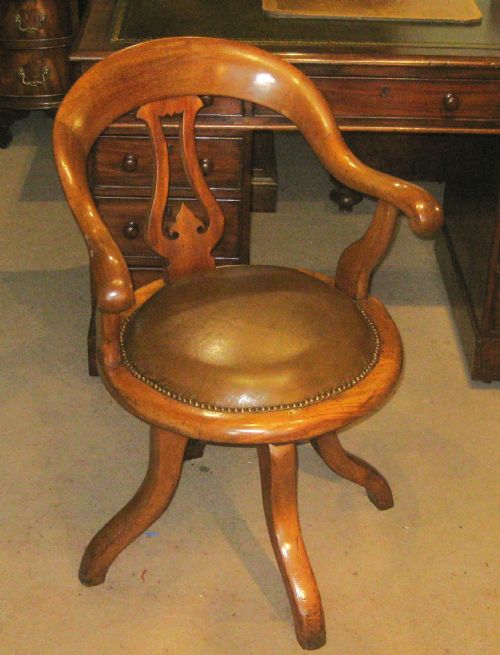
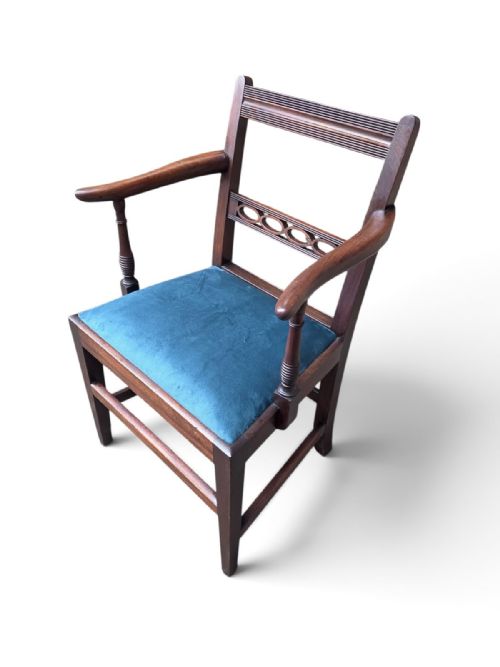
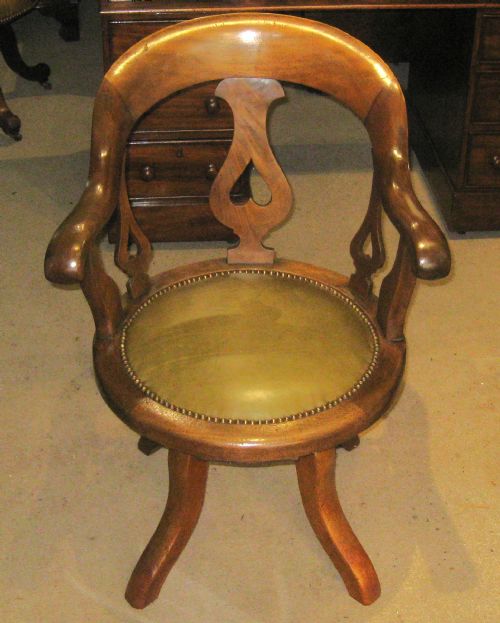
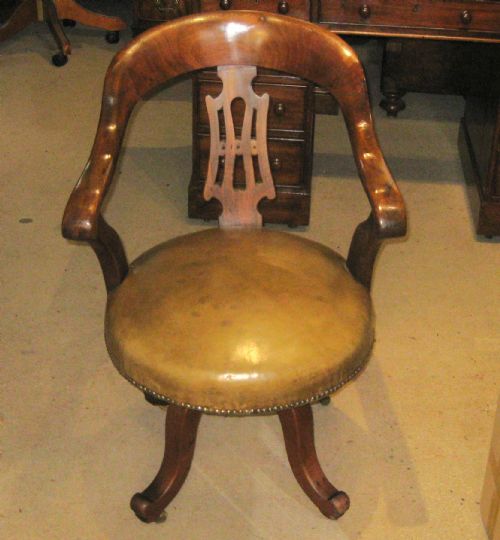
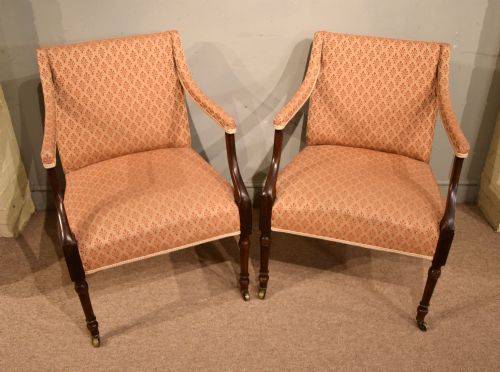
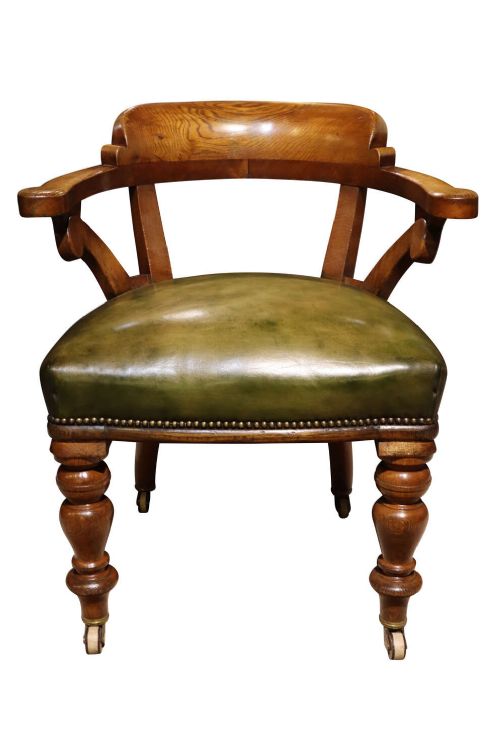
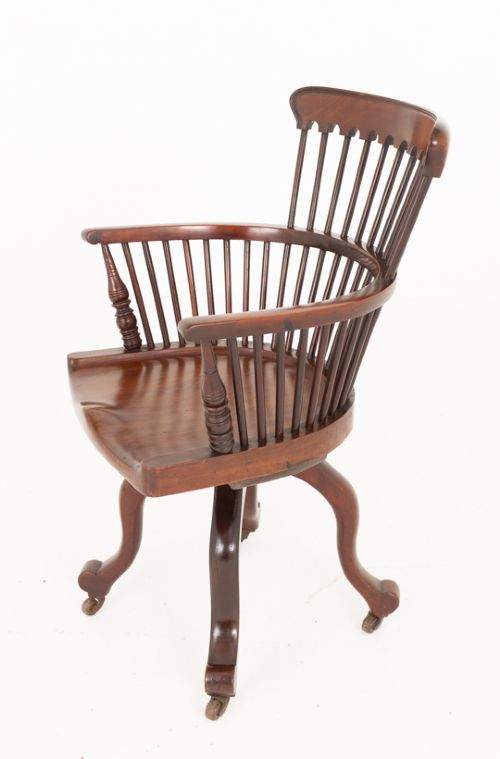
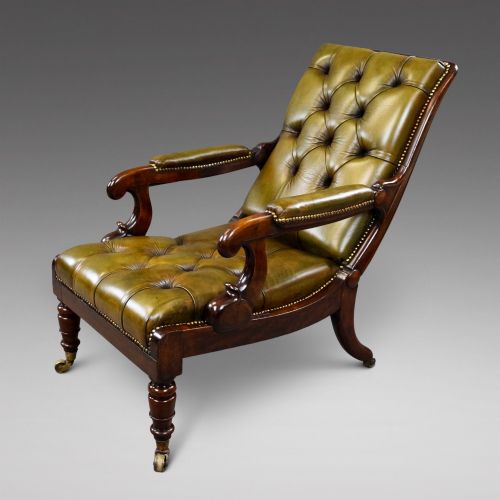
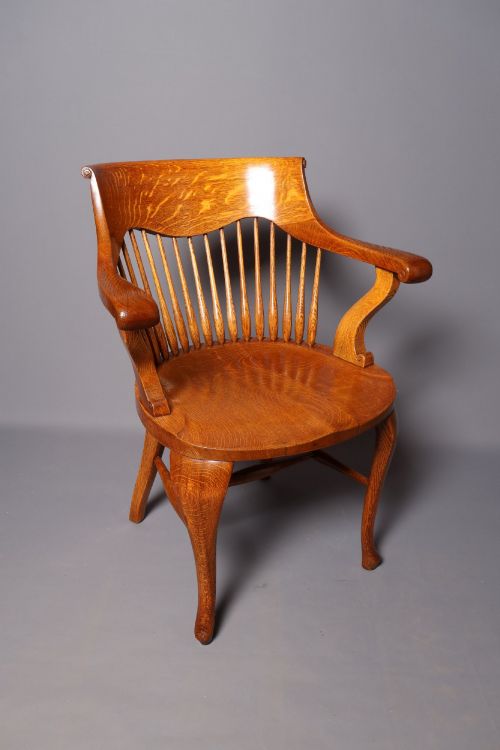
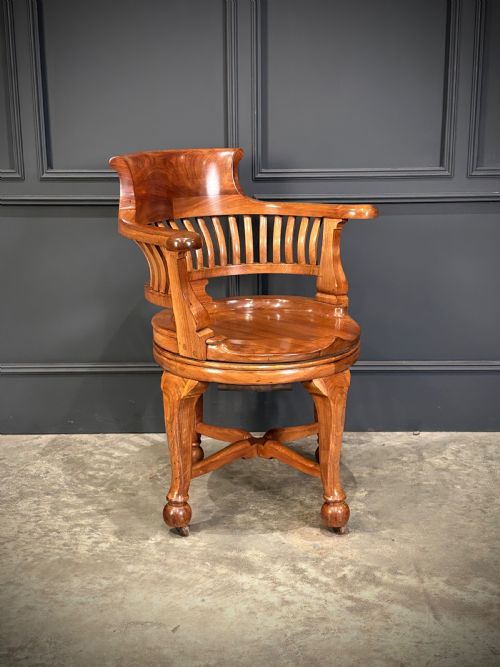
A victorian study chair is primarily encountered on this page as a revolving desk chair, library armchair, or office chair dating from the nineteenth century. These forms are engineered for sitting at a desk or table, frequently featuring arms and supportive upholstered backs.
The materials recorded in the evidence show a strong reliance on dense hardwoods like mahogany, oak, and walnut, paired with leather, fabric, or cane seating. Many examples incorporate swivel mechanisms, brass castors, and robust timber frames built to withstand daily use in a study or library.
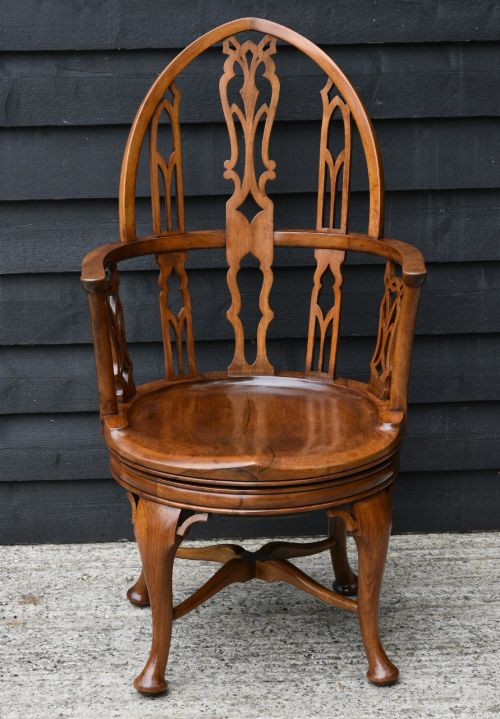
Origins span the broader Victorian era alongside related nineteenth-century periods such as William IV and Edwardian revivals, with styles ranging from plain utilitarian office seats to ornate Gothic Revival designs.
How they were made
Makers constructed these chairs using solid hardwoods including mahogany, walnut, and oak for the primary frames, often finished to highlight natural grain patterns such as golden mahogany or burr elm. Structural joints were typically pegged or dowelled to provide stability under shifting weight.
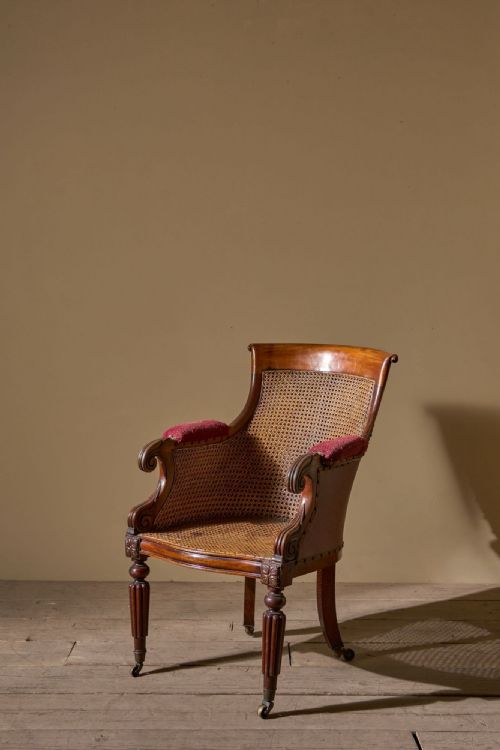
Upholstery methods involved button leather, fabric, or cane work set into timber frames, sometimes supplemented by brass studding and heavy iron or brass swivelling mechanisms. Carved detailing on armrests and legs was executed by hand on finer library armchairs and Gothic Revival models.
Victorian Study Chair Retail Price Guide 2026
Typical asking prices for victorian study chair among the pieces listed under this phrase on Sellingantiques today, from the lower quarter to the upper quarter. They describe what is for sale here now, not the wider market.
Listings show these chairs constructed predominantly in mahogany, oak, and walnut, paired with leather, fabric, and cane.
What varies in quality
The calibre of a victorian study chair depends heavily on the selection of timber and the ambition of its carving, with dense golden mahogany or figured walnut marking the upper tier. Heavier framing and sophisticated mechanical elements like smooth-turning brass swivel assemblies elevate an ordinary office seat into a finer library chair.
Design complexity also dictates distinction, separating simple cane-seated country house chairs from intricately carved Gothic Revival or button-leather reclining armchairs. The integration of robust secondary materials, such as heavy brass castors and supple leather upholstery, distinguishes the more substantial pieces.
Gillows·Bruce James Talbert
The Victorian Study Chair Glossary
- Gothic Revival
- A nineteenth-century design style drawing on medieval architectural motifs like pointed arches and heavy tracery. It appears frequently in walnut and oak study chairs.
- Bergere
- An enclosed upholstered armchair with wooden framing and woven cane panels on the back or sides. This form offers a lighter appearance while retaining structural support.
- Gainsborough armchair
- A wide, low-seated desk or reading chair with an upholstered back and open padded arms on short legs. The style originates earlier but heavily influences nineteenth-century library seating.
- Revolving desk chair
- An office or study seat fitted with a central spindle and undercarriage allowing the top to turn. These frequently incorporate timber cross-bases and metal swivel mechanisms.
Victorian Study Chair: Frequently Asked Questions
What is a victorian study chair?
A victorian study chair is a nineteenth-century seat built for a library, office, or desk environment. These pieces are characterised by sturdy timber frames and functional forms designed for prolonged sitting.
They appear in various formats, from swivelling mahogany desk chairs to leather-upholstered library armchairs and simpler cane-seated models.
How were they used?
These chairs were placed in studies, home offices, and libraries to accommodate reading, writing, and administrative tasks. Swivel and revolving versions allowed users to turn easily between desks and surrounding bookcases.
Heavier armchairs served as comfortable reading seats by a fire or beside large library tables.
How do I live with one?
A victorian study chair integrates easily into modern workspaces and traditional interiors alike. Their robust timber construction and leather or fabric upholstery handle everyday desk work while adding period character to a room.
Pairing a swivelling mahogany or walnut desk chair with a modern writing table creates a functional workspace using antique furniture.
How do I tell periods apart?
Dating these chairs relies on observing stylistic markers and materials recorded across the nineteenth century. William IV and early Victorian pieces often feature heavy rosewood or mahogany with deep carving, while later Victorian and Edwardian examples introduce varied timbers like burr elm and distinct revival styles.
Swivel mechanisms and castors also evolve in weight and complexity from the mid-nineteenth century onward.