
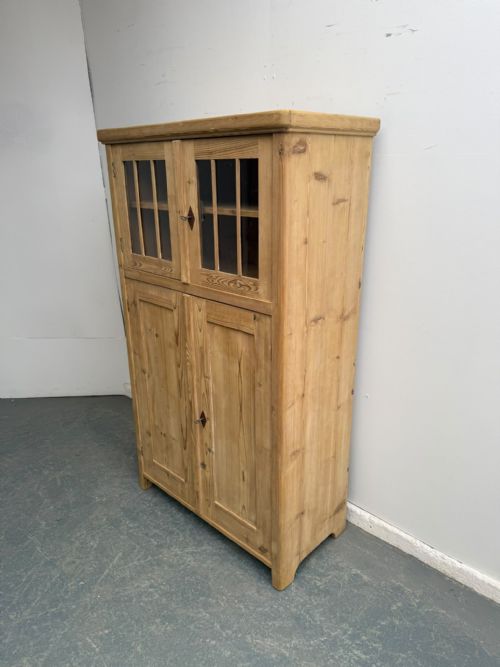
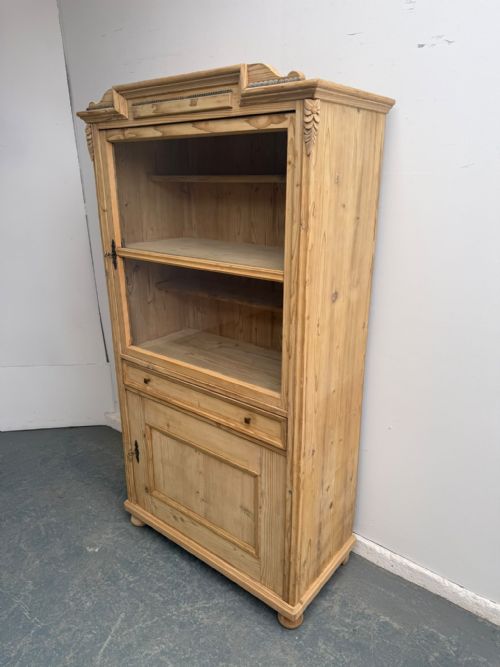
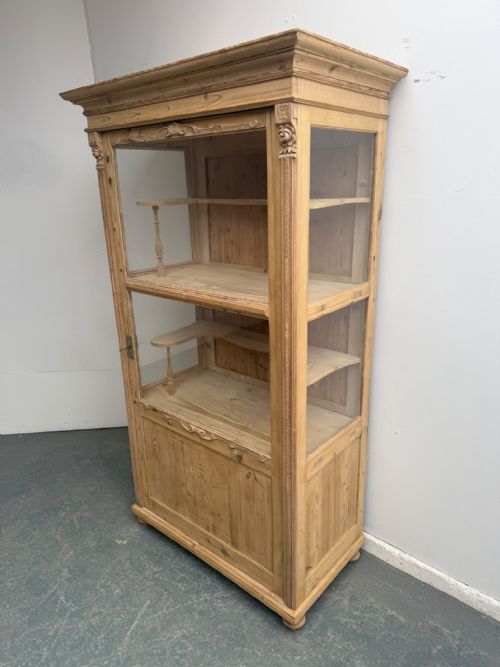
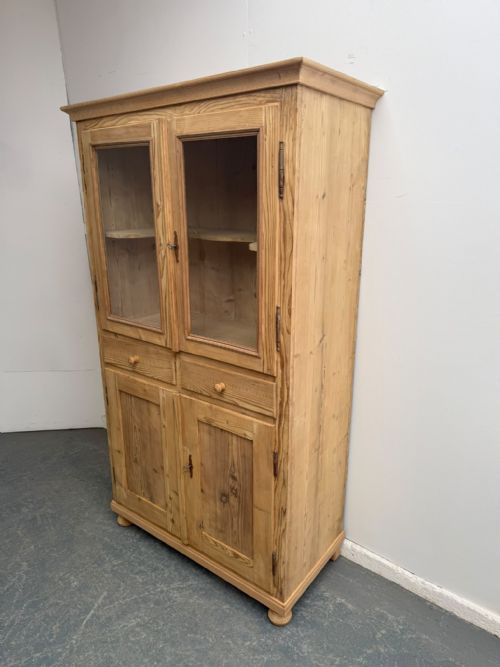
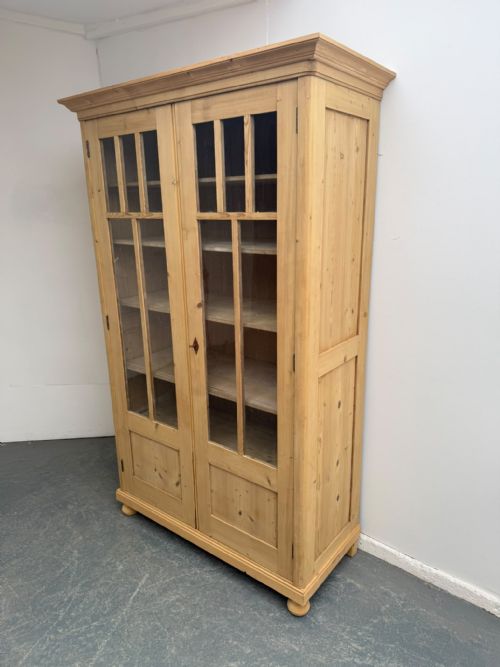
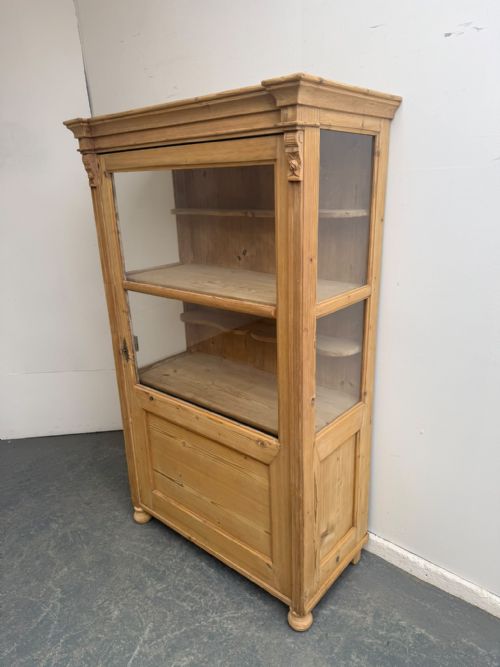

Victorian Stripped Pine Bookcase
These Victorian stripped pine bookcase pieces bring practical utility and warm domestic character into a room.
Victorian Stripped Pine Bookcase
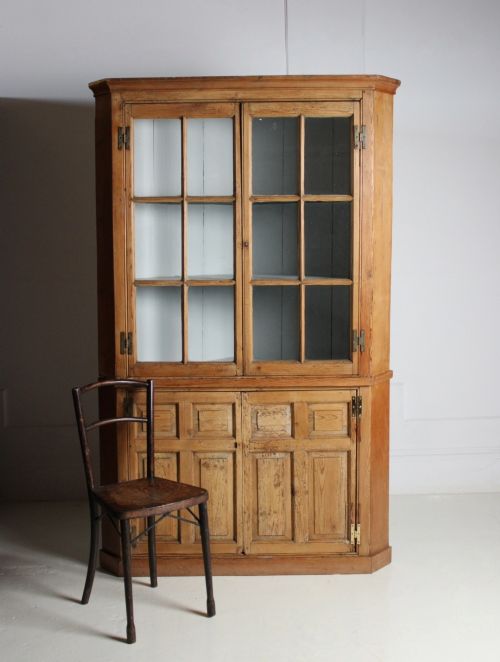
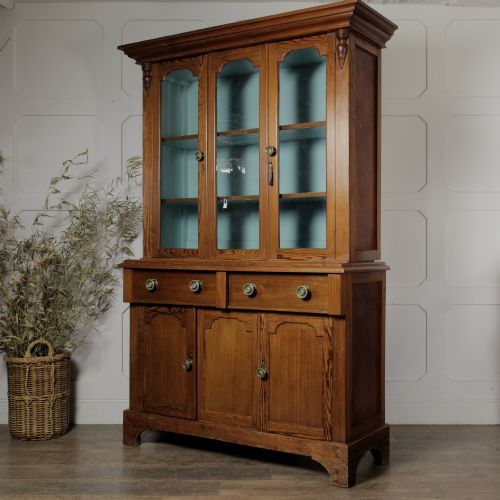
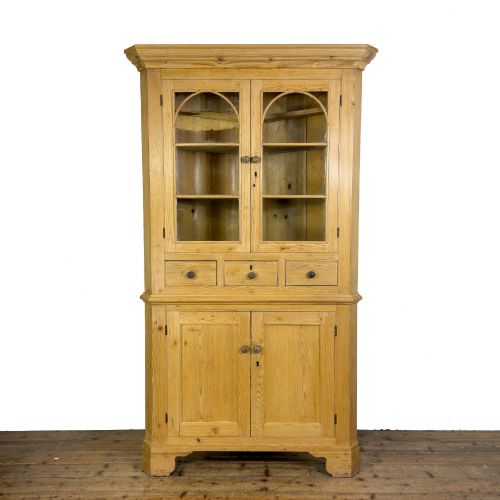
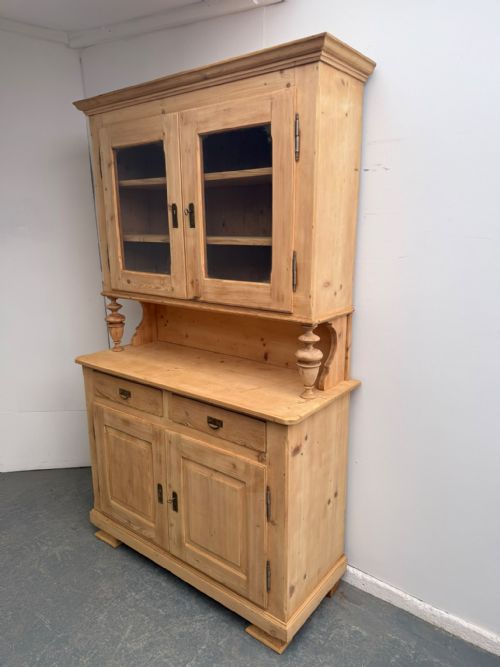
A victorian stripped pine bookcase takes the form of functional storage furniture built during the nineteenth century, often stripped down to reveal the natural grain of the timber. The selection includes glazed display cabinets, kitchen dressers, and corner cupboards alongside open bookcases.
Most examples originate from the Victorian period, frequently associated with rustic farmhouse or country styles. Buyers meet pieces ranging from early Victorian two-door display cabinets to tall open bookcases and large four-door storage units.
How they were made
Constructed primarily from pine and pitch pine, these pieces utilise timber assembled with brass and iron hardware. Glass panels feature in the doors of glazed cabinets and cupboards.
Many items are prepared to wax or paint, reflecting domestic utility where timber surfaces were finished for daily use in country houses and farmhouses.
Some nineteenth-century dressers spent decades holding heavy stoneware crocks before finding a second life as polite living room bookcases.
What varies in quality
Quality rests on the scale of the construction and the choice of timber, distinguishing substantial four-door display cabinets and pitch pine builds from simpler corner cupboards. The handling of the stripped surface and the retention of original glass or hardware shape the character of each piece.
Proportion and form dictate the distinction between regional items, such as West Country dressers, and standard utility cabinets, where simpler domestic pieces contrast with larger architectural storage units.
The Victorian Stripped Pine Bookcase Glossary
- Pitch pine
- A dense resinous pine variety offering a distinct grain pattern and harder surface than standard softwoods. It appears frequently in later nineteenth-century furniture.
- Glazed cupboard
- A storage piece featuring glass panels set into the doors to display contents while protecting them from dust. These range from corner units to large multi-door storage cabinets.
- Kitchen dresser
- A dual-purpose domestic form combining lower storage cupboards or drawers with upper display shelving or a glazed cabinet. They served as central furniture in nineteenth-century kitchens.
- Corner cabinet
- A space-saving storage unit built with an angled footprint to fit neatly into room corners. Both open and glazed variants appear across country and farmhouse styles.
Victorian Stripped Pine Bookcase: Frequently Asked Questions
What rooms suit a victorian stripped pine bookcase?
These pieces fit naturally into living rooms, studies, and kitchens where functional storage and warm timber tones complement traditional or rustic interiors. Their upright proportions make efficient use of wall space.
Larger glazed cabinets provide enclosed display space for books and collections, while open shelves offer immediate access for everyday volumes.
How do I care for stripped pine furniture?
Maintenance involves regular dusting with a soft cloth and occasional application of appropriate wax to nourish the bare timber. Avoiding direct sunlight preserves the tone of the wood.
Keeping the environment stable prevents the timber from drying out or splitting across the panels and joints.
What is the difference between pine and pitch pine?
Pitch pine contains higher resin content, giving the wood greater weight, durability, and a more pronounced linear grain. Standard pine tends to be lighter in tone and softer.
Both materials were common in nineteenth-century construction, though pitch pine frequently appears in more robust utility pieces.
Were these bookcases painted originally?
Many nineteenth-century utility pieces received layers of paint for protection or domestic decoration before later stripping exposed the raw timber underneath. This accounts for the common description of pieces prepared to wax or paint.
Exposed pine surfaces reflect modern decorative preferences rather than the original factory finish of every working cabinet.