



Victorian Sterling Silver Tankard
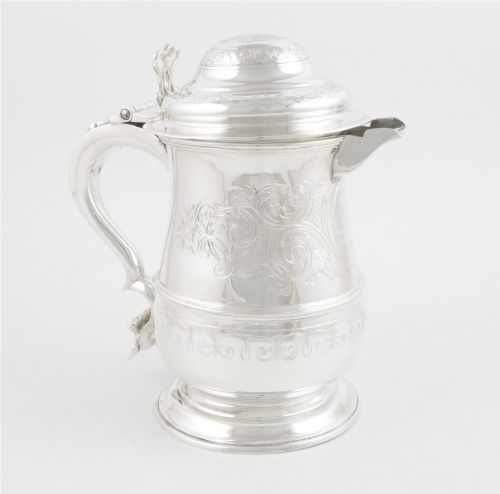
A victorian sterling silver tankard carries the weight of nineteenth-century ceremony, offering a substantial drinking vessel shaped by decades of dining and presentation.
Victorian Sterling Silver Tankard
When you search for a victorian sterling silver tankard, you encounter pieces spanning from the mid-nineteenth century through to the end of the Victorian period, alongside related christening mugs and pint tankards. These vessels originate primarily from English assay offices, with London, Sheffield, Exeter, and Newcastle appearing across the records alongside provincial and Scottish examples.
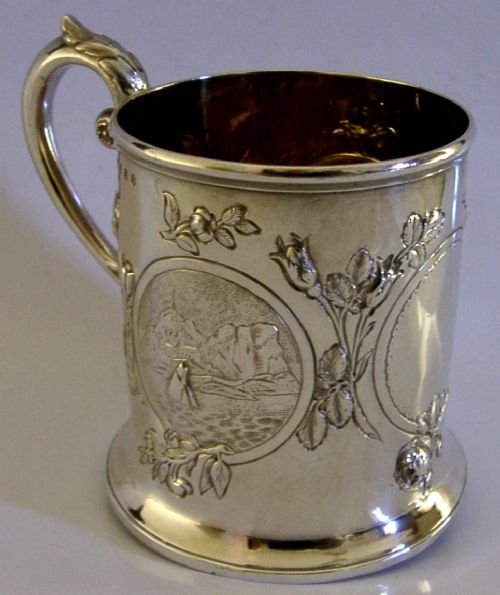
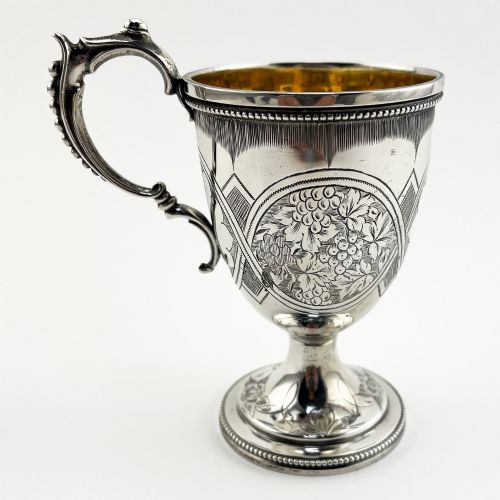
The domestic christening mug forms a substantial portion of these listings, often featuring baluster shapes, floral engraving, or scroll handles. Larger pint tankards appear regularly, sometimes bearing inscriptions from rowing regattas, golf clubs, and maritime presentations that connect the silver directly to nineteenth-century sporting and social life.
Materials and Techniques
Makers shaped these vessels from solid sterling silver, occasionally applying silver gilt or gold gilt to the interior surfaces to protect the metal from acidic drinks. Construction methods relied upon traditional silversmithing techniques, combining hammered or spun body forms with cast handles soldered securely to the sides.
Decoration required skilled hand work, utilising floral engraving, embossing, and chasing to create relief patterns on the exterior walls. Glass bases also appear in the archive, inserting a thick round of glass into the bottom of the silver body to alter the weight and appearance of the drinking vessel.
Victorian Sterling Silver Tankard Retail Price Guide 2026
Typical asking prices for victorian sterling silver tankard among the pieces listed under this phrase on Sellingantiques today, from the lower quarter to the upper quarter. They describe what is for sale here now, not the wider market.
Listings feature periods from the mid-nineteenth century through to Edwardian times, alongside occasional later items.
The Measure of Quality
Distinction across these pieces rests upon the crispness of the hand engraving and the structural integrity of the cast handle in relation to the main body. Superior examples display deep, sharp chasing that retains its definition without thinning the silver wall.
Provenance and original context elevate certain pieces, particularly where contemporary inscriptions link the silver to named regattas, clubs, or historical ships. The presence of clear, well-struck hallmarks matching the date on the body confirms the integrity of the piece.
Mappin & Webb·Stephen Smith·Walker & Hall
The Victorian Sterling Silver Tankard Glossary
- Sterling Silver
- A standard alloy composed of ninety-two point five percent silver and seven point five percent other metals, chosen for durability in tableware. This standard is marked by the lion passant on British silver.
- Silver Gilt
- Silver that has been coated with a thin layer of gold on the surface, commonly applied to the interior of drinking vessels. This finish prevents oxidation from beverages.
- Baluster Form
- A vertical architectural shape characterised by a swelling lower portion tapering toward a narrower neck. This silhouette appears frequently on nineteenth-century drinking vessels.
- Chasing
- A metalworking technique where the smith pushes the metal from the front using hammer and punches to create raised surface designs. This differs from engraving, which removes metal.
- Hallmark
- A series of official stamps applied to precious metals indicating the maker, assay office, and year of testing. These marks provide the primary evidence for dating antique silver.
Victorian Sterling Silver Tankard: Frequently Asked Questions
What is a christening mug?
A christening mug is a small silver vessel presented as a traditional gift to mark an infant's baptism or naming ceremony during the nineteenth century. These pieces were often kept as lifetime mementos rather than used for daily dining.
Many examples feature decorative handles and personalized engraving recording the child's birth or baptism date. They represent a distinct subcategory within larger drinking vessels of the period.
Were these tankards used for drinking?
Pint tankards and larger vessels served as functional drinking containers for beer, ale, and cider in domestic and club settings. Their solid silver construction made them suitable for everyday hospitality.
Over time, many larger tankards transitioned into presentation pieces awarded for sporting achievements or military service. Engraved inscriptions often record these specific historical uses.
How do I read a silver hallmark?
British hallmarks consist of a sequence of small stamped symbols identifying the standard of the metal, the town where it was tested, and the year of manufacture. A leopard head or crown often designates the assay office, while a specific letter code indicates the exact year.
Consulting standard date tables allows you to match the stamped letter to the correct Victorian decade. Maker's marks alongside these symbols reveal the workshop responsible for the piece.
What does a glass base mean?
A glass base involves a thick disk of clear glass fitted into the bottom of a silver tankard rather than a solid silver floor. This construction style appeared during the nineteenth century for specific drinking vessels.
The inclusion of glass allows the drinker to see the contents and adds distinctive weight to the base of the mug. These pieces combine traditional silversmithing with glass-working techniques.