


Victorian Sterling Hollowware
Victorian sterling hollowware brings functional elegance to the table, comprising solid silver vessels designed for serving, pouring and dining.
Victorian Sterling Hollowware
Buyers exploring this selection encounter items spanning the nineteenth century, with Victorian pieces appearing alongside occasional Georgian revival, Edwardian, and later iterations.
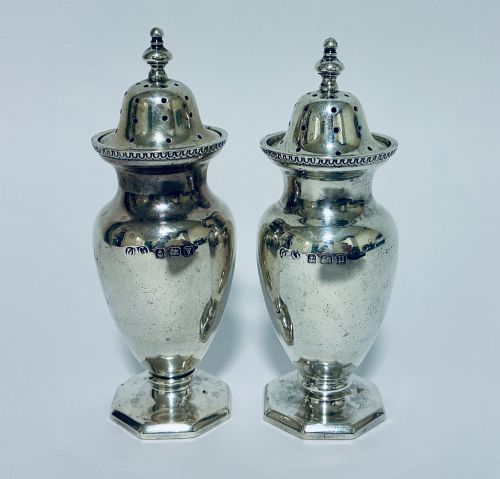
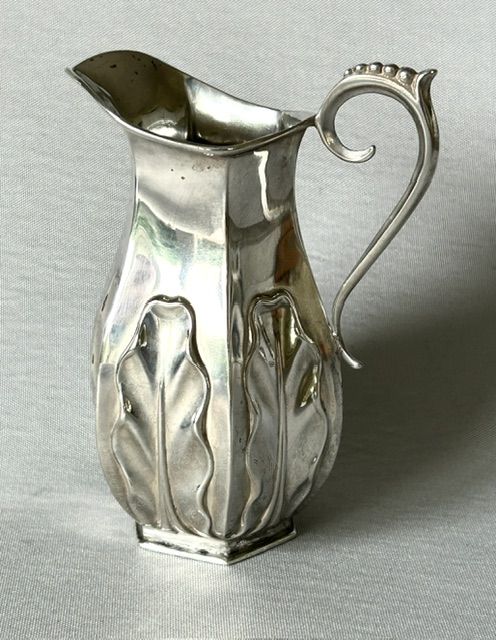
The most frequently encountered forms on this page include cream jugs, mustard pots, christening mugs, and sauce boats, often displaying the intricate ornamentation characteristic of the period.
Materials and construction
Items in this category are fashioned primarily from sterling silver, frequently paired with glass, cobalt blue glass, wood, leather, velvet, or gilt silver liners and accents.
Silversmiths utilised traditional techniques such as piercing, casting, and hand-raising, incorporating naturalist motifs, acanthus scrollwork, and classical revival styling into the heavy metal body.
Listings feature items from multiple periods, spanning the Victorian era, 1800, 1850, 1890, and later than 1960.
Judging quality and craftsmanship
The standard of Victorian sterling hollowware is determined by the crispness of the hand-chased detail, the weight of the solid silver, and the structural integrity of handles and feet.
Superior examples demonstrate meticulous chasing on naturalistic designs like acorn motifs, alongside clear, legible hallmarks that verify the maker and assay office.
Tiffany and Co·Martin Hall·John Hunt and Robert Roskell·Charles Stuart Harris·Atkin Brothers·Edward and John Barnard·William Hutton and Sons·George Fox·Robert Hennell
The Victorian Sterling Hollowware Glossary
- Hollowware
- Table vessels that are hollow or semi-hollow in construction, such as jugs, pots, bowls, and baskets, rather than flatware like spoons and forks.
- Sterling silver
- An alloy consisting of ninety-two point five percent silver by mass, with the remainder composed of copper or other metals to ensure durability.
- Pierced work
- A decorative technique where sections of the silver are cut away to create openwork patterns, common in baskets, mustard pots, and dishes.
- Naturalist style
- A Victorian design movement drawing direct inspiration from flora and fauna, featuring organic forms like leaves, vines, and acorns.
- Hallmark
- A series of official marks stamped onto silver items indicating the maker, assay office, standard of purity, and date of manufacture.
Victorian Sterling Hollowware: Frequently Asked Questions
What is Victorian sterling hollowware?
Victorian sterling hollowware refers to three-dimensional silver table items produced during the reign of Queen Victoria, designed for serving liquids, condiments, and food.
These pieces include cream jugs, sugar bowls, mustard pots, sauce boats, and serving dishes used in nineteenth-century dining.
How do I identify a Victorian silver hallmark?
British silver hallmarks typically include a standard mark such as a lion passant for sterling, a city mark for the assay office, a date letter, and a maker's mark.
These tiny stamped symbols allow collectors to determine the exact year and city of manufacture for each piece of hollowware.
Can I use antique silver hollowware daily?
Many buyers choose to use solid silver hollowware for everyday dining and entertaining, provided it is handled with care and cleaned properly.
Pieces with glass liners, such as mustard pots, require gentle washing by hand to preserve both the silver and the interior glass components.
What styles are common in this silver?
The listings show a range of aesthetic movements, predominantly Victorian rococo revival, neoclassical revival, and naturalist designs featuring foliage and acorns.
Some items also reflect Georgian revival tastes or later twentieth-century interpretations that emulate nineteenth-century forms.