



Victorian Steel Engraving
Victorian steel engraving pieces are nineteenth-century printed works on paper, prized by collectors for their fine linear detail and historical subjects.
Victorian Steel Engraving
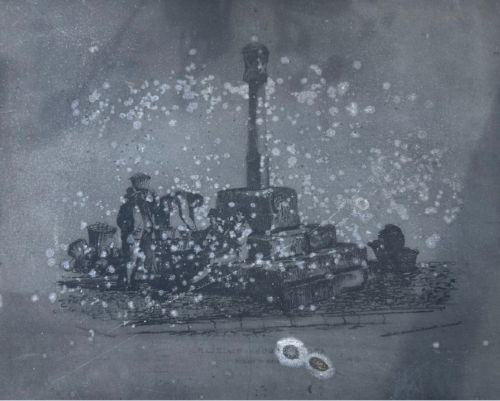
A victorian steel engraving sits within the broad category of nineteenth-century framed art and prints, capturing landscapes, portraits, and literary scenes from the period. These works often emerge from the Victorian era and 1850 through 1860, reflecting the visual culture of the time.
Buyers encounter framed prints and engravings that frequently depict specific topographical views, actors, politicians, or historical scenes. The pieces connect directly to nineteenth-century publishing and artistic output.
The format usually involves a paper print mounted behind glass, occasionally housed in period frames made of wood or gilt wood. This presentation preserves the delicate ink lines characteristic of the medium.
How they were made
Makers utilised hard steel plates instead of softer copper ones, allowing for immense durability and thousands of crisp impressions before the plate wore down. Printers applied ink to these meticulously hand-etched and engraved plates under heavy press pressure.
Paper forms the essential ground for the printed image, while selected examples receive supplementary hand colouring in watercolours or tints. Framing materials typically include wood, gilt wood, and glass to protect the fragile paper surface.
Victorian print collectors sometimes kept specialised magnifying glasses in their parlours to inspect the microscopic cross-hatching executed by master engravers.
What varies in quality
The clarity of the impression dictates much of the visual success, as plates worn from extensive print runs produce softer, muddier lines than early strikes. Skilled hand colouring elevates certain sheets far above standard monochrome impressions.
The fidelity of the engraver's interpretation of an original painting determines the artistic merit of the finished plate. Preservation of the paper sheet, minimal toning, and appropriate period framing further distinguish superior examples.
T.A Prior·W. Roffe·F R Roffe·J. Brown·J.R. Thompson
The Victorian Steel Engraving Glossary
- Engraving
- A printmaking technique where an artist cuts lines directly into a metal plate using a sharp tool called a burin. The resulting grooves hold the ink for printing.
- Etching
- A process where acid bites lines into a metal plate that has been covered with an acid-resistant ground. This method often combines with engraving on nineteenth-century plates.
- Impression
- A single copy of a print pulled from a printing plate onto paper. Early impressions generally show sharper detail than later ones.
- Hand coloured
- A print that has received washes of watercolour applied by hand after the initial printing process. This adds colour to topographical and portrait subjects.
Victorian Steel Engraving: Frequently Asked Questions
How do I care for a victorian steel engraving?
Keep the framed print away from direct sunlight to prevent the paper from yellowing and the subtle ink tones from fading. Maintaining a stable room temperature protects both the paper and the wooden frame from warping.
Ensure the glass remains intact and that moisture cannot enter the frame. Professional framing using acid-free materials safeguards the paper over decades.
Are these engravings original period pieces?
The examples listed date from the nineteenth century, produced during the height of the steel plate printing era. They represent original impressions from that period rather than modern photographic reproductions.
Examining the paper stock and the crispness of the plate mark helps confirm the nineteenth-century origin of each print.
What subjects do these engravings typically show?
Common subjects include topographical views of London and British rivers, alongside portraits of politicians, actors, and historical figures. Literary scenes and animal paintings after artists like Landseer also appear frequently.
These themes reflect the Victorian appetite for home decoration, education, and cultural appreciation through affordable art.
How do I distinguish hand coloured prints?
Close inspection under a magnifying glass reveals the soft brushstrokes and pooled pigment characteristic of manual watercolour application. Printed colour dots or flat lithographic tints look entirely different under magnification.
Hand colouring was executed by specialised workshop artisans who painted each sheet individually before publication.