


Victorian Star Pendant
A victorian star pendant captures the celestial romanticism of the nineteenth century through cluster settings of diamonds, pearls, and gold.
Victorian Star Pendant
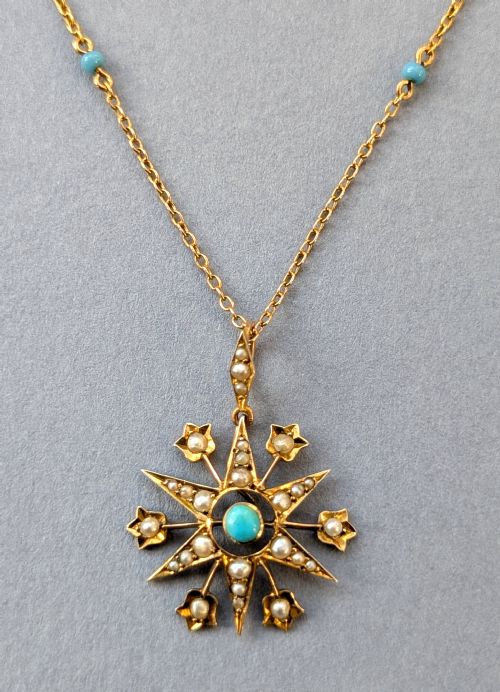
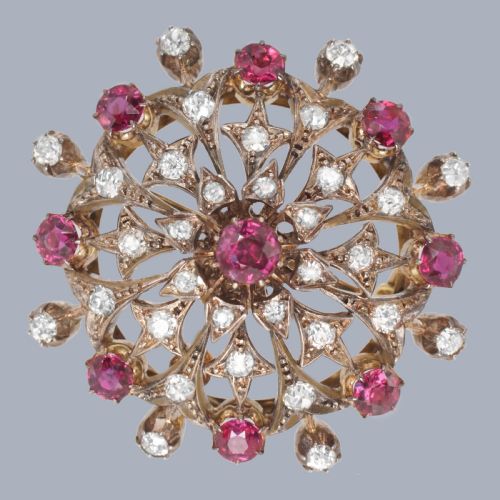
When you search for a victorian star pendant, you encounter pieces shaped as stellar bursts, often configured with central diamond points radiating outwards. These items frequently double as brooches, featuring hidden pin stems alongside suspension loops at the reverse.
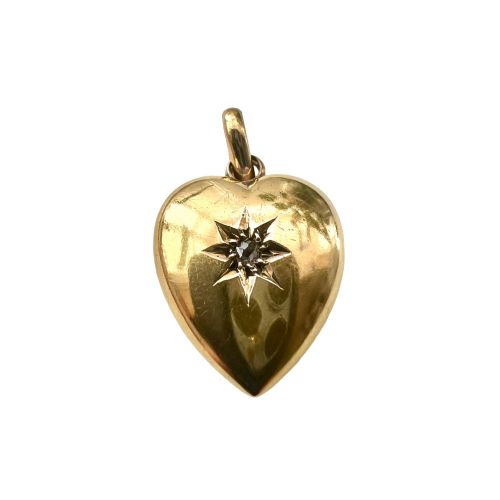
Origins cluster around the later nineteenth century, spanning the Victorian and Edwardian periods. Designs range from flat, multi-rayed starbursts to puffy, three-dimensional heart lockets adorned with celestial motifs.
How they were made
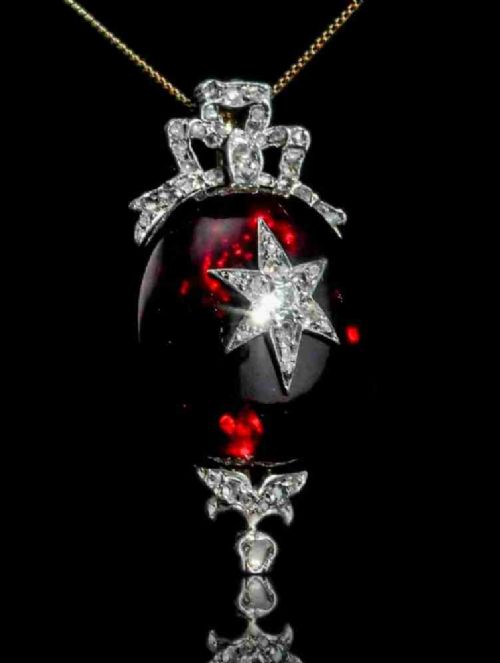
Goldsmiths of the period frequently employed a combination of yellow gold and silver, setting diamonds into the silver overlay to preserve the cool, bright flash of the stones while retaining the warm tone of gold beneath.
Stones were typically hand-set using claw or grain settings suited to old-cut diamonds, rose-cut diamonds, and turquoise cabochons. Seed pearls were meticulously thread-strung or pinned into place to form floral and stellar arrangements.
Convertible mechanisms required precise engineering, incorporating hinged bails, detachable pendant loops, and secure pin fittings that allowed a single jewel to function as both a brooch and a necklace ornament.
Listings feature items from the Victorian and Edwardian eras, utilising materials including fifteen carat gold, silver, diamonds, turquoise, and seed pearls.
What varies in quality
The hierarchy of quality rests primarily on stone weight, symmetry of the stellar rays, and the retention of original convertible fittings. Pieces featuring substantial old-cut diamonds with high clarity command greater interest than those utilising smaller diamond paste or low-count seed pearls.
Construction intricacy also dictates worth, distinguished by layered gold work, hand-engraved foliate details, and enamelling in blue or red tones. Condition of fragile elements, such as glazed locket compartments and aligned pin stems, further separates standard examples from finer specimens.
The Victorian Star Pendant Glossary
- Old-cut diamond
- A hand-faceted diamond cut before the standardisation of modern brilliants, characterised by a smaller table, higher crown, and open culet. These stones exhibit a softer, candlelit sparkle under lower light conditions.
- Seed pearl
- A very small, naturally occurring or early cultured pearl, often drilled and mounted on wire or thread. They form delicate borders and clustered rays in celestial jewellery.
- Cabochon
- A gemstone shaped and polished with a smooth, convex dome rather than faceted surfaces. This cut is frequently applied to turquoise, garnets, and opals.
- Convertible brooch pendant
- A dual-purpose jewel engineered with a fold-down loop and a removable pin assembly. This allows the wearer to pin the piece to garments or suspend it from a chain.
- Celestial star motif
- A decorative design scheme drawing on astronomical themes popular during the late nineteenth century. It frequently incorporates sunbursts, comets, and multi-pointed stellar shapes.
Victorian Star Pendant: Frequently Asked Questions
How were they worn?
Victorians wore these stellar ornaments suspended from ribbons or gold chains around the neck, or pinned directly to the bodice as brooches. Because many were engineered with convertible fittings, a single owner could shift the piece from collar to lapel depending on the outfit.
They were worn during both day and evening occasions, serving as personal tokens or fashionable accessories that signalled an interest in contemporary aesthetic trends.
How do I care for a victorian star pendant?
Caring for these delicate jewels requires avoiding harsh chemical dips, ultrasonic cleaners, and prolonged exposure to water, which can damage seed pearls and historical foil-backed or glazed locket compartments. Gentle dusting with a soft dry cloth is usually sufficient for routine maintenance.
Store the pendant flat in a lined jewellery box away from other pieces to prevent the metal and stones from scratching one another. Professional inspection of the settings is recommended if you wear the piece frequently.
How do I tell if a star pendant is Victorian?
Authentic pieces exhibit characteristics typical of nineteenth-century manufacturing, such as hand-cut old-mine or old-rose diamonds, closed-back settings on earlier examples, and characteristic gold standards like nine carat, fifteen carat, or high-carat yellow gold. Maker's marks, hallmarks, and the specific weight and wear of the metalwork offer further clues.
Construction methods also provide evidence, including hand-bevelled pin stems, tubular hinges, and individual claw settings that lack the uniform precision of modern mass production.