


Victorian Standing Vitrine
These upright glazed cabinets are built to display precious objects, combining timber frames with glass panels to protect porcelain and curiosities.
Victorian Standing Vitrine
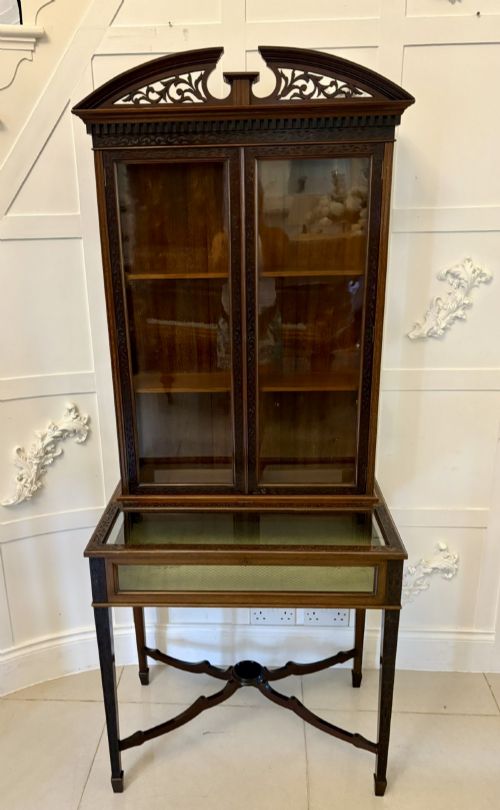
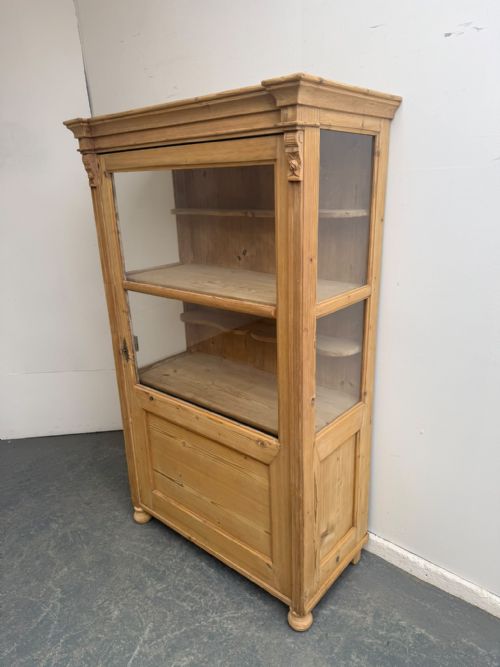
A victorian standing vitrine is an upright display cabinet designed to showcase collections of porcelain, silver, and curiosities within domestic rooms. These pieces originate predominantly from the nineteenth century, encompassing various revival aesthetics popular during the period.
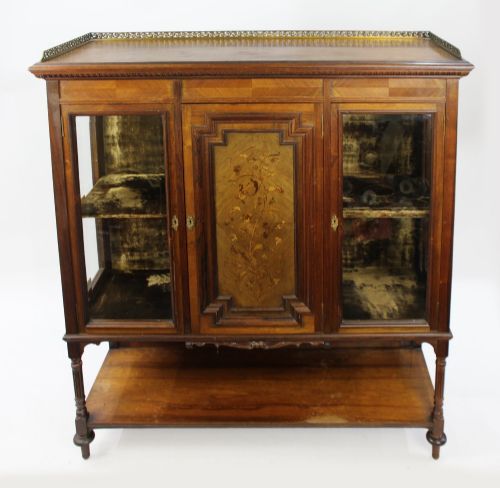
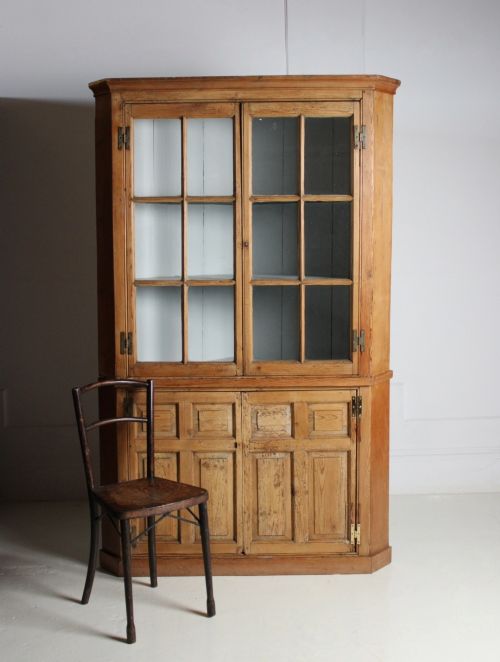
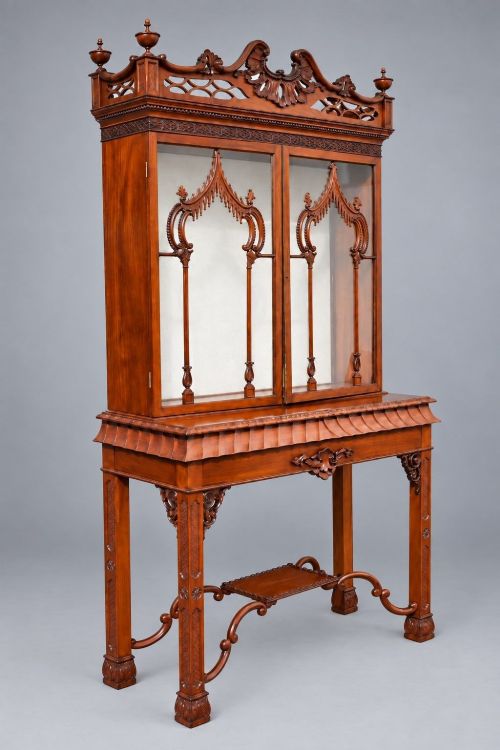
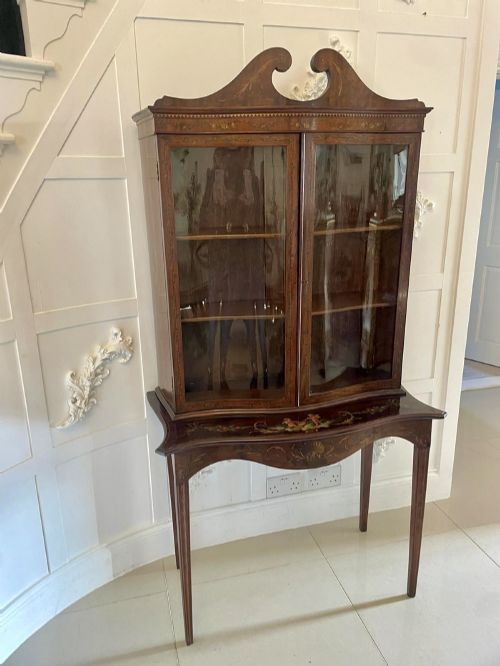
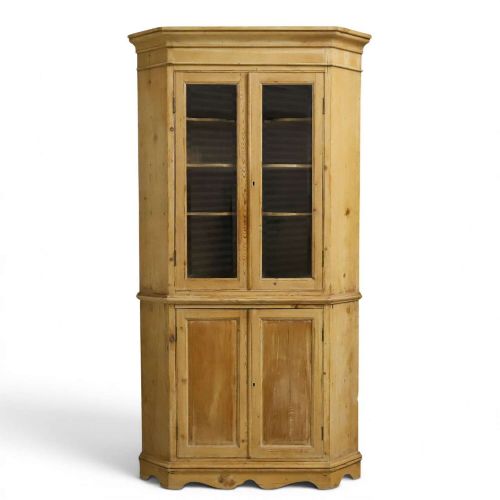
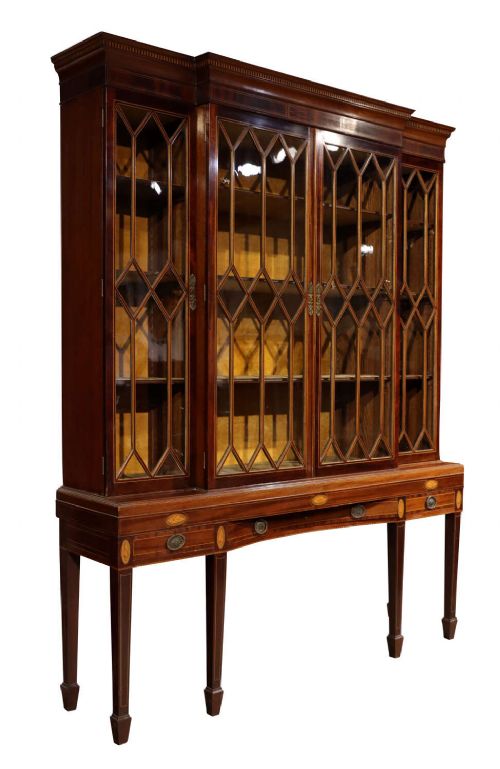
The selections available here range from mahogany and satinwood breakfront furniture to rosewood and pine corner cabinets. Makers utilise glass doors and panels to allow uninterrupted viewing from multiple angles in a drawing room or parlour.
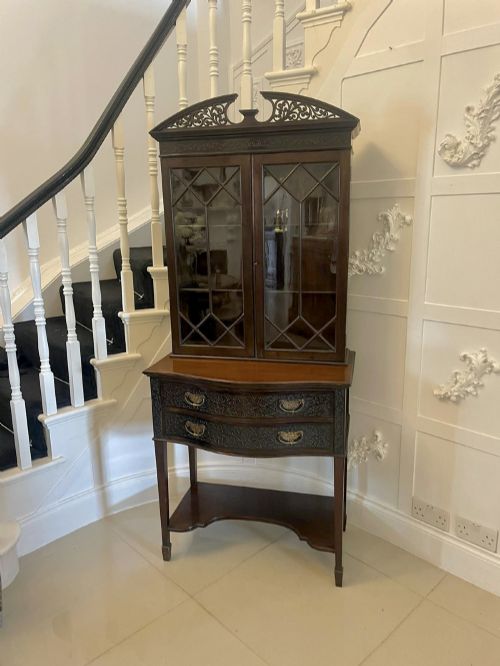
Formats vary from tall standing bookcases with glazed upper sections to serpentine cabinets on stands and specialised circular bijouterie tables. Buyers will frequently encounter revival styles such as Chinese Chippendale and Sheraton alongside simpler country pine iterations.
How they were made
Cabinet makers constructed the primary carcases of these pieces using dense hardwoods like mahogany, rosewood, and satinwood, occasionally utilising pine for regional or simpler cupboards. Surfaces frequently received intricate inlay work, parcel-gilt details, or painted decoration to enhance the visual impact of the timber.
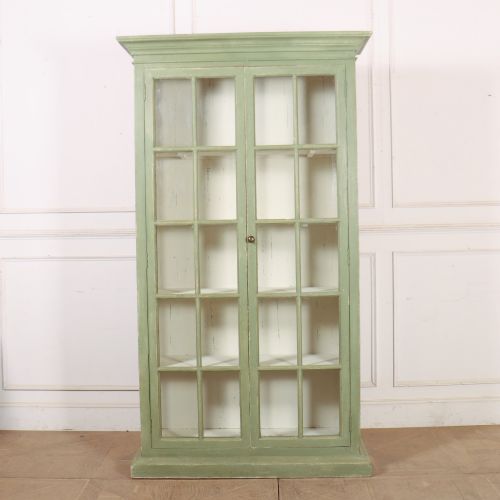
Glazing techniques involved fitting glass panes into wooden frames or astragal bars, sometimes forming curved serpentine shapes or two-part breakfront configurations. Brass mounts, handles, and hinges provided functional and decorative hardware additions to doors and drawers.
Revival aesthetics represented in the selection include Gothic, Sheraton, and Chinese Chippendale styles.
What varies in quality
The standard of a cabinet rests upon the selection of timber veneers and the precision of the marquetry or inlay work integrated into the facade. Superior examples exhibit fluid serpentine curves, well-balanced proportions, and original glass panes within tightly joined astragal bars.
Attribution to documented workshops such as Edwards & Roberts or Collinson & Lock elevates the standing of a piece through recorded craftsmanship. Finer execution is also visible in the crispness of carved wooden details, particularly within revival styles exhibiting Chinoiserie or Gothic motifs.
Collinson & Lock·Edwards & Roberts·C Hindley & Sons
The Victorian Standing Vitrine Glossary
- Vitrine
- A glass-fronted cabinet designed specifically for displaying porcelain, curiosities, or decorative objects. These cases protect contents from dust while offering maximum visibility.
- Astragal
- A small wooden moulding used to divide individual panes of glass within a glazed door or window. These bars create geometric patterns typical of period cabinet making.
- Serpentine
- A curved line of furniture fronting that undulates outward in the centre and curves inward toward the sides. This technique requires considerable skill from the cabinet maker.
- Breakfront
- A large piece of furniture whose central section projects forward from the flanking outer wings. This architectural arrangement adds depth and visual rhythm to bookcases and display cabinets.
- Bijouterie
- A low display case or table with a glazed top and sides used for holding small precious objects and jewellery. These pieces often stand on slender legs in drawing rooms.
Victorian Standing Vitrine: Frequently Asked Questions
Where should I place a vitrine?
These upright cabinets suit drawing rooms, dining spaces, or hallways where natural light can pass through the glass panels. Positioning them away from direct sunlight protects sensitive interior contents and timbers.
Ensure the floor surface is level to prevent distortion of the glazed doors and wooden frames over time.
How do I clean the glass?
Use a soft, lint-free cloth and a mild glass cleaning solution applied directly to the cloth rather than the cabinet. This prevents moisture from seeping into vulnerable antique timber or painted decorations.
Take care around delicate astragal bars and vintage glass panes which may be thin or secured with old putty.
Can I adjust the internal shelves?
Most nineteenth-century display cabinets feature fixed wooden or glass shelving rather than adjustable modern fittings. Altering the interior layout is rarely recommended as it disrupts the original construction and structural integrity.
Plan the height of your collection pieces to fit the existing shelf clearances before placement.
How do I identify a revival style?
Revival pieces incorporate specific historical motifs, such as Chinese Chippendale fretwork or Sheraton classical inlay, executed using nineteenth-century manufacturing methods. Examining the secondary timbers inside drawers helps confirm the true period of construction.
Maker stamps or labels, when present, provide definitive proof of workshop origins and stylistic intent.