


Victorian Standing Corner Cupboard
A victorian standing corner cupboard makes use of overlooked rooms by turning empty angles into displays of figured mahogany, walnut or oak.
Victorian Standing Corner Cupboard
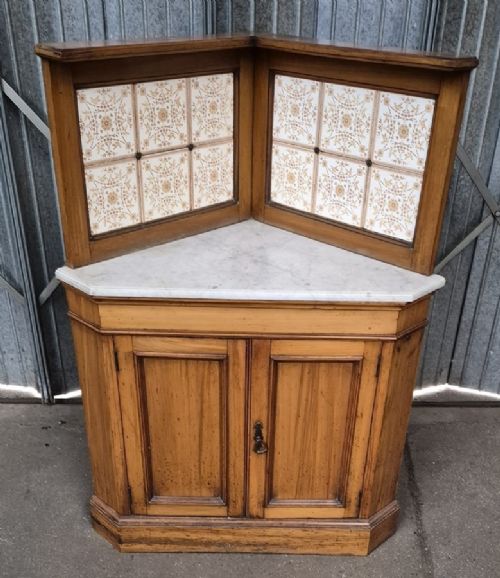
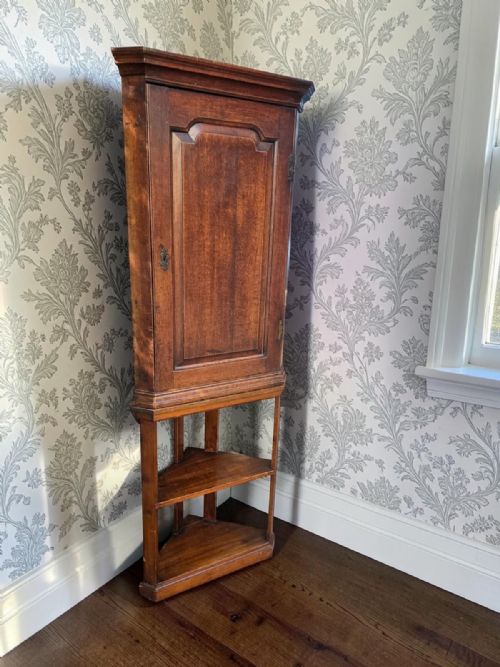
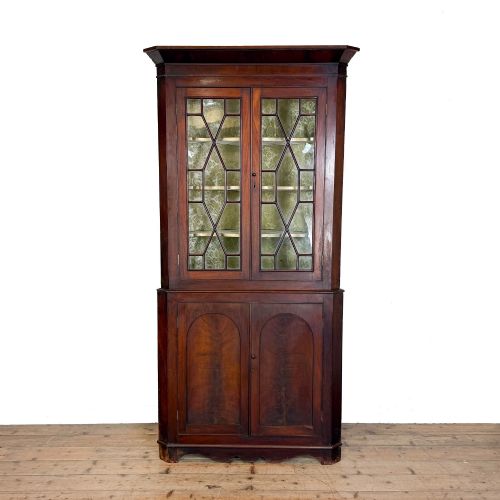
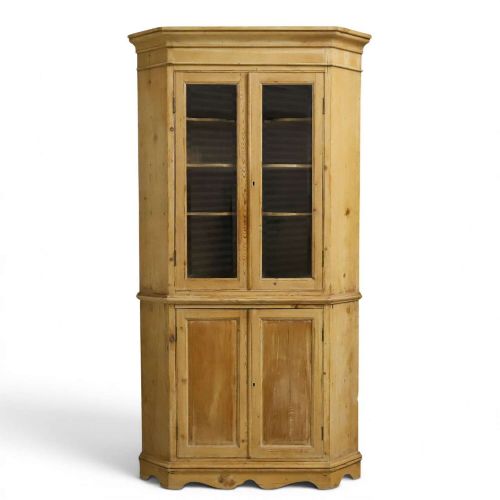
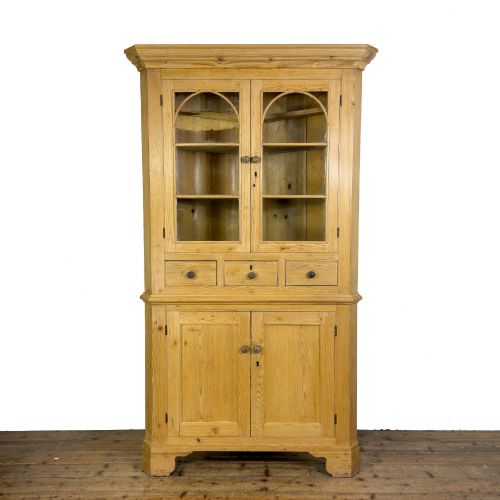
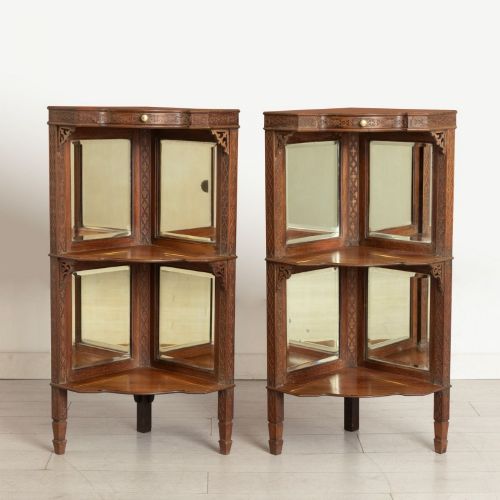
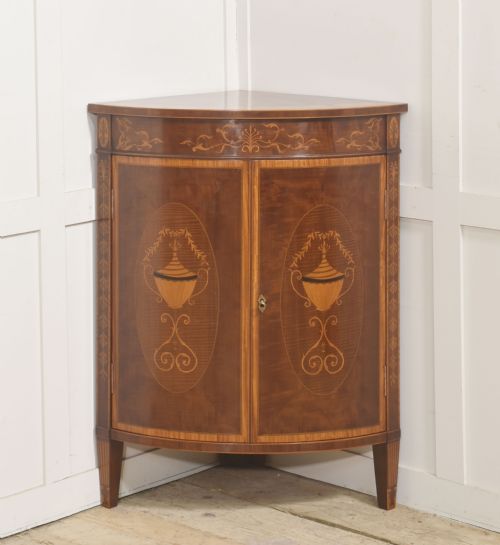
A victorian standing corner cupboard sits directly on the floor rather than hanging on the wall, often utilising the two-part form seen in nineteenth-century examples. The pieces encountered here span the Victorian era, the later nineteenth century, and around 1900, drawing on styles from plain country pine to Sheraton Revival inlay and Gothic Revival carving.
Most items are built to occupy a room angle cleanly, presenting either solid panelled doors, glazed display fronts, or open shelving. Alongside dedicated corner cabinets, the selection includes related forms such as corner washstands and hall cupboards that share the same angled footprint.
How they were made
Cabinetmakers constructed these cupboards from native and imported timbers, employing solid oak, mahogany, walnut, rosewood, and pine. Woods were chosen for their natural grain or prepared as smooth carcases ready for applied carvings and brass fittings.
Inlaid pieces incorporate contrasting lighter timbers to create delicate floral or geometric motifs, particularly in Sheraton Revival and later nineteenth-century work. Glazed doors utilise individual glass panes set into timber frames, while two-part forms join a top cabinet section securely to a lower base or stand.
Several cupboards are designed to tuck quietly into corners, yet they demand more attention than the walls they inhabit.
What varies in quality
The distinction between ordinary and exceptional pieces rests on the choice of timber and the precision of decorative detail. Figured veneers, fine string inlay, and deeply carved oak ornament separate ambitious cabinet work from utilitarian country pine items.
Proportion and structural joinery dictate how well a tall corner cabinet meets the wall and floor. Superior examples display thoughtful grain matching across the doors and refined brass hardware that complements the primary wood.
Walker & Sons·Edwards & Roberts·Liberty & Co.
The Victorian Standing Corner Cupboard Glossary
- Two-Part Form
- A piece constructed in separate upper and lower sections that sit one upon the other. This arrangement made heavy standing furniture easier to transport through narrow hallways.
- Bowfront
- A curved front profile that bulges outward in a gentle arc. This shape softens the sharp angles typical of corner furniture.
- Sheraton Revival
- A late nineteenth-century design movement inspired by eighteenth-century neoclassical furniture. It relies on symmetrical proportions, satinwood, and delicate marquetry.
- Gothic Revival
- A Victorian style drawing on medieval architectural motifs. Pieces feature pointed arches, heavy linenfold panels, and dark carved oak.
- Washstand
- A piece of furniture fitted with a marble or timber top designed to hold a basin and jug. Corner versions fit neatly into domestic bathrooms or bedrooms of the period.
Victorian Standing Corner Cupboard: Frequently Asked Questions
How do I fit a corner cupboard into a modern room?
Measure the wall depth from the corner outward to ensure the frame clears existing skirting boards and cornices. Standing models rest directly on the floor without wall fixings, making them straightforward to position.
Keep surrounding furniture low so the vertical lines of the cabinet anchor the corner properly. These pieces naturally draw the eye, transforming dead angles into focal points.
What is the difference between a wall-hanging and a standing cupboard?
Standing cupboards extend all the way to the floor, often incorporating a lower base cabinet, drawer section, or sturdy bracket feet. They possess greater weight and presence within a room.
Wall-hanging versions lack this floor contact and are built lighter for suspension from picture rails or wall studs. The standing format dominates the examples on this page.
How do I care for nineteenth-century wood surfaces?
Maintain polished mahogany, walnut, and oak by dusting with a soft dry cloth and applying occasional quality wax to nourish the grain. Avoid placing furniture in direct sunlight or beside active heat sources.
Pine and satinwood surfaces respond well to similar gentle treatment without heavy modern cleaning sprays. Keeping indoor humidity stable prevents timber from shrinking or warping over time.
Are glazed doors original to these cabinets?
Many nineteenth-century corner cabinets feature original glass panels held by timber glazing bars. Examining the glass reveals slight surface ripples or bubbles consistent with period manufacturing methods.
Solid panelled doors were equally common for spaces where contents were meant to remain hidden. Both styles reflect the original design intent of the maker.