


Victorian Glazed Corner Cupboard
A victorian glazed corner cupboard turns empty angles into useful display space, bringing warmth and character to traditional rooms.
Victorian Glazed Corner Cupboard
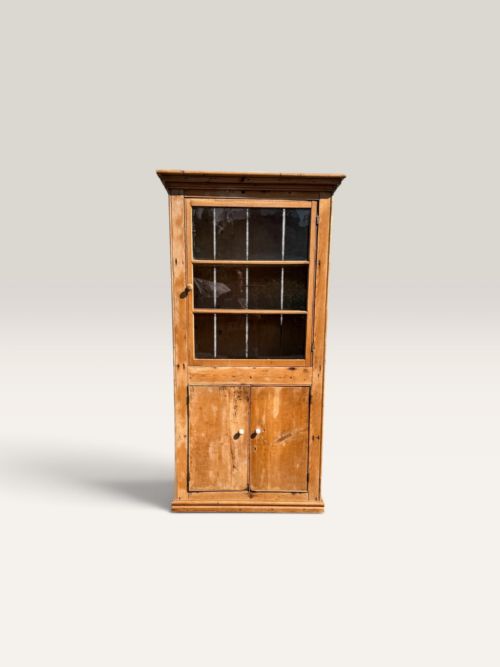
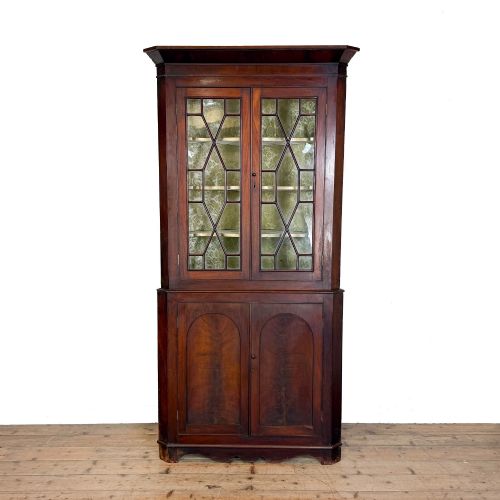
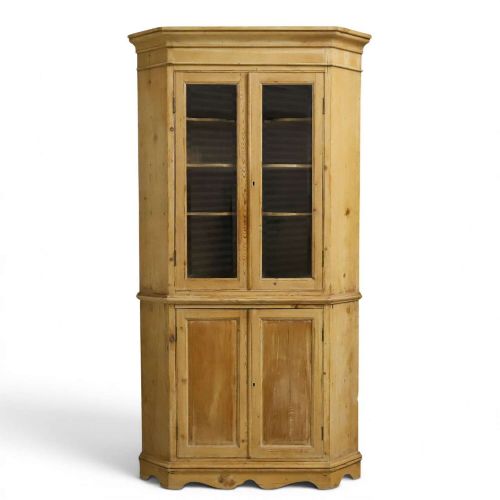
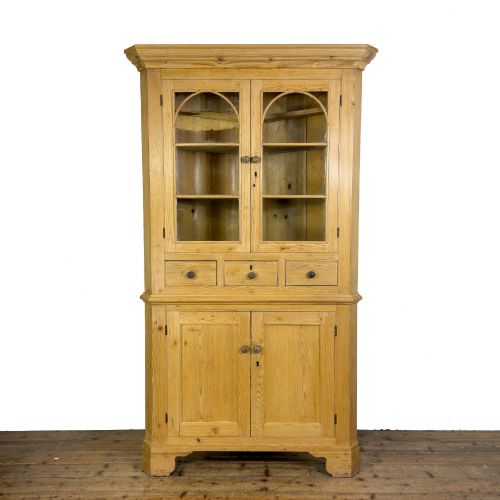
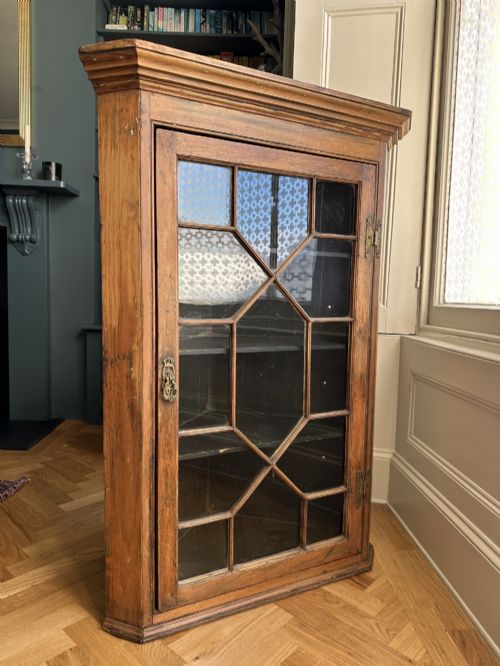
A victorian glazed corner cupboard is a specialised timber storage piece designed to fit neatly into the ninety-degree junction of a room. These cabinets utilise otherwise wasted wall space while presenting ceramics, books or glassware behind glass doors. The selection on this page ranges from modest farmhouse pine and oak versions to refined, heavily figured mahogany and walnut examples.
Most pieces date across the nineteenth century, including vernacular country workshop items and more formal urban designs. Buyers meet both wall-hanging models and substantial two-part floor-standing cupboards. Styles span simple rustic farmhouse pieces to revival aesthetics like Chippendale and George I influences.
How They Were Made
Cabinet makers built these pieces using solid timbers like mahogany, walnut, oak, and pine, frequently applying veneers of rosewood or satinwood to visible surfaces. Glass panels were secured within wooden frames using timber glazing bars, creating structured door panels. Brass hardware, such as hinges and escutcheons, completed the functional construction.
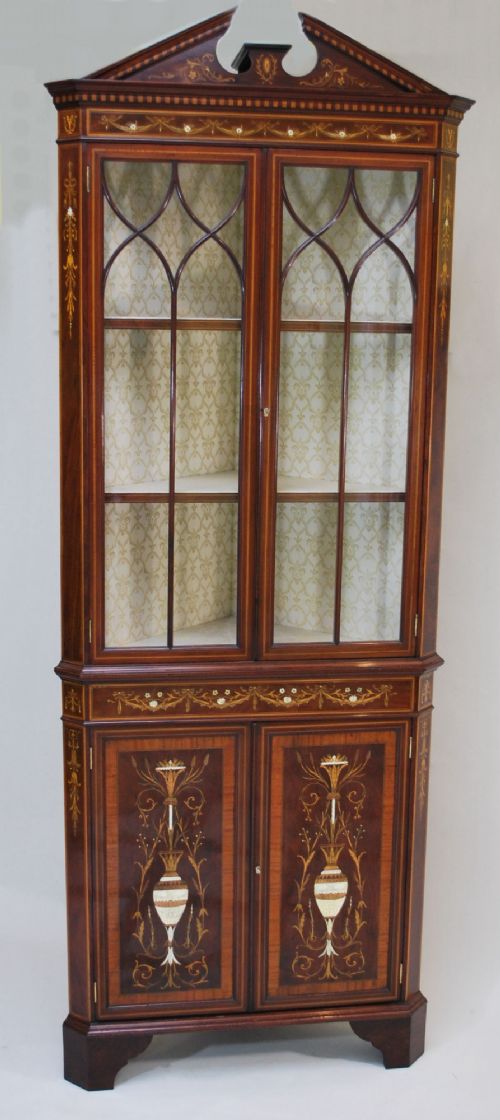
Many finer examples incorporate decorative flourishes including marquetry inlay, contrasting stringing, and satinwood inlay. Interiors sometimes retain original painted finishes or fabric linings behind the glazed display sections.
Some pine cupboards still hide original painted interiors behind their glass doors, revealing bright historical colour choices.
What Varies in Quality
Quality rests primarily in the choice of timber and the precision of the cabinet work. Dense, richly figured mahogany or walnut with careful marquetry indicates a higher tier of production than plain utilitarian pine. The finesse of the glazing bar arrangement and the intricacy of inlay work mark the distinction between standard workshop items and superior commissions.
Structural integrity and the retention of original decorative elements heavily influence the standing of a piece. Cabinets that preserve untouched brassware, original painted interiors, and clean glass without replacement panes command greater interest among collectors.
Goodhall Lamb and Heighway
The Victorian Glazed Corner Cupboard Glossary
- Astragal glazed
- A glass door divided into smaller panes by thin wooden or metal bars called astragals. This technique creates a grid pattern typical of period display cabinets.
- Marquetry inlay
- Decorative patterns formed by fitting contrasting pieces of wood veneer into a prepared surface. It adds pictorial or geometric ornamentation to cabinet doors.
- Bow front
- A convex, outwardly curved front profile popular in nineteenth-century case furniture. This shape softens the sharp angles inherent to corner furniture.
- Two-part form
- A cabinet constructed in separate upper and lower sections stacked together. This method eased transport and placement of heavy storage furniture.
Victorian Glazed Corner Cupboard: Frequently Asked Questions
How do I hang a wall cabinet safely?
Wall-hanging corner cupboards require secure fixing directly into solid masonry or substantial wall studs using appropriate brackets.
Because these timber cabinets carry significant weight once filled with glassware, professional installation ensures the piece remains secure.
Are these cupboards suitable for small rooms?
These cabinets excel in compact spaces by utilising unused corners that standard rectangular furniture cannot occupy efficiently.
Their triangular footprint projects minimally into the room while providing substantial vertical storage behind glass doors.
How do I distinguish pine country pieces from mahogany urban ones?
Country pieces typically utilise simpler timbers like pine, oak, or ash, often featuring plain surfaces or painted finishes suited to domestic vernacular settings.
Urban cabinets favor dense hardwoods such as mahogany and walnut, frequently decorated with complex veneer work, satinwood inlay, and refined brass hardware.
Can these cabinets support heavy books?
Floor-standing corner bookcases and robust lower cupboards handle heavy volumes easily due to their sturdy timber shelving.
Wall-mounted display cabinets suit lighter items like porcelain and glassware rather than dense libraries.