


Victorian Staffordshire Animal Figures
Victorian Staffordshire animal figures bring the charm of nineteenth-century menagerie and hearth into a room.
Victorian Staffordshire Animal Figures
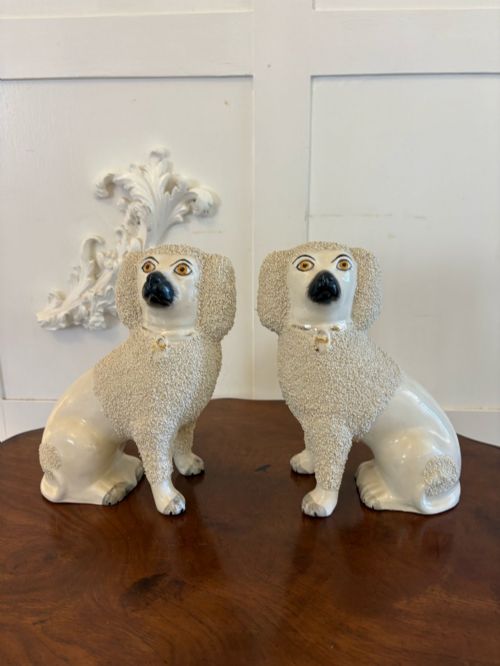
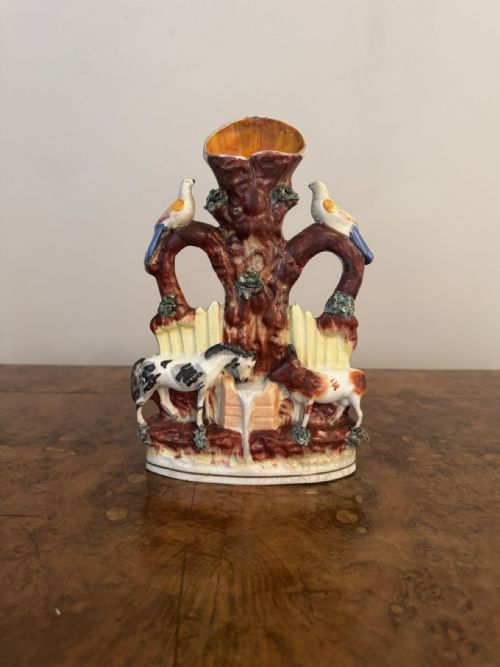
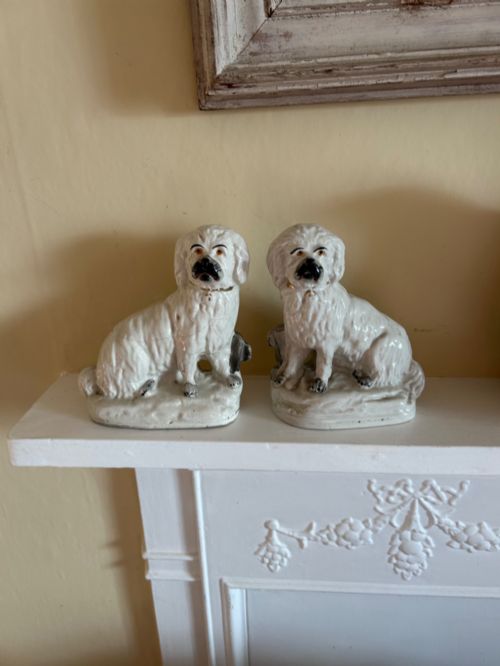
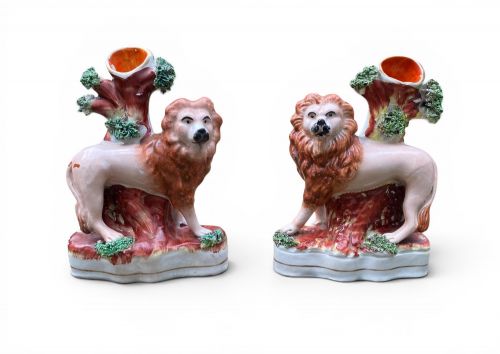
Victorian Staffordshire animal figures capture the nineteenth-century domestic fascination with domestic pets and exotic beasts alike, modelled as dogs, lions, sheep, and zebras. When you search for victorian staffordshire animal figures, you encounter earthenware pieces fashioned as decorative figurines, spill vases, and bookends.
The most common versions on this page are pairs of poodles and lions, often modelled in the round or seated upon glazed bases. These nineteenth-century examples reflect the robust pottery traditions of English workshops from the period.
Many of these decorative objects serve practical purposes beyond simple display, functioning as inkwells or spill vases to hold matches by the fireplace. They range from modest single figures to grand pairs designed for mantelpieces.
How they were made
Potters shaped these figures from earthenware and ceramic bodies, often utilising press moulds to form the animal shapes efficiently. The greenware was then fired before receiving its initial coating.
Makers applied lead glaze and enamel colours by hand, giving the surfaces their characteristic sheen and vibrant markings. Some pieces feature treacle glaze, producing a deep, glossy brown finish that distinguishes them from enamelled examples.
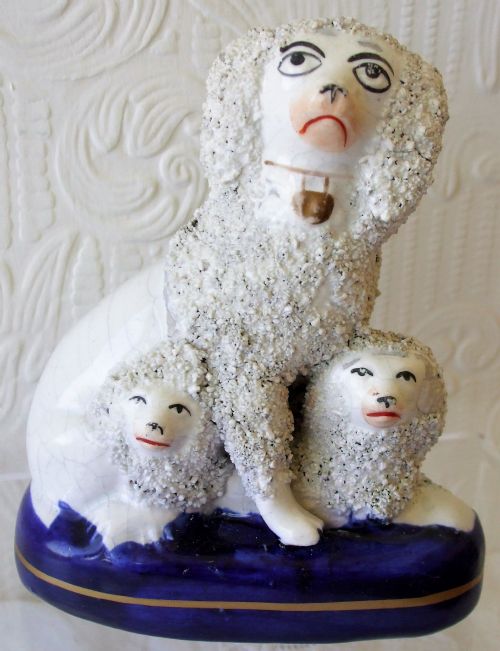
Poodles dominate the dog listings, displaying fur rendered in stiff ceramic curls.
What varies in quality
Quality rests in the crispness of the modelling and the liveliness of the painted details, where finer pieces capture the alert expression of a terrier or the muscular form of a lion. Brushwork on the eyes, muzzles, and coats determines whether a figure feels spirited or static.
The weight of the ceramic body and the depth of the glaze also separate standard output from superior examples, with heavier potting and richer lead glazes commanding attention. Pairs that match closely in size and painted finish represent the higher tier of production.
Wooley Staffordshire·Rockingham Pottery
The Victorian Staffordshire Animal Figures Glossary
- Earthenware
- Porous pottery fired at a lower temperature than stoneware, forming the primary body for most nineteenth-century Staffordshire figures. It requires a glaze to become impermeable to liquids.
- Spill vase
- A hollow cylindrical holder attached to a figure, designed to hold wooden spills for lighting candles and pipes. These containers are integrated into the composition behind the animal.
- Treacle glaze
- A dark, translucent brown lead glaze that produces a rich, treacly appearance on ceramic surfaces. It is frequently seen on nineteenth-century lions and dogs.
- Lead glaze
- A glossy glass coating applied to pottery before firing to seal the porous clay body and intensify painted colours. It gives these figures their characteristic reflective shine.
Victorian Staffordshire Animal Figures: Frequently Asked Questions
What animals appear most often?
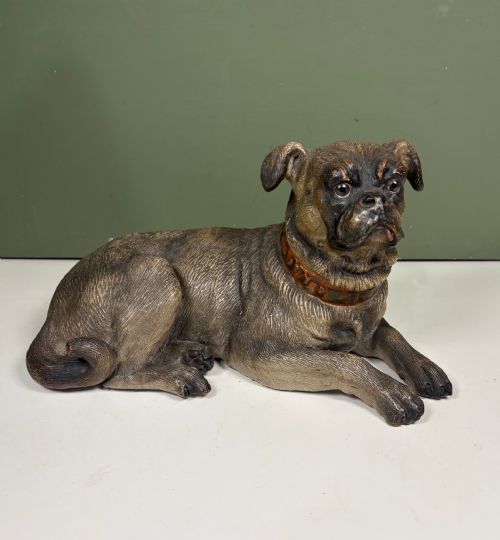
Dogs dominate the selection, particularly poodles, pugs, and greyhounds, often modelled in matched pairs to sit on either side of a mantelpiece.
Exotic beasts such as lions and zebras also appear, alongside farm animals like sheep and cows with calves.
How were these figures used?
Most served as purely decorative mantel ornaments, bringing colour and character to Victorian parlours and sitting rooms.
Some specialised pieces doubled as inkwells or spill vases, combining ornamental appeal with everyday domestic utility.
Are they found in pairs?
Many listings comprise matching pairs designed to mirror each other symmetrically on a fireplace or shelf. Single figures also occur, representing individual animals or groups.
How do you date them?
Dating relies on stylistic clues, potting methods, and glaze characteristics typical of nineteenth-century production. Most pieces date from the mid to late Victorian era.