



Antique Pottery Lion Statues
Antique pottery lion statues bring fierce character and traditional craft into a room, spanning British hearth ornaments and Asian temple figures.
Antique Pottery Lion Statues
When you search for antique pottery lion statues, you encounter a diverse gathering of figures ranging from Staffordshire mantel ornaments to Chinese Buddhist lion dogs and Japanese Shishi figures. These pieces serve as decorative sculptures, bookends, and spill vases, reflecting the domestic and ritual traditions of their makers.
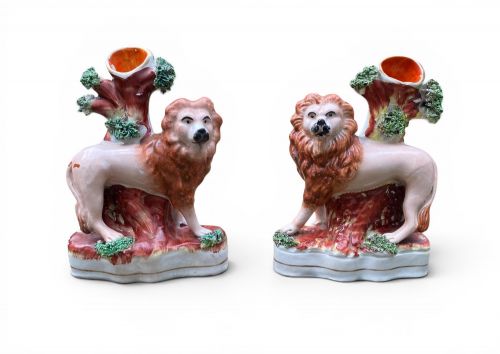
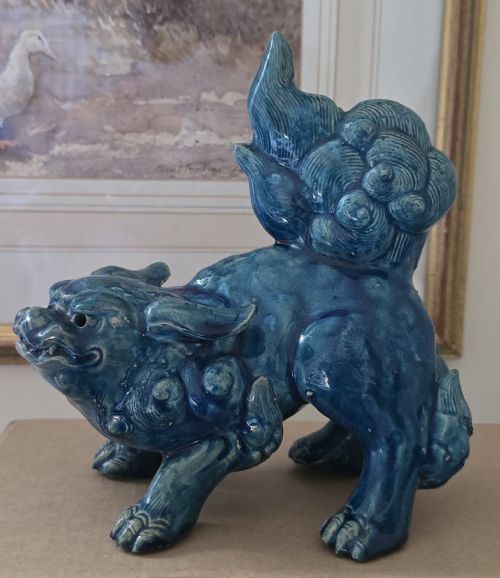
The versions you are most likely to meet on this page include pairs of Victorian Staffordshire lions sitting proudly on bases, alongside glazed earthenware and porcelain Foo dogs from the Qing Dynasty and the Meiji period. English examples often adopt the classic Medici lion stance or function as garden and mantel figures.
Makers across nineteenth-century Britain and East Asia utilised local clays and distinctive glazes to shape these beasts, resulting in forms that vary from fierce temple guardians to domestic fireside companions. Each piece carries the stylistic markers of its period, whether modeled with copper lustre or finished in pale green and turquoise glazes.
How they were made
Potters shaped these figures using earthenware, stoneware, and porcelain, often pressing clay into moulds or modeling the sculptures by hand before firing them in kilns. Staffordshire pieces typically relied on refined earthenware bodies, while garden figures utilised heavier salt-glazed stoneware for durability.
Makers applied metallic lustre, pearlware, and coloured lead glazes directly to the ceramic surface to achieve the rich coats seen on copper lustre lions and turquoise Shishi figures. These glazes underwent a secondary kiln firing to vitrify the surface, sealing the porous clay body beneath.
Several stone-cold guardians double as match holders, proving that even mythological protectors had to carry household chores.
What varies in quality
Glaze application also distinguishes finer examples, where even coverage and vibrant metallic lustre or smooth turquoise tones enhance the ceramic form without pooling heavily in the recesses. Superior pieces retain their hand-painted highlights and show careful placement of colour across the eyes, teeth, and bases.
Lancaster and Sons of Hanley·Hurlford Kilmarnock
The Antique Pottery Lion Statues Glossary
- Staffordshire
- Pottery manufactured in the towns of the Staffordshire Potteries in England, renowned for domestic mantel figures and animal sculptures.
- Pearlware
- A refined earthenware developed in the late eighteenth century featuring a thin glaze with a faint bluish tint over a white body.
- Foo Dog
- A traditional Chinese guardian lion, also known as a Buddhist lion or Shishi, typically shown protecting sacred spaces.
- Spill Vases
- Hollow ceramic figures fitted with an attached cylindrical holder designed to store wooden matches for lighting candles and fires.
- Medici Lion
- A classic sculptural pose modeled after the ancient marble lions guarding the Loggia dei Lanzi in Florence.
- Salt Glaze
- A glossy, textured finish created by throwing common salt into the kiln during high-temperature firing.
Antique Pottery Lion Statues: Frequently Asked Questions
Where were Staffordshire lion figures displayed?
These figures typically sat in mirrored pairs upon the mantelpiece above a Victorian fireplace, framing the hearth with an imposing domestic presence. Owners often placed them facing inward toward each other to guard the domestic space.
Smaller versions also appeared on living room sideboards and library shelves alongside books and ceramic vases, serving purely decorative functions in nineteenth-century homes.
How do you distinguish English lions from Chinese Foo dogs?
English Staffordshire lions generally display a naturalistic or heraldic stance, often modeled after classical European sculpture or seated upright with relaxed paws. They frequently feature painted eyes and distinct Staffordshire glazing.
Chinese Foo dogs and Japanese Shishi figures exhibit stylized curls in their manes, muscular facial structures, and intricate monochromatic or turquoise glazes. They frequently rest one paw upon an embroidered ball or a cub.
What is the purpose of a spill vase lion?
A spill vase lion incorporates an open ceramic tube directly behind or beside the animal figure to hold wooden spill splints. Victorian households used these thin tapers to transfer flames from the hearth fire to oil lamps and candles.
This combined the decorative appeal of a mantel sculpture with a practical household tool used daily before the widespread invention of safety matches.
How should antique pottery lions be cleaned?
Dust these ceramic figures gently using a soft, dry brush to prevent dirt from settling into the fine crazing lines of the glaze. Avoid harsh commercial cleaning liquids that might strip hand-painted surface colours or historical touch-ups.
If washing is necessary, use a damp cloth with mild soap, followed immediately by thorough drying with a soft towel to protect the earthenware body.
What period do most ceramic garden lions date from?
Garden lions and large architectural figures commonly date from the mid to late nineteenth century, coinciding with Victorian expansions in landscaping and conservatory decoration. Sturdier salt-glazed stoneware allowed these sculptures to withstand outdoor exposure.
Earlier eighteenth-century garden ceramics remain exceptionally scarce, while later twentieth-century reproductions utilise heavier modern casting methods and different clay densities.