




Victorian Specimen Table
A victorian specimen table brings together meticulous stonework or marquetry and utilitarian nineteenth-century forms for practical display.
Victorian Specimen Table
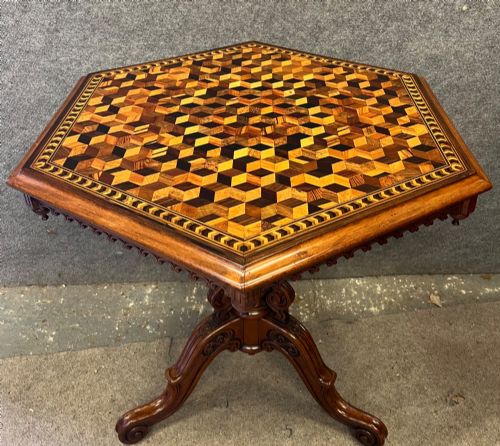
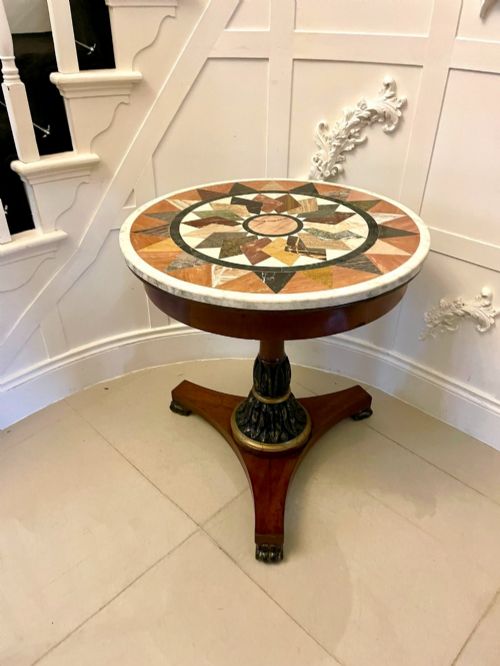
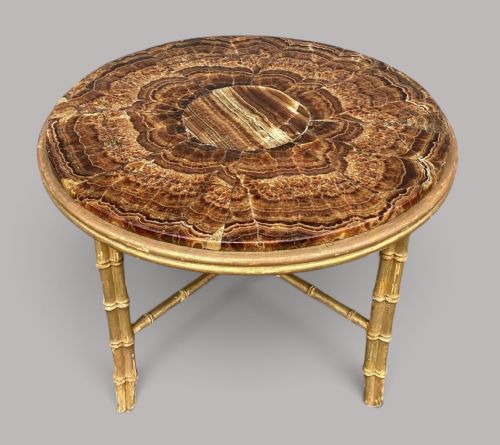
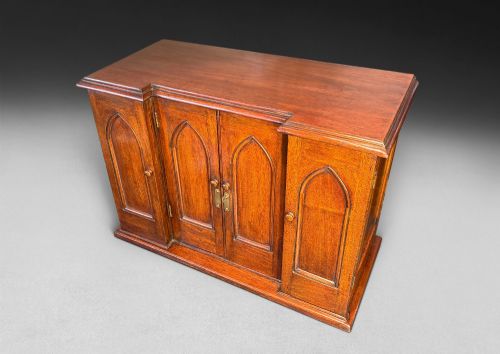
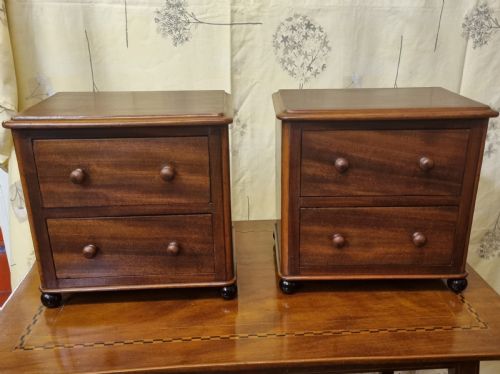
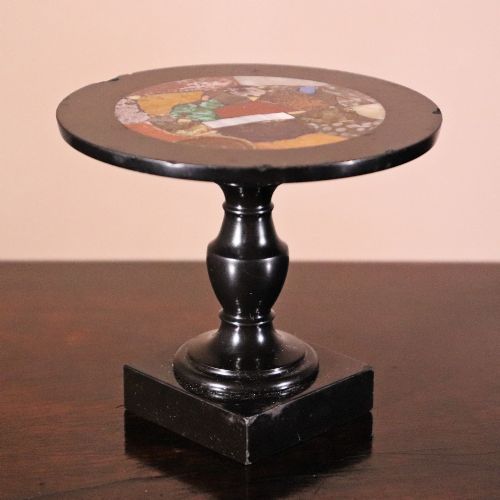
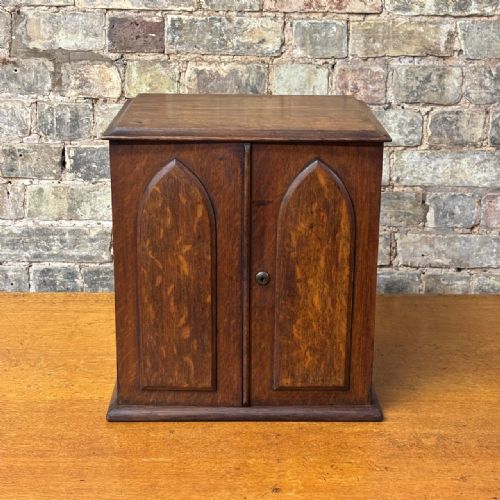
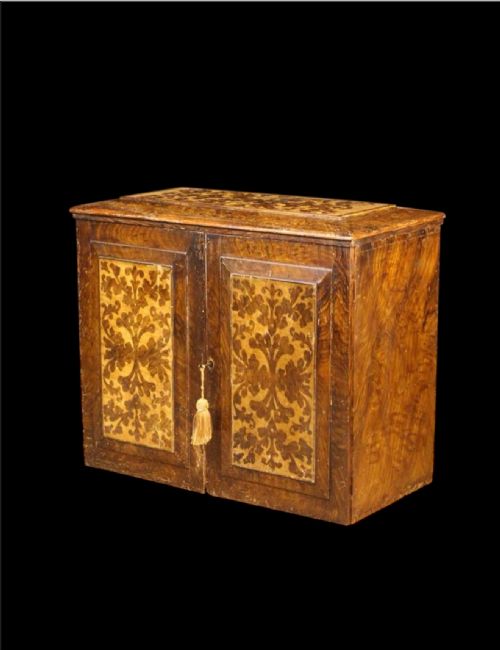
A victorian specimen table is a decorative surface created to display geometric arrangements of marbles, pietra dura, or various indigenous and exotic woods. These pieces generally take the form of occasional, side, or centre tables, along with occasional table-top chests and miniature display cabinets.
Most examples originate from the nineteenth century, with specific pieces linked to Victorian, William IV, and Gothic Revival styles, as well as colonial workshops in places like Ceylon and New Zealand. Buyers frequently encounter circular lamp tables and hexagonal occasional tables supported by pedestals, mahogany frames, or tripod bases.
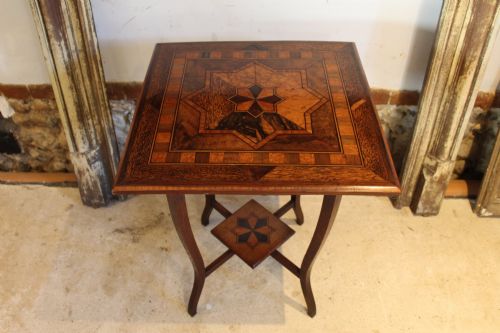
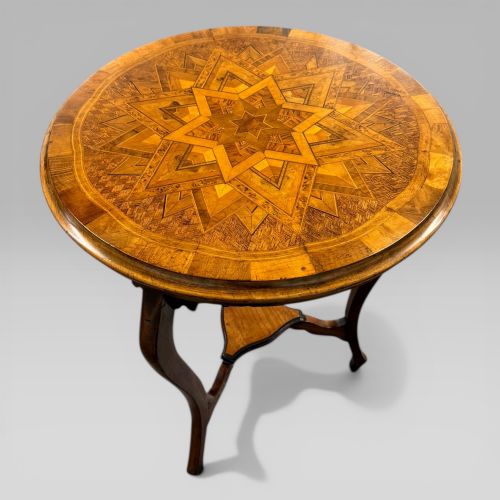
Makers utilised contrasting timbers and mineral samples to form sunburst motifs, checkerboards, and intricate marquetry panels. The emphasis rests heavily on the tabletop itself, transforming a standard domestic item into a portable cabinet of curiosities.
How They Were Made
Craftsmen built the underlying structures using traditional timbers such as mahogany, walnut, rosewood, oak, and ebony, shaped into tripod bases, pedestals, or side frames. Upon these solid foundations, specialised artisans arranged hundreds of individual geometric tiles or wood veneers to form the decorative surfaces.
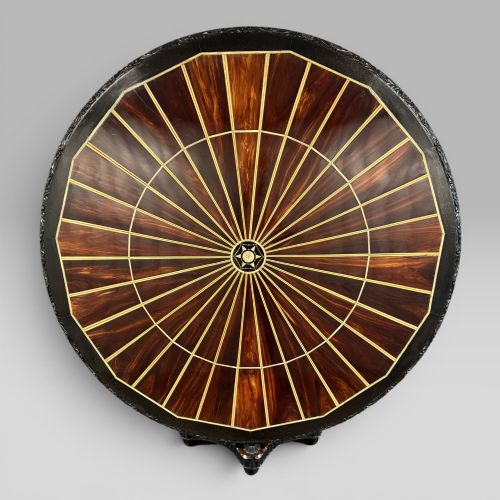
Tabletops featuring stone utilised specimen marble and pietra dura techniques, inlaying hardstones and mineral slices directly into slate or marble bases. Wood versions relied on precision marquetry and parquetry, cutting diverse timbers like calamander, burr-elm, and palmwood to create complex tonal patterns secured with hide glue.
Makers gathered fragments of stone and timber from across the globe just to make tea-time look like a geography lesson.
What Varies in Quality
Structural integrity of the base and support mechanism separates standard production pieces from bespoke workshop commissions. Tables featuring precise joinery, balanced pedestal supports, and seamless inlay alignment demonstrate the hand of a master cabinetmaker.
James Shoolbred·Anton Seuffert·Woodley family
The Victorian Specimen Table Glossary
- Specimen Marble
- Cut sections of different coloured marbles and stones arranged in geometric or pictorial patterns. These mineral segments are often polished flat to create a smooth, decorative tabletop.
- Marquetry
- The art of applying small pieces of veneer to a structure to form decorative patterns or pictures. Craftsmen select diverse woods to achieve natural tonal gradations without the use of paint.
- Pietra Dura
- An inlay technique utilising precisely cut and fitted sliced stones to create pictorial or abstract designs. Hardstones such as lapis lazuli and jasper frequently appear in these compositions.
- Parquetry
- Geometric mosaic woodwork used to cover floors or tabletops. It differs from marquetry by strictly employing angular, repeating geometric shapes rather than pictorial motifs.
- Calamander
- A heavy, durable wood featuring dark brown colouration with contrasting light streaks. This exotic timber originates from South Asia and appears frequently in nineteenth-century colonial furniture.
Victorian Specimen Table: Frequently Asked Questions
How are specimen tables cleaned?
Dust surfaces gently using a soft, dry cloth to prevent scratching polished stone or delicate wood veneers. Avoid harsh chemical cleaners and excessive moisture, which can damage historic glues and nineteenth-century polishes.
For stone tops, a damp cloth wrung out thoroughly removes minor marks safely. Wooden elements benefit from occasional applications of appropriate wax to maintain the grain and prevent timber from drying out.
Where should a specimen table be placed?
Position these tables away from direct sunlight and heat sources to protect sensitive wood veneers and natural stone from fading or warping. Placing a lamp or small display items on top highlights the intricate marquetry and geometric marble work.
Because many examples function as occasional or centre tables, ensure they sit in rooms with stable ambient temperatures and moderate humidity levels. This protects the historic joinery and delicate inlay work from environmental stress.
How do colonial pieces differ?
Colonial examples often incorporate indigenous timbers such as New Zealand native woods or Ceylonese ebony and calamander. These regional materials create distinct colour palettes and grain patterns not typically found in standard English domestic furniture.
Workshops in regions like the Galle District produced specific regional interpretations of nineteenth-century occasional and centre tables, utilising local carving traditions alongside European structural forms.