



Victorian Snap Table
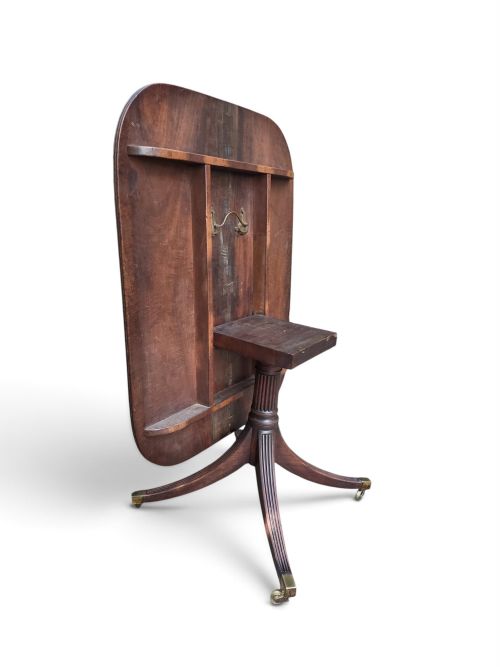
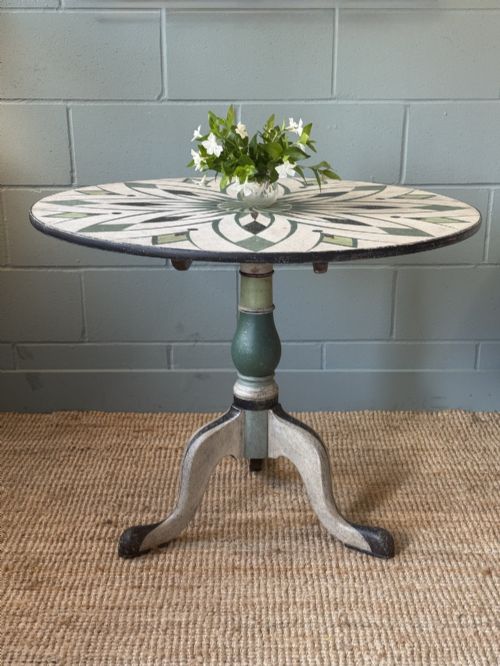
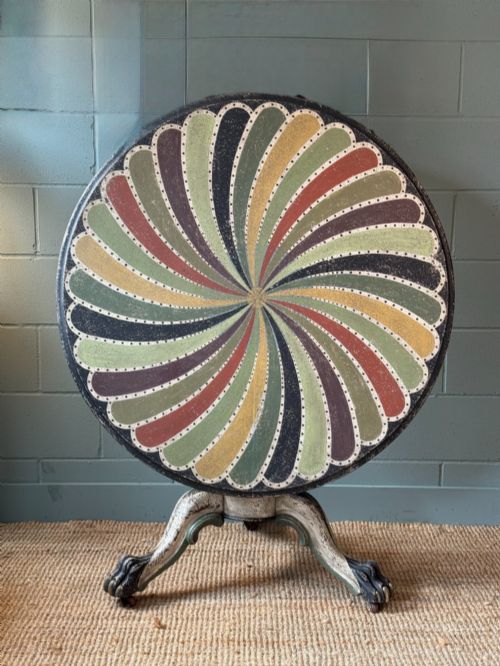
A victorian snap table saves precious floor space by folding flat against the wall when not in use.
Victorian Snap Table
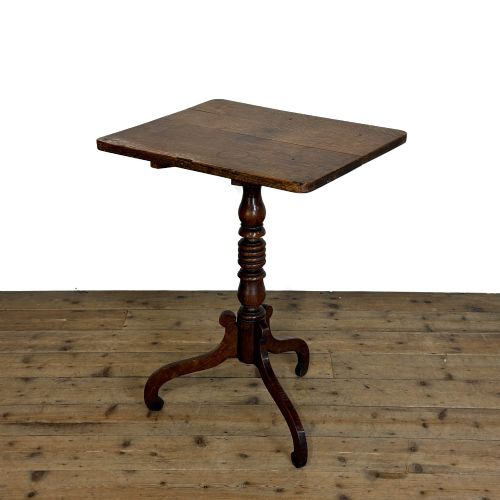
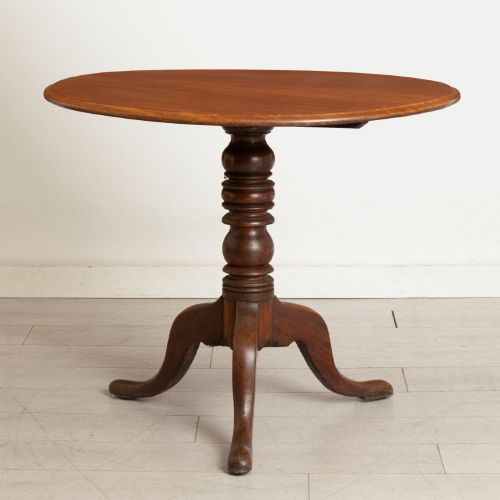
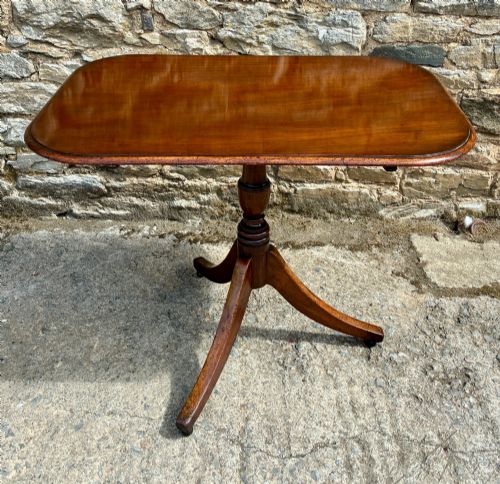
When you search for a victorian snap table, you are looking at clever timber furniture designed to tilt vertically on a central pedestal mechanism. These practical tables served dining, breakfast, or card playing purposes in nineteenth-century homes before stowing neatly away.
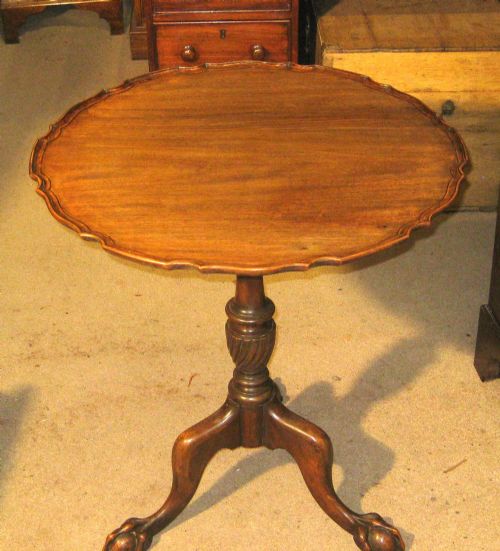
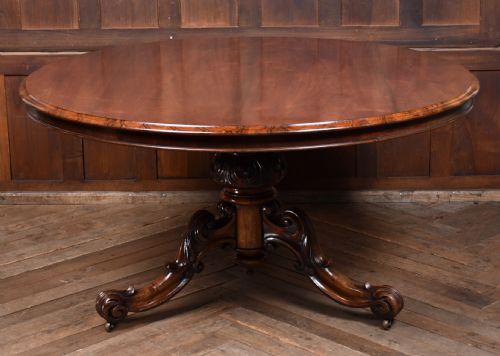
Mahogany and walnut versions dominate the selection, often appearing in circular, oval, or octagonal forms supported on tripod legs. You will also encounter occasional examples featuring decorative marquetry, painted floral motifs, or papier-mâché tops.
The mechanism relies on a brass catch or wooden peg system connecting the tilting top to the pillar block. This allows the surface to lock securely horizontal for use or drop flat for storage.
Materials and construction
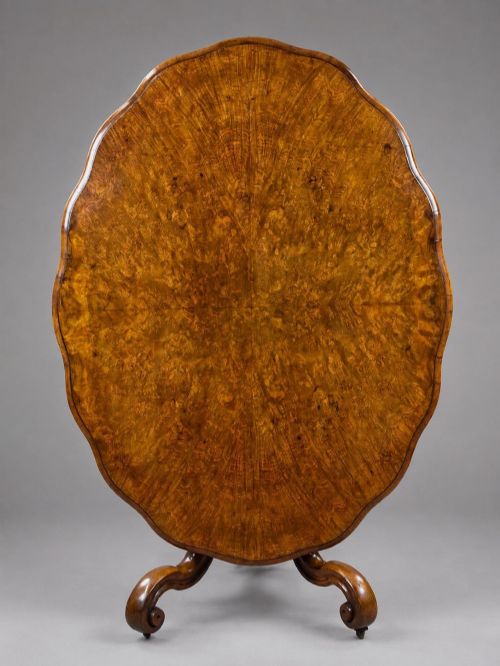
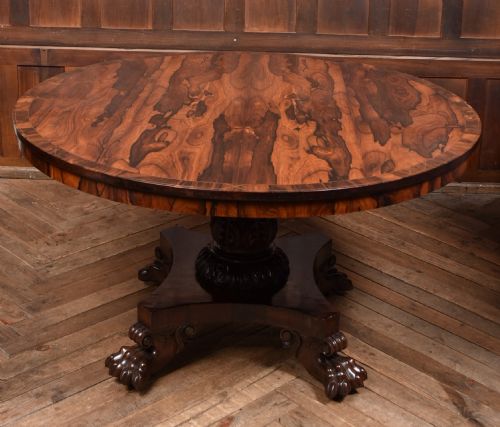
Cabinet makers built these tables using dense hardwoods like mahogany, walnut, and rosewood, frequently applying burr walnut veneers to the circular tops for striking grain patterns. Solid timbers formed the robust tripod bases and turned central pedestals.
The pivoting mechanism required precise joinery and brass fittings to ensure the top remained stable when horizontal without wobbling on its catch. Marquetry inlay, mother-of-pearl detailing, and hand-painted floral designs completed the surface enrichment on finer parlour pieces.
Quality variations
The distinction between standard and superior pieces lies in the choice of timber veneers and the crispness of the pedestal carving. Finer examples display highly figured burr walnut or meticulously matched rosewood grain across a generous circular top.
Engineering of the tilting mechanism also separates workshop tiers, with better tables operating smoothly on robust brass catches without lateral play in the locked position. The proportion between the diameter of the top and the spread of the tripod legs determines the overall stability.
The Victorian Snap Table Glossary
- Snap-top
- A table top fitted with a spring catch or pivoting mechanism allowing it to tilt upright against the pedestal base.
- Tilt-top
- An alternative descriptor for a table whose top hinges vertically for storage or convenience when not in use.
- Loo table
- A large round Victorian card and social table, frequently built with a tilting mechanism to save space.
- Tripod base
- A three-legged support structure commonly utilised on pedestal tables to prevent rocking on uneven floors.
- Pie crust edge
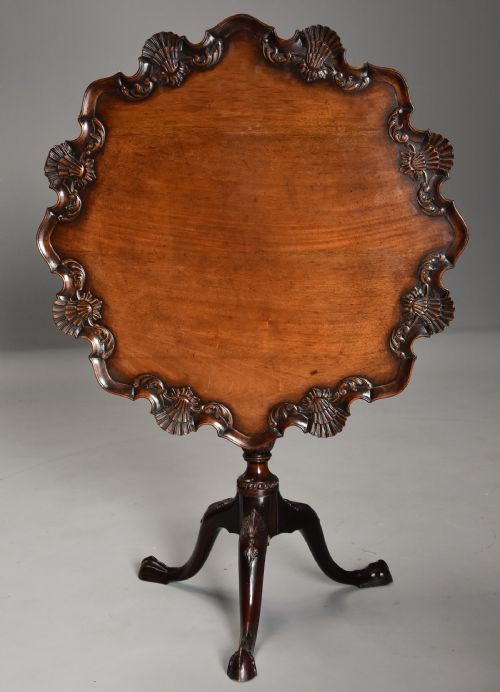
- A raised, carved ornamental rim shaping the perimeter of a circular wooden table top.
Victorian Snap Table: Frequently Asked Questions
How do you operate the snap mechanism?
Most tables use a sliding brass catch underneath the top that releases the locking pin when squeezed. Once disengaged, the surface pivots freely on its central hinge.
To lock it flat again, simply push the top down firmly until the spring catch clicks back into its housing. Ensure the catch engages fully before placing objects on the surface.
Were these used as dining tables?
Larger versions, often referred to as loo tables or breakfast tables, accommodated families for everyday meals in nineteenth-century parlours. Their tilting design cleared floor space in multi-use rooms once meals concluded.
Smaller occasional and lamp variants served bedside or drawing-room duties rather than formal dining. Their lightweight frames made them easy to reposition around the home.
How do I care for a polished wood top?
Keep nineteenth-century timber surfaces away from direct sunlight and radiators to prevent the wood veneers from drying out or splitting. Use coasters under glasses and avoid placing hot items directly on the polish.
Apply a traditional beeswax polish occasionally and buff gently with a soft cloth to maintain the lustre. Avoid silicone-based sprays which can damage antique French polish over time.
How do I distinguish mahogany from walnut?
Mahogany generally exhibits a reddish-brown hue with straight, uniform grain patterns that darken gracefully with age. It provides a sturdy, heavy structure ideal for traditional pedestal bases.
Walnut tends towards a richer chocolate brown colour featuring complex, swirling grain variations and burr patterns. Cabinet makers prized these decorative figures for the main display surfaces of Victorian tables.