




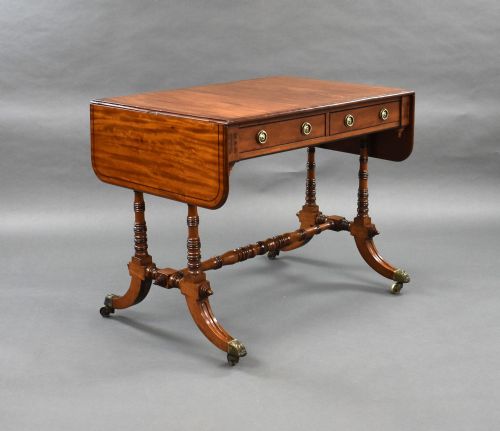


Georgian Tip Table
These georgian tip table pieces are clever space-saving furniture designed to tilt flat when not in use, offering both utility and craftsmanship.
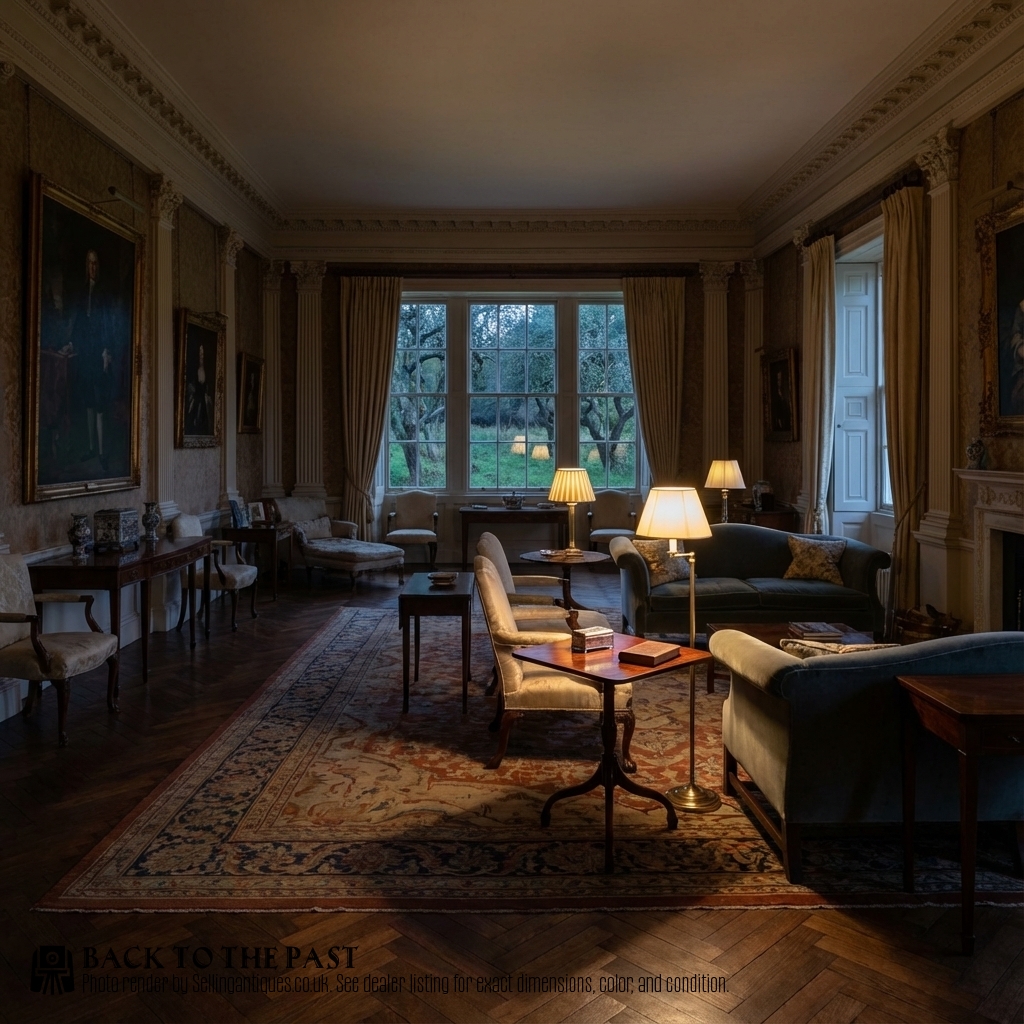
Georgian Tip Table
A georgian tip table is a versatile surface engineered with a hinged mechanism that allows the tabletop to pivot into a vertical position against the pedestal base. This design originally enabled the table to be stored flush against a wall when floor space was required for other activities in period rooms.
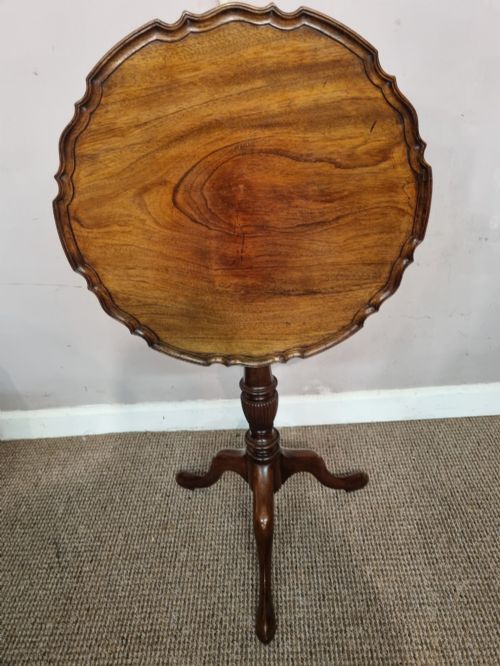
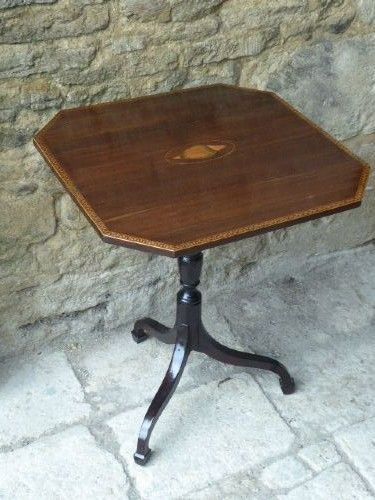
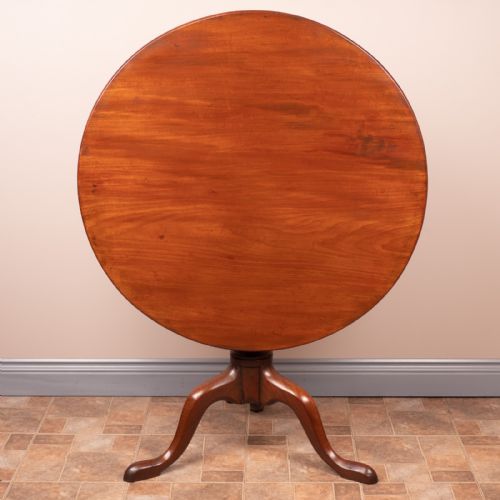
The pieces you encounter most frequently on this page belong to the Georgian and Regency eras, constructed primarily from mahogany with circular tops supported by tripod legs. Occasional tables and side tables dominate the selection, often featuring tripod bases that provide stable footing on uneven floors.
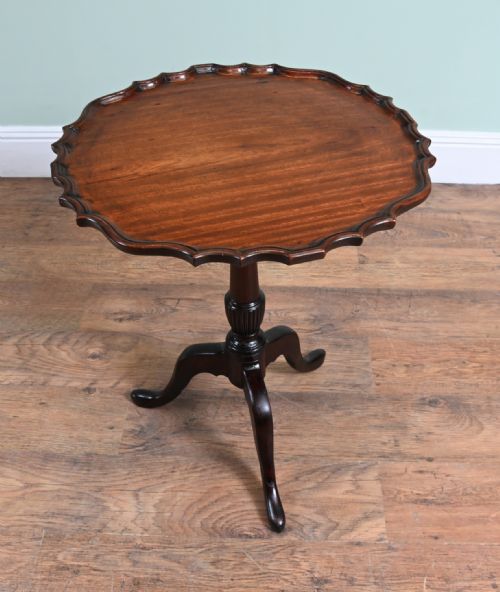
Variations span from simple rustic pine country examples to refined mahogany dining and wine tables with pie crust edges. You will also find occasional pieces incorporating birdcage mechanisms, which allow the top to rotate as well as tilt.
Materials and Construction Techniques
Makers relied heavily on dense timbers like mahogany, walnut, and oak, occasionally incorporating rosewood and pine for secondary woods or simpler country pieces. Mahogany provided the structural strength and stability required for slender tripod legs and turned pedestals without splitting under daily use.
The tilting action relies on specialised joinery and hardware, frequently utilising a birdcage mechanism of small wooden blocks and catches mounted beneath the top. Tops were turned on lathes or hand-carved to create circular or shaped profiles, sometimes featuring raised moulded edges or pie crust contours.
Georgian Tip Table Retail Price Guide 2026
Typical asking prices for georgian tip table among the pieces listed under this phrase on Sellingantiques today, from the lower quarter to the upper quarter. They describe what is for sale here now, not the wider market.
Listings feature woods spanning mahogany, rosewood, walnut, pine, and brass.
Evaluating Quality and Detail
The distinction between standard utility pieces and finer examples rests upon timber selection and the sophistication of the turning work. High-grade specimens utilise well-figured Cuban mahogany and feature crisply carved tripod legs terminating in neat pad or claw feet.
Mechanical complexity also separates pieces, with birdcage actions and sophisticated catch mechanisms demonstrating superior craftsmanship compared to basic hinged blocks. The sharpness of moulded edges, such as pie crust carving, indicates the skill of the original maker.
The Georgian Tip Table Glossary
- Tip-top table
- A table with a hinged top that pivots from horizontal to vertical for compact storage.
- Birdcage
- A timber framework beneath the tabletop that allows the surface to both rotate and tilt.
- Tripod base
- A pedestal support resting on three diverging legs, typical of smaller occasional tables.
- Pie crust edge
- A raised, decorative carved edge shaped in undulating curves resembling pastry work.
- Occasional table
- A small, moveable table intended for specific, intermittent use rather than permanent placement.
Georgian Tip Table: Frequently Asked Questions
How do you store a tip table?
Release the wooden catch or pin beneath the tabletop and pivot the surface upward until it rests flat against the central pedestal.
Once vertical, the table can be pushed back against a wall or corner to reclaim floor space in smaller rooms.
What is a birdcage mechanism?
A birdcage is a small wooden assembly fitted between the tabletop and the central pillar, constructed from short turned spindles.
This clever addition allows the table top to rotate horizontally in a full circle as well as tilt vertically.
Where were these tables used?
These tables served multiple functions in domestic interiors, acting as tea tables, wine tables, or general occasional surfaces.
Because they could be cleared and stored upright instantly, they moved easily between parlours, drawing rooms, and dining spaces.
How do I spot a Georgian piece?
Look for traditional timber choices such as richly patinated mahogany, oak, and walnut, combined with period construction methods like hand-turned tripod bases.
Many examples feature specific details like birdcage actions and moulded or pie crust edges characteristic of eighteenth-century design.