


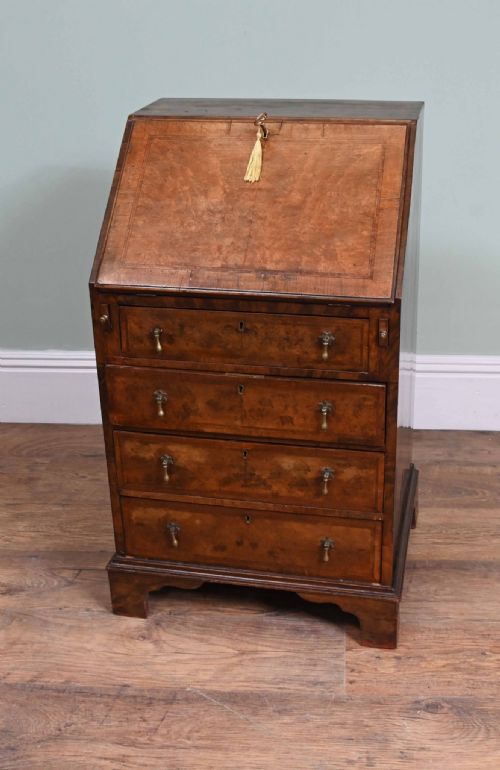

Victorian Slanted Desk
A Victorian slanted desk offers compact writing space with hinged lids and fitted interiors, bringing nineteenth-century craftsmanship into daily use.
Victorian Slanted Desk
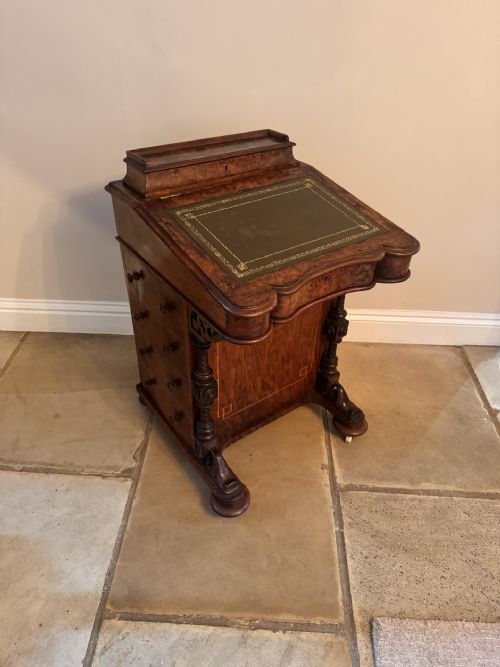
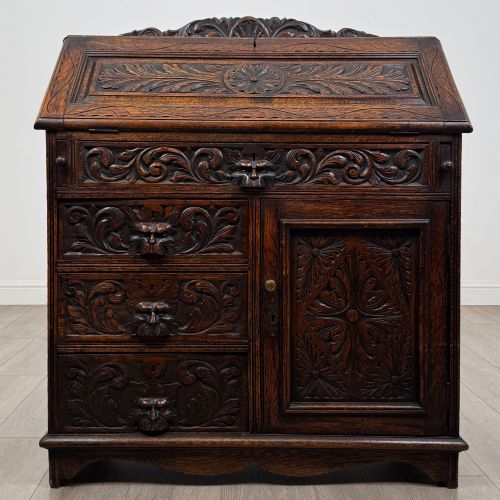
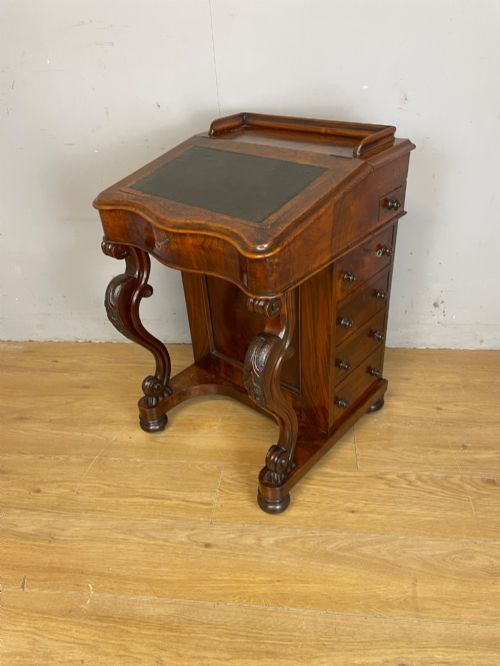
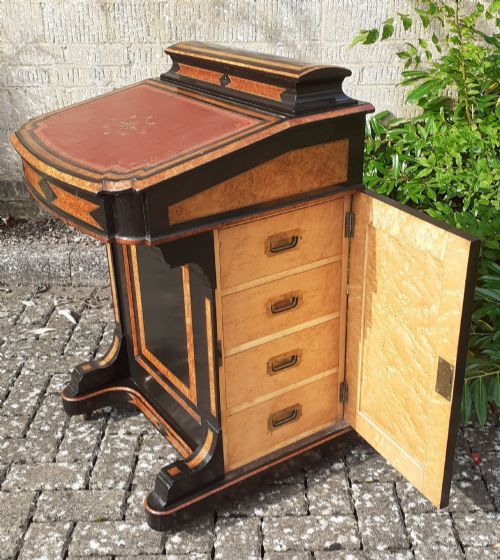
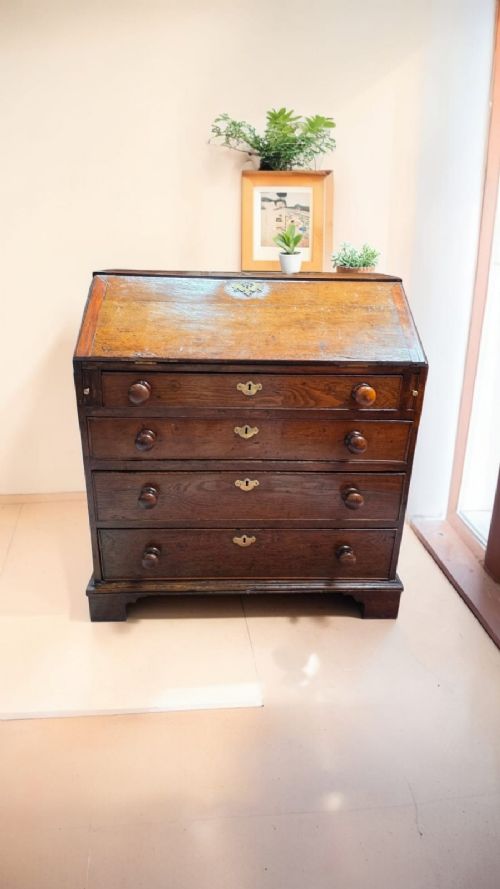
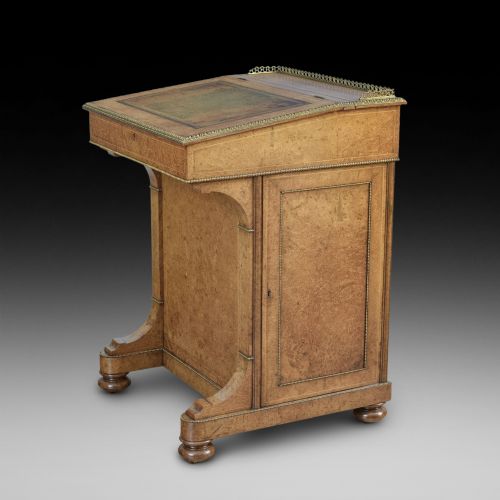
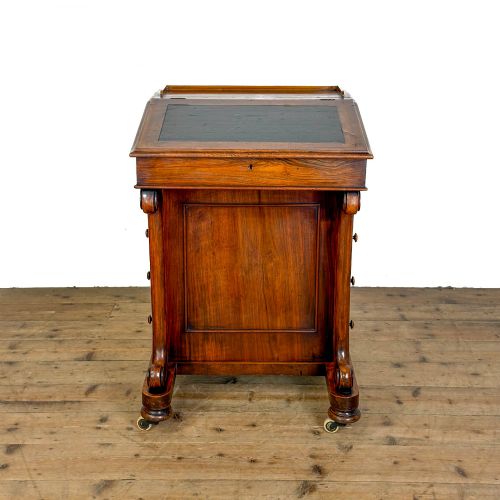
A Victorian slanted desk spans compact Davenport writing boxes, larger bureau bookcases, and architectural Dickens desks built during the nineteenth century. These pieces emerge in styles ranging from early Victorian mahogany and rosewood variants to late Victorian oak examples.
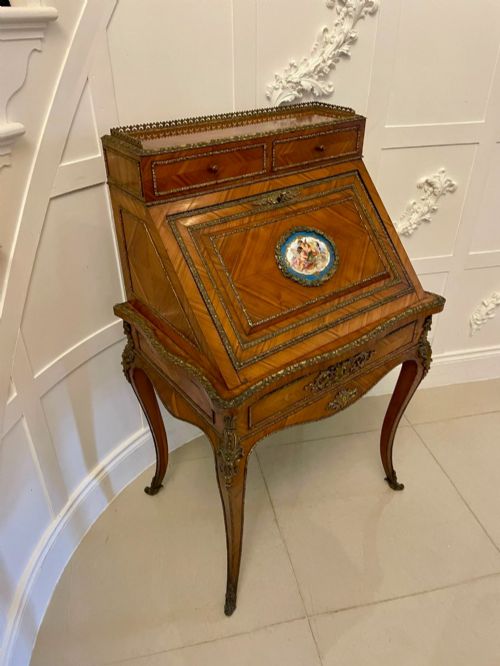
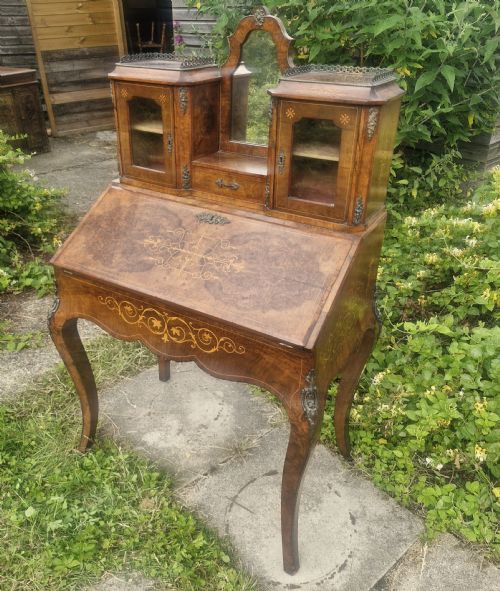
The Davenport desk dominates the selection, featuring a sloping lid that lifts to reveal small drawers and pigeonholes above a set of pedestal drawers. Alongside these sit bonheur du jour writing tables, stationery boxes, and occasional bureau desks incorporating floral marquetry or plain timber.
Materials and construction
Cabinetmakers constructed these writing pieces using dense hardwoods including mahogany, walnut, burr walnut, oak, and rosewood, often applying veneers and crossbanding to flat surfaces. Interiors frequently incorporate satinwood or maple for secondary drawer linings.
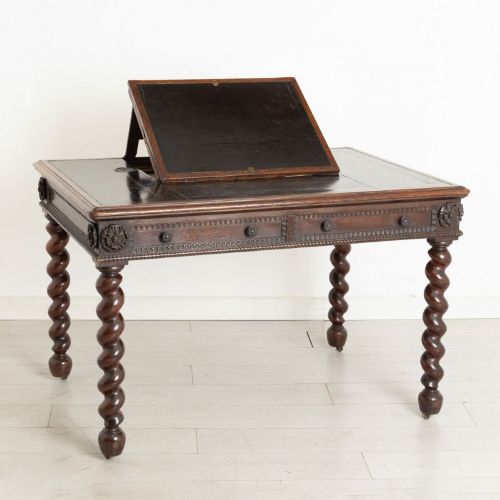
Metal mounts in brass and ormolu secure corners and hinges, whilst leather inserts provide writing surfaces on desks and architectural tables. Inlaid marquetry and contrasting timbers such as ebony and amboyna add decorative detail to bureau lids and cabinet fronts.
Materials range from indigenous English oak and mahogany to imported exotic timbers like amboyna, kingwood, and Jerusalem olivewood.
Standards of execution
Quality rests upon the selection of timber veneers, particularly the figure and grain matching found across burr walnut and kingwood surfaces. Finer examples display meticulous marquetry, crisp carving on oak Green Man motifs, and well-fitted internal stationery compartments.
Structural integrity depends on the precision of drawer construction, the retention of original brass hardware and working keys, and the condition of leather writing panels. Superior cabinetmaking shows consistency in secondary woods and clean movement within pedestal drawers and writing slopes.
Gillow and Co·Maple and Co·Pairs MFG Co
The Victorian Slanted Desk Glossary
- Davenport desk
- A compact writing desk featuring a sloping, hinged desktop above a pedestal of drawers. This form originated in the early nineteenth century and gained popularity for domestic study use.
- Bonheur du jour
- A light lady's writing table equipped with small drawers, shelves, or a cabinet on the upper surface. French influences appear frequently in these refined nineteenth-century pieces.
- Dickens desk
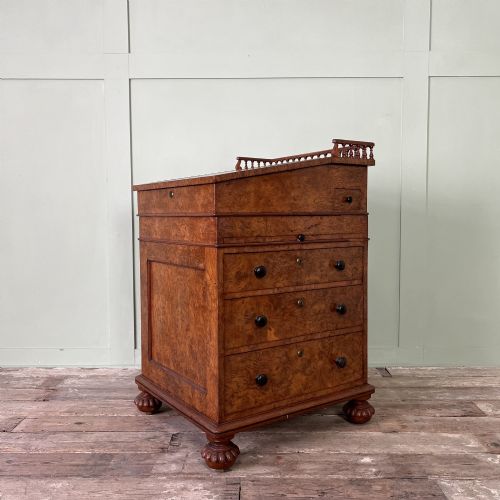
- A large partner's or single-sided pedestal desk featuring a raised superstructure of small drawers and pigeonholes above the writing surface. Oak and walnut versions appear in late nineteenth-century examples.
- Marquetry
- Decorative patterns formed by fitting together thin slices of wood veneer on a ground. Floral designs in burr walnut and exotic timbers distinguish high-status Victorian writing furniture.
- Secretaire
- A desk or cabinet containing a pull-down or sloping flap that conceals a fitted interior of small drawers and pigeonholes. These items combine storage utility with writing functionality.
Victorian Slanted Desk: Frequently Asked Questions
What is a Davenport desk?
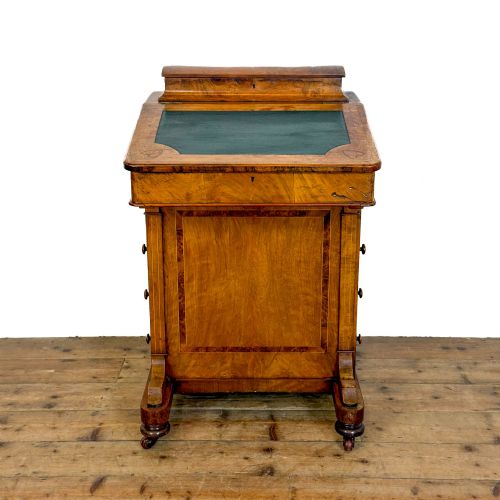
A Davenport desk is a small writing cabinet with a sloping lid that opens to reveal a fitted interior. The writing slope sits above a pedestal of side drawers.
Cabinetmakers designed these compact pieces for domestic writing tasks where floor space was limited.
How do I date a Victorian desk?
Dating relies on timber choices, construction methods, and stylistic details recorded across the nineteenth century. Early pieces often utilise solid mahogany, whilst later Victorian examples favour burr walnut and applied marquetry.
Hardware styles, secondary woods inside drawers, and incorporated revival motifs help narrow the manufacturing decade.
Where were these desks used?
Owners placed these writing pieces in drawing rooms, bedrooms, and private studies for correspondence and household administration. Compact models allowed writers to work comfortably whilst seated in smaller rooms.
Larger architectural and Dickens desks served in libraries and offices for managing papers and ledgers.
How do I maintain leather writing surfaces?
Leather inserts require gentle cleaning with a damp cloth and occasional treatment with appropriate conservation balms to prevent drying. Avoiding direct sunlight protects both the leather and the surrounding timber veneer.
Proper humidity control in the room prevents the wood and glue joints from shrinking or cracking.