


Victorian Silver Table Mirror
These victorian silver table mirror pieces bring reflected light and polished metalwork to a dressing table or sideboard.
Victorian Silver Table Mirror
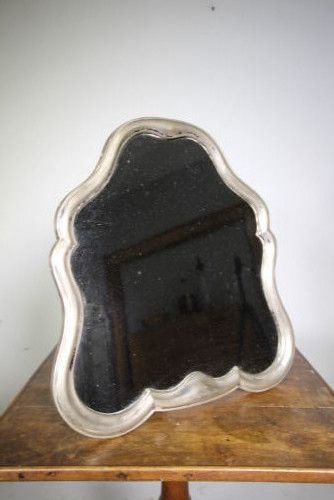
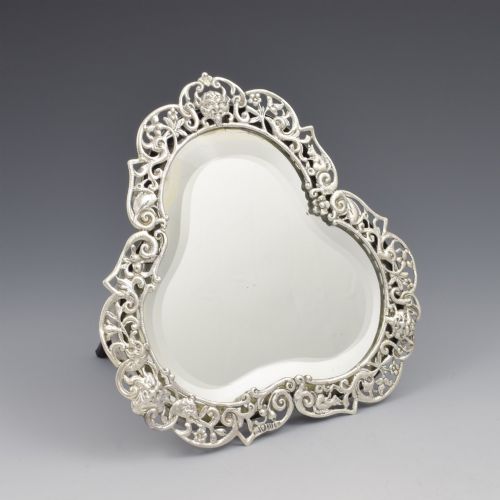
A victorian silver table mirror is typically encountered as an easel-backed dressing mirror or a low tabletop plateau. These objects appear in various configurations including heart shapes, circular frames, and rectangular formats supported by wooden struts.
The materials span sterling silver, silver plate, and silver gilt frames mounted around mirror glass. Backings frequently incorporate wood and velvet to support the weight of the silver work.
Stylistic influences range from straightforward Victorian utility to French rococo revival and organic art nouveau motifs. Pieces frequently emerge from workshops operating in London and Birmingham during the late nineteenth century.
Materials and Construction
Silversmiths utilised sheet sterling silver or silver plate over a foundational structure, often incorporating wood or velvet backs for stability. Frames were embossed, pierced, or cast with detailed flora, fauna, and scrollwork.
Easel mechanisms relied on hinged wooden or metal struts covered in fabric to hold the glass upright at a fixed angle. Silver deposit techniques were also applied directly to ceramic or glass surfaces in specialised workshops.
Listings feature sterling silver, silver plate, and silver gilt alongside glass, wood, and velvet materials across the nineteenth century.
Judging Quality
Quality rests upon the crispness of the chasing and the depth of the metal relief work. Superior pieces display finely detailed animals, birds, or asymmetrical rococo scrolls rather than shallow, mass-produced stamping.
The integrity of the original backing and easel strut significantly affects the standard of a piece. Well-preserved mirror glass and clear hallmarks stamped by recognised makers elevate the standing of an individual mirror.
William Comyns·Henry Matthews·Jean Gille
The Victorian Silver Table Mirror Glossary
- Easel mirror
- A looking glass supported by a hinged prop attached to the rear, allowing it to stand upright on flat surfaces without wall hanging.
- Silver deposit
- A decorative technique where pure silver is chemically and electrically bonded onto a ceramic or glass substrate to form intricate patterns.
- Plateau
- A mirrored tabletop stand traditionally placed in the centre of a dining table to hold ornaments, candelabra, or glass vessels.
- Sterling silver
- An alloy consisting of ninety-two point five percent silver by mass, with the remainder comprising copper or other metals for durability.
- Silver gilt
- Silver objects that have been coated with a thin layer of gold applied to the exterior surface.
Victorian Silver Table Mirror: Frequently Asked Questions
How do I clean a silver mirror frame?
Clean the silver using a soft microfibre cloth and a gentle, non-abrasive silver polish to avoid damaging the embossed details.
Keep moisture away from the mirror glass edges and the wooden backing during the polishing process.
Can I replace the original mirror glass?
Replacing the glass is possible, though retaining the original bevelled glass preserves the historic character and integrity of the object.
Original glass frequently shows slight foxing or age spots which collectors prefer to keep intact.
How were table plateaux used originally?
Table plateaux served as decorative centrepieces on dining tables to reflect candlelight and display ornamental silver or porcelain.
They protected polished wood table surfaces from heat and wax drips while creating a sense of increased space.
Are easel backs usually original?
Many easel backs survive intact, covered in velvet or leather with metal or wooden support struts.
Replacements do occur due to heavy daily use, so checking the fixings helps determine originality.