
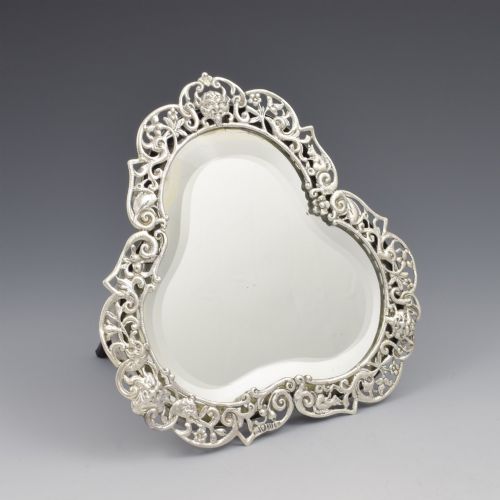


Silver Tabletop Dressing Mirror
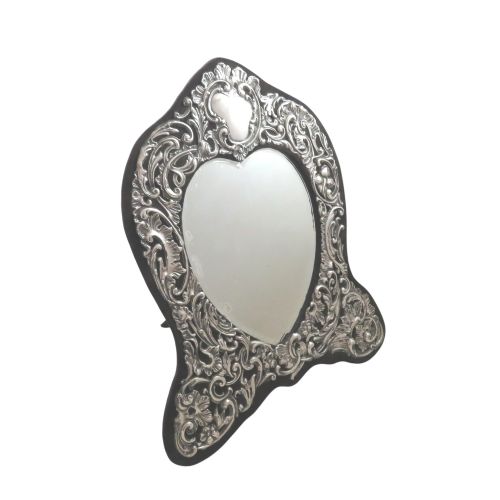
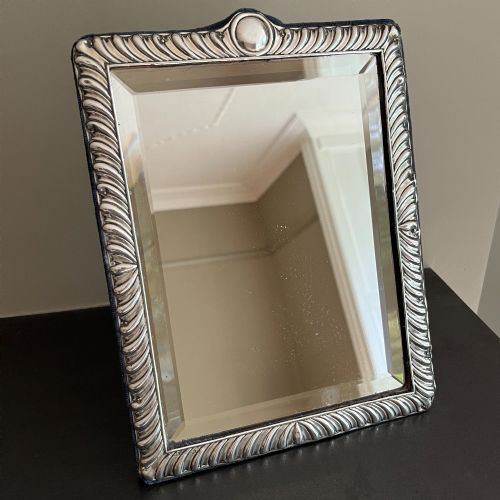
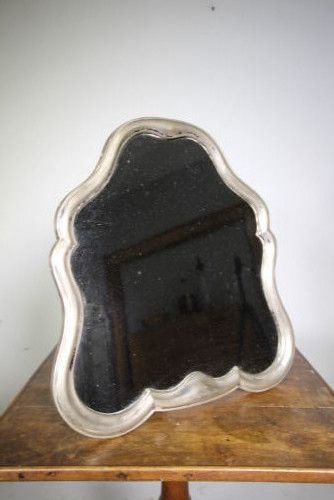
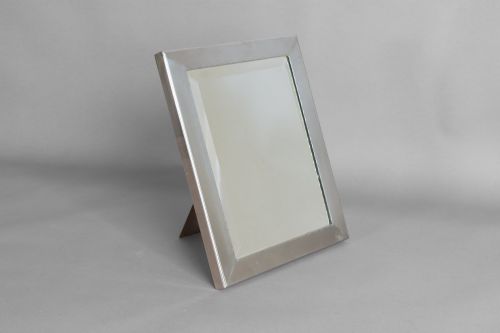
These silver tabletop dressing mirrors are practical boudoir furnishings built to sit on a chest or vanity, offering a clear reflection alongside decorative metalwork.
Silver Tabletop Dressing Mirror
A silver tabletop dressing mirror is a portable looking glass designed for dressing tables and vanities, supported by a sturdy back or easel frame. These pieces appear in forms ranging from simple strut mirrors to large triptychs and ornate vanity mirrors.
The versions most common on this page date from the Victorian and Edwardian eras, alongside pieces from the 1900 period and later Art Deco designs. Makers utilised sterling silver, silver plate, and silver gilt alongside wood, glass, and velvet to construct these dressing accessories.
Stylistic influences vary significantly, taking shape through Victorian Rococo Revival scrolls, Edwardian simplicity, Art Nouveau floral motifs, and French Art Deco geometry. Buyers often select them to add functional reflection and period character to a bedroom or dressing room.
Materials and Construction
Silversmiths constructed the outer frames using sterling silver, silver plate, or silvered copper mounted over wooden cores or backed with supportive timber structures. Many examples incorporate glass mirror plates secured within heavy metal mounts, often lined with velvet at the reverse.
Techniques such as piercing, embossing, and silver depositing allowed craftsmen to create intricate borders featuring animals, birds, and botanical motifs. Easel backs and hinged struts were engineered to prop the mirror securely at an angle on flat surfaces.
Some Edwardian dressing mirrors feature whimsical pierced borders decorated with tiny metal birds and animals peering out from the silver foliage.
Assessing Quality and Craftsmanship
Quality in a silver tabletop dressing mirror rests upon the weight of the metal and the depth of the repoussé or pierced work decorating the frame. Heavier gauge sterling silver mounts and crisp, hand-chased details distinguish finer workshop productions from lighter stamped items.
The integrity of the structural support, such as a sturdy wooden easel back and intact velvet lining, dictates longevity. Original mirror glass with minimal foxing and fully functional hinges also elevates the standing of a piece.
WMF·Jean Gille·William Comyns·Henry Matthews
The Silver Tabletop Dressing Mirror Glossary
- Strut mirror
- A looking glass supported by a hinged leg or prop attached to the back. This mechanism allows the mirror to tilt at various angles on a table.
- Easel mirror
- A dressing mirror held upright by a rear support frame resembling an artist easel. This design was widely utilised throughout the Victorian and Edwardian periods.
- Silver gilt
- Silver that has been coated with a thin layer of gold on its surface. This technique produces a warm, rich finish seen on specific antique mirrors.
- Triptych
- A three-panel mirror where the two outer hinged wings fold over the central glass. This configuration allows the user to adjust the viewing angles.
- Silver deposit
- A decorative technique where sterling silver designs are chemically bonded directly onto a porcelain or glass base. Pieces by makers like Jean Gille frequently employ this method.
Silver Tabletop Dressing Mirror: Frequently Asked Questions
How do I date a silver dressing mirror?
Dating relies primarily on hallmarks stamped into the silver frame, which indicate the assay office, city, and year of manufacture. Stylistic clues like Art Nouveau whiplash lines or Victorian Rococo scrolls also help narrow the period.
Examining the backing materials, such as original wood cores and aged velvet, provides further context for the age of the piece.
How were these mirrors used?
These mirrors were placed on dressing tables, chests of drawers, or vanities to assist with personal grooming, styling hair, and applying cosmetics. Their portable nature allowed owners to move them around boudoirs to catch optimal daylight.
Larger triptych and tabletop versions served as permanent fixtures in Victorian and Edwardian dressing rooms.
Can tarnished silver frames be cleaned?
Silver frames naturally tarnish over time when exposed to the air, which is a normal characteristic of antique silver. Gentle cleaning with a specialised silver cloth helps maintain the shine without damaging the metalwork.
Care must be taken around mirror glass edges and velvet backings to prevent moisture from seeping into the frame.