





Victorian Silver Table Lighter
These victorian silver table lighter pieces bring period smoking rooms to life with clever novelty forms and gleaming metalwork.
Victorian Silver Table Lighter
A victorian silver table lighter is a desk or smoking room accessory designed to hold a flame for cigars and pipes. These pieces emerge in various forms during the nineteenth century, from simple sterling vessels to elaborate novelties.
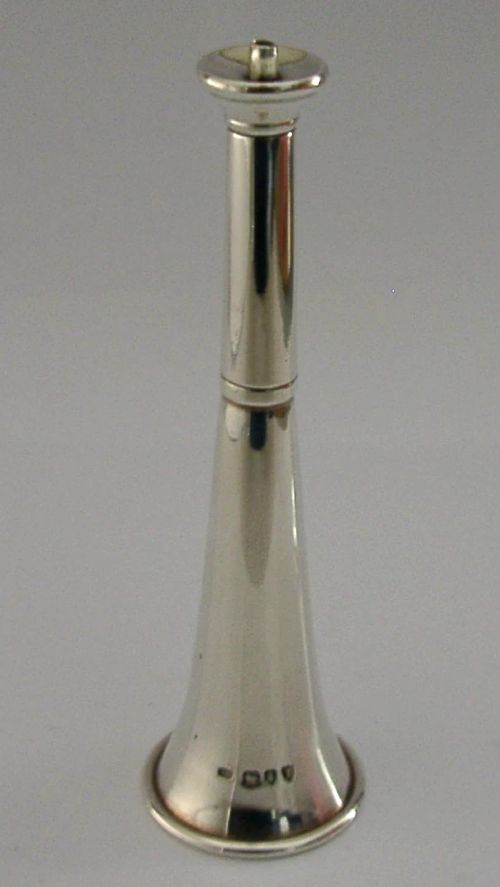
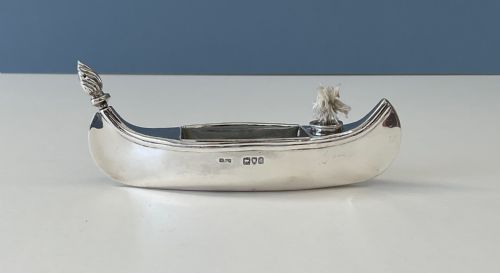
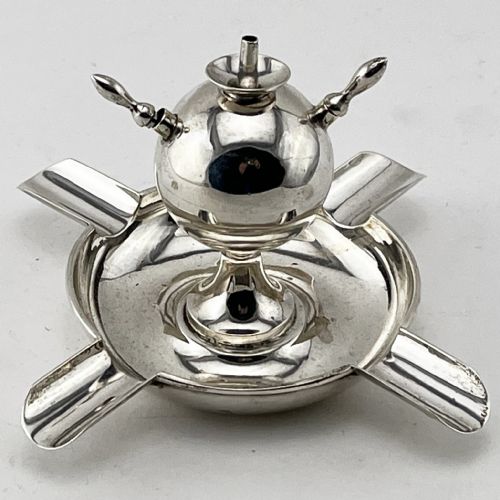
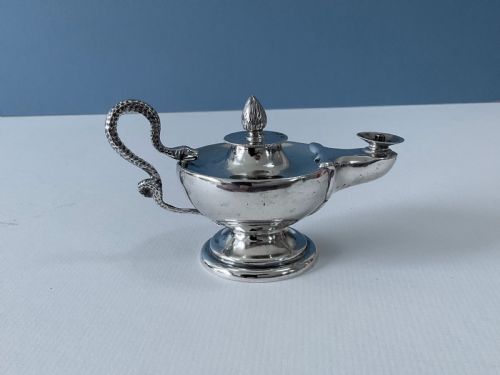
The most common examples on this page take the shape of hunting horns, canoes, and Aladdin's lamps. Makers also fashioned smoking compendiums and cigar boxes incorporating lighters alongside match strikers.
Originating predominantly in the Victorian era, these items reflect the social rituals of nineteenth century smoking culture. Collectors encounter both solid sterling silver and silver plated versions spanning the decades from eighteen sixty to nineteen hundred.
How they were made
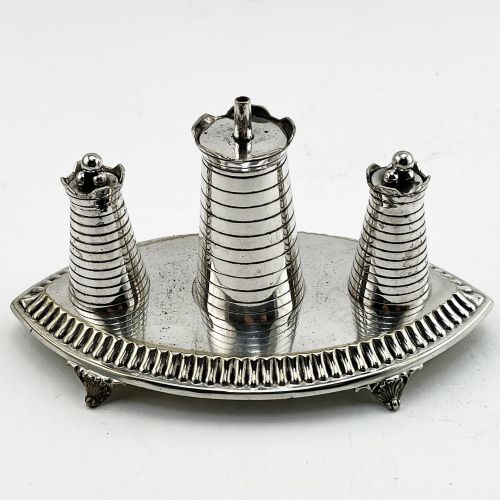
Silversmiths utilised sterling silver and silver plate over metal foundations to shape these complex figural designs. Casting and hammering techniques allowed craftsmen to render detailed subjects like castle turrets, fire carriages, and animal horns.
Functional elements included a fabric wick fed through the body of the lighter to hold the flame. Artisans frequently combined silver with cut glass, horn, and metal components to build varied smoking accessories.
Listings feature items from the Victorian period, including specific dates across the nineteenth and early twentieth centuries.
What varies in quality
Quality rests in the crispness of the modelling and the fidelity of the novelty shape, whether cast as a hunting horn or a detailed castle. Superior examples display sharp maker marks, careful chasing, and robust structural integrity across hinges and mounts.
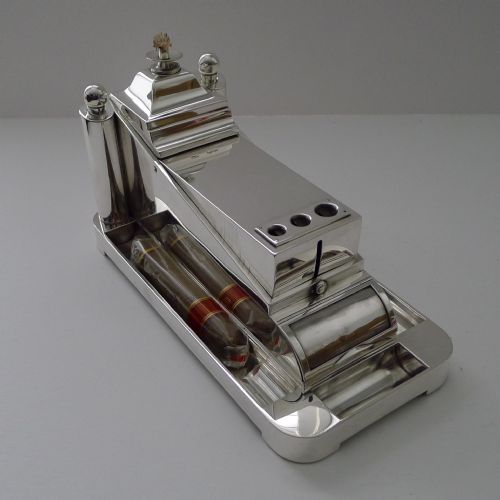
The choice of materials also separates standard production items from exceptional commissions. Pieces featuring solid sterling silver, integrated match strikers, and complex wheeled carriages demonstrate higher craftsmanship than simpler plated alternatives.
Braham·Wright and Davies·Elkington·Richard Hodd and Son·John Wilmin Figg
The Victorian Silver Table Lighter Glossary
- Sterling Silver
- A silver alloy containing ninety-two point five percent pure silver by mass, standard for quality British plate. This material provides the primary body for many high end Victorian desk accessories.
- Silver Plate
- A layer of silver applied to a base metal core such as copper or nickel silver. This technique allowed Victorian manufacturers to produce large novelty lighters more affordably.
- Smoking Compendium
- A fitted box or stand housing multiple smoking accessories including lighters, match strikers, and cigar cutters. These sets organised the desktop of the nineteenth century smoker.
- Novelty Lighter
- A functional piece fashioned into a playful or specific shape rather than a standard geometric vessel. Common Victorian motifs included animal horns, lamps, and vehicles.
- Match Striker
- A textured surface integrated into a smoking accessory to ignite sulfur matches. They frequently accompany table lighters in compendium sets.
Victorian Silver Table Lighter: Frequently Asked Questions
How did a victorian silver table lighter work?
These lighters relied on an internal reservoir holding fuel and a fabric wick that protruded through a burner nozzle. Users lit the exposed wick to apply a flame to cigars or pipes.
Once finished, a small snuffer cap attached to a chain was placed over the wick to extinguish the flame. The fuel reservoir kept the flame burning steadily on the smoking table.
What is a smoking compendium?
A smoking compendium is a coordinated set of smoking accessories housed together on a tray or inside a cabinet. They typically combined a table lighter with match holders, ash trays, and cigar storage.
Wealthy Victorians kept these compendiums in studies and drawing rooms for guests. They coordinated multiple desk functions into a single decorative centrepiece.
Are novelty lighters heavier than standard ones?
Novelty lighters often require more complex casting work, particularly when shaped as animals, vehicles, or architectural models like castles. This intricate metalwork can add considerable weight compared to plain columnar designs.
The addition of functional elements like wheels, horns, and double lidded boxes also increases the mass of the piece. Solid silver novelty items feel particularly substantial in the hand.
How do I identify a Victorian period piece?
Identification relies on examining hallmarks stamped into the silver, which record the maker, assay office, and year of production. Stylistic cues such as Classical Revival motifs or specific Victorian manufacturing techniques also point to the era.
The presence of original fabric wicks and period wear patterns further confirms nineteenth century origins. Comparing known maker marks helps narrow down the exact decade of manufacture.