




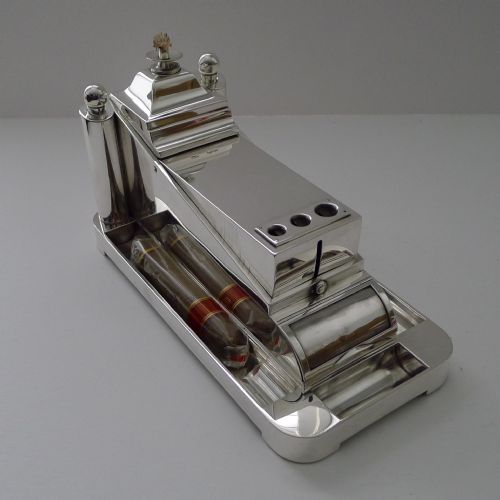


Novelty Silver Table Lighter
These novelty silver table lighter pieces are whimsical smoking accessories shaped like animals, vehicles and ancient lamps, designed to sit on a dining or smoking room table.
Novelty Silver Table Lighter
When you search for a novelty silver table lighter, you encounter functional smoking accessories shaped to resemble familiar objects rather than standard cylinders or boxes. The pieces on this page span the Victorian and Edwardian periods, stretching into the 1920s.
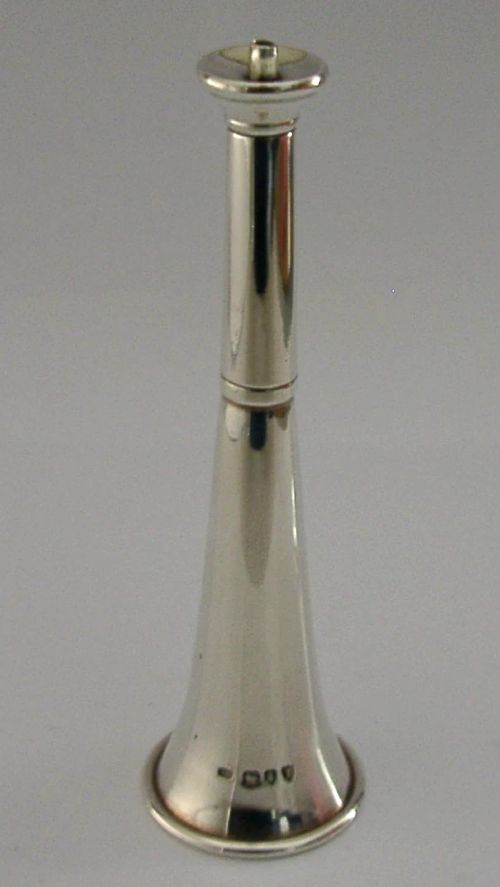
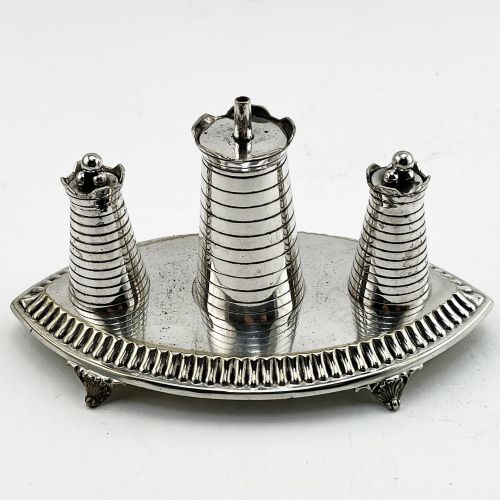
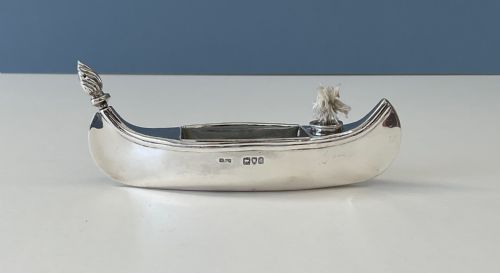
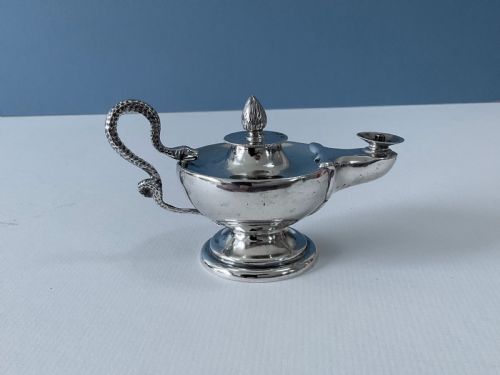
Most examples take distinct representational forms such as hunting horns, canoes, frogs, castles, lighthouses and classical oil lamps like Aladdin's designs. Others appear as smoking compendiums on wheels or take the shape of a fire carriage.
You are most likely to meet sterling silver or silver plate versions produced by prominent silversmiths in London during the late nineteenth and early twentieth centuries. These functional items served as conversation pieces in smoking rooms and gentlemen's studies.
How they were made
Silversmiths utilised sterling silver or silver plate over a base metal, shaping the metal through casting, chasing and repoussé techniques to achieve realistic anatomical or architectural details. Cut glass and horn occasionally provide contrasting textures on compendiums and lighter bodies.
A cotton fabric wick protrudes from an aperture in the design, drawing fuel from an internal reservoir housed within the sculptural body. The wick assembly often screws out to allow refuelling with liquid fuel for the flame.
Listings feature items spanning from the Victorian and Edwardian eras into the 1920s, incorporating materials such as sterling silver, silver plate, horn and cut glass.
What varies in quality
Maker marks and clear hallmarks significantly elevate an example, as does the complexity of the moving parts and the weight of the solid sterling silver used in the construction. Pieces incorporating wheeled chassis or multi-part compendium designs require intricate engineering.
Joseph Braham·Elkington·The Goldsmiths And Silversmiths Co·Collingwood And Co·John Wilmin Figg
The Novelty Silver Table Lighter Glossary
- Table lighter
- A portable or stationary device designed to sit on a piece of furniture for lighting cigars and cigarettes. These items were essential accessories in period domestic smoking environments.
- Smoking compendium
- A desk or table accessory that combines a table lighter with storage for matches, cigars or cigarettes. They frequently incorporate whimsical shapes like carriages or wheeled vessels.
- Sterling silver
- An alloy consisting of ninety-two point five percent silver by mass and seven point five percent other metals, usually copper. British pieces carry standard hallmarks to verify this composition.
- Silver plate
- A layer of silver applied to a base metal core such as nickel silver. Makers like Elkington utilised this method to produce larger or more sculptural pieces at a lower cost than solid silver.
- Repoussé
- A metalworking technique where the silversmith hammers the metal from the reverse side to form a raised design in relief. This method creates the three-dimensional contours seen on animal and lamp lighters.
Novelty Silver Table Lighter: Frequently Asked Questions
How did a novelty silver table lighter work?
These lighters functioned by holding a liquid fuel inside the sculptural body, which fed a cotton fabric wick protruding from the top. A user would ignite the exposed wick to light cigars or pipes in a drawing room or smoking room.
Many examples feature a removable burner cap attached by a small chain to extinguish the flame when finished. The fuel reservoir was typically filled by unscrewing a dedicated plug or the burner assembly itself.
Where were novelty table lighters used?
They sat upon dining tables, sideboards, or smoking room desks in wealthy nineteenth and early twentieth-century households. Guests and hosts utilised them at the conclusion of a meal or during evening gatherings.
Because smoking was often confined to specific rooms, these accessories remained stationary on tables rather than being carried in a pocket. Their whimsical shapes served as humorous conversation pieces among guests.
What is the difference between solid silver and silver plate?
Solid sterling silver pieces consist entirely of silver alloy meeting strict purity standards and bear official hallmarks showing the lion passant and maker's marks. Silver plate items use a thin layer of silver bonded to a base metal substrate like nickel silver.
Plate allowed makers to produce larger or more complex forms, such as fire carriages or castles, without the prohibitive cost of massive solid silver blocks. Both types were used for high-end novelty lighters depending on the manufacturer.
How do I date a silver table lighter?
British silver items carry a set of hallmarks that include a date letter indicating the exact year of assay and manufacture. Examining the leopard head for London and the specific letter punch allows accurate dating.
Stylistic cues such as Victorian ornamentation, Edwardian refinement, or later Art Deco geometric influences also help narrow down the period when hallmarks are rubbed or absent on plated items.