






Silver Desk Lighter
A silver desk lighter brings a flicker of Victorian and mid-century ceremony to a modern room.
Silver Desk Lighter
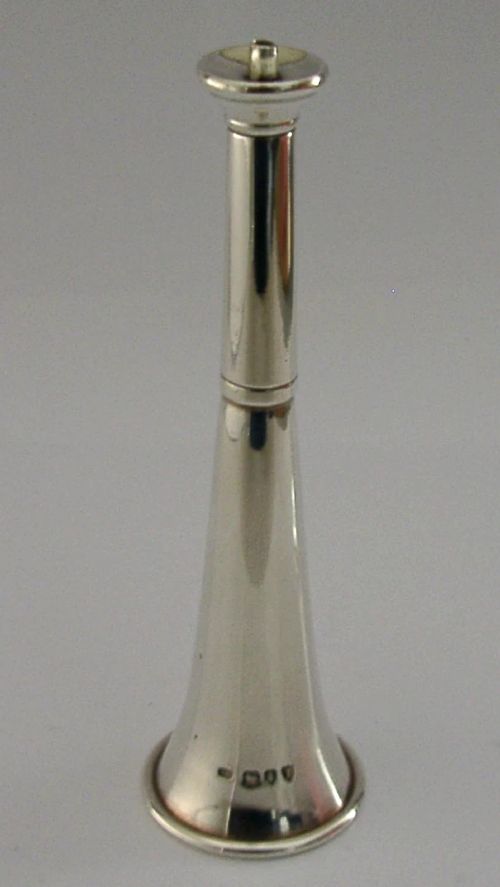
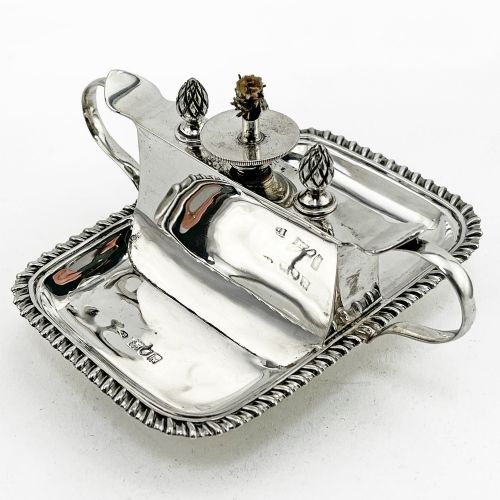
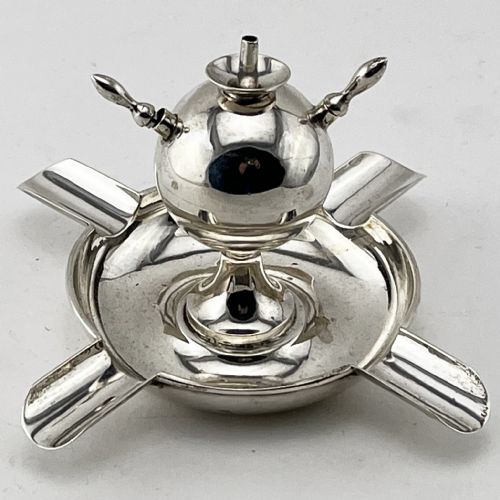
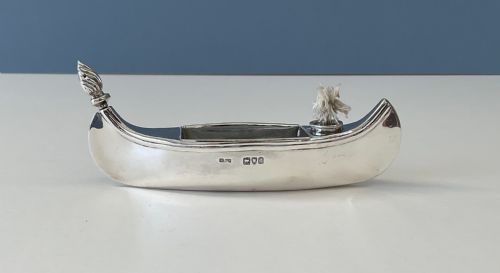
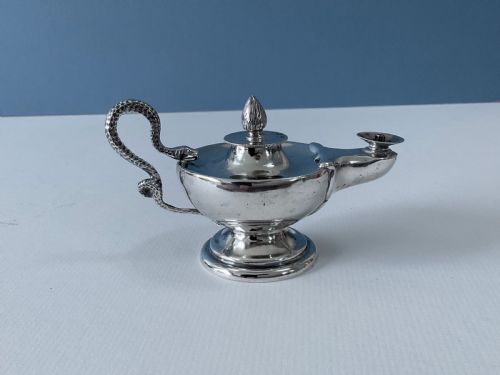
A silver desk lighter is a substantial smoking accessory designed to sit upon a library table or partner's desk. When you search for a silver desk lighter, you encounter forms ranging from classical oil lamps to novelty hunting horns, canoes, and fire carriages.
The pieces on this page span the Victorian, Edwardian, and mid-century periods. You are most likely to meet sterling silver table lighters shaped like Aladdin's lamps or cast in the form of novelty objects from the late nineteenth and early twentieth centuries.
How they were made
Makers fashioned these pieces primarily from sterling silver, silver plate, and gilt brass, often incorporating shagreen, lucite, perspex, onyx, and lapis lazuli into the bodies. Metalwork techniques involved casting, chasing, and engraving to render intricate details such as fox hunting horns and classical vessels.
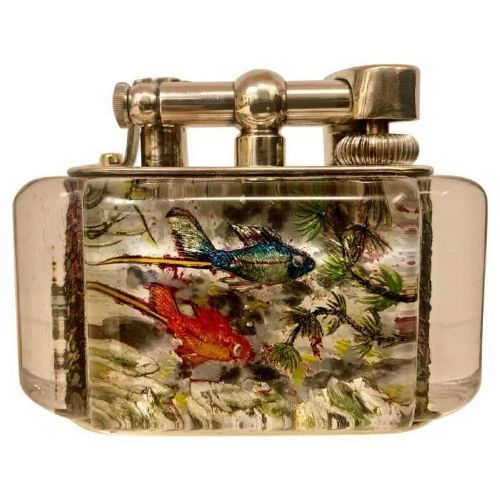
Many examples combine heavy metal mounts with glass or fabric wicks, while mid-century iterations integrate specialised lighter mechanisms within transparent enclosures or structured smoking compendiums.
Silver Desk Lighter Retail Price Guide 2026
Typical asking prices for silver desk lighter among the pieces listed under this phrase on Sellingantiques today, from the lower quarter to the upper quarter. They describe what is for sale here now, not the wider market.
Victorian smokers could light their cigars from a miniature silver fire carriage or an authentic fox hunting horn.
What varies in quality
Quality rests upon the crispness of the casting and the crispness of the hallmarks stamped into the metal. Pieces by notable makers show superior hand-chasing and structural weight compared to standard production.
The integrity of combined materials, such as the fit of shagreen panels or the clarity of lucite in aquarium designs, separates ordinary examples from exceptional ones.
Braham·Goldsmith & Silversmith·Dunhill·Christopher Lawrence·Hermes, Paris·Comyns·Mappin & Webb·George Betjemann·Richard Hodd and Son
The Silver Desk Lighter Glossary
- Sterling silver
- An alloy containing 92.5 percent silver by mass, forming the primary metal body of most traditional desk lighters.
- Table lighter
- A stationary lighting device scaled for domestic desk or smoking room use rather than pocket carriage.
- Smoking compendium
- A fitted box or desk set housing a lighter alongside compartments for cigars, cigarettes, or matches.
- Vesta case
- A small portable container used for holding safety matches, frequently adapted into larger desk smoking sets.
- Shagreen
- Untanned leather with a granulated surface, often dyed and applied to decorative boxes and lighter bodies during the Art Deco period.
Silver Desk Lighter: Frequently Asked Questions
How were silver desk lighters used?
These pieces sat permanently on desks or smoking tables to provide a steady flame for cigars and cigarettes. Guests and hosts used them in drawing rooms and studies during formal gatherings.
They often formed part of a larger smoking compendium alongside matching boxes and trays for ash.
How do I date a silver desk lighter?
You date them primarily by reading the hallmarks stamped onto the silver body, which indicate the assay office and year of production. Stylistic clues such as Art Deco geometric lines or Victorian novelty figural shapes also point to specific eras.
Mid-century examples rely on known maker periods and mechanical patents rather than traditional town marks.
Are novelty desk lighters harder to find?
Novelty forms shaped like hunting horns, animals, and vehicles were produced in smaller quantities than standard lamp shapes. Their whimsical designs made them popular gifts, leading to high attrition rates over time.
Consequently, surviving figural pieces from the Victorian era appear less frequently in collections.
How do I care for silver and mixed materials?
Gentle dusting and careful polishing with a specialised cloth keep silver mounts bright without abrading recessed chasing. Care must be taken around organic elements like shagreen or delicate lucite panels.
Harsh chemical dips should be avoided to protect internal mechanisms and fitted decorative inlays.