








Victorian Silver Lighter
These Victorian silver lighters bring striking form and functional craftsmanship to the smoking table, offering both novelty design and period utility.

Victorian Silver Lighter
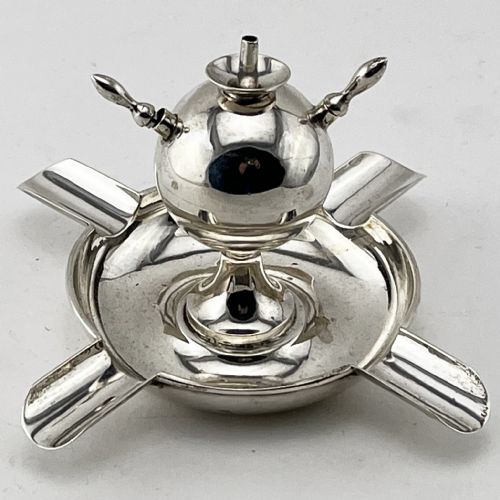
A victorian silver lighter encompasses table lighters, cigar lighters, tinder tubes, and novelty smoking accessories designed to sit upon a desk or smoking table. These pieces emerge from the nineteenth century, with specific examples spanning from the eighteen-sixties through to nineteen hundred.
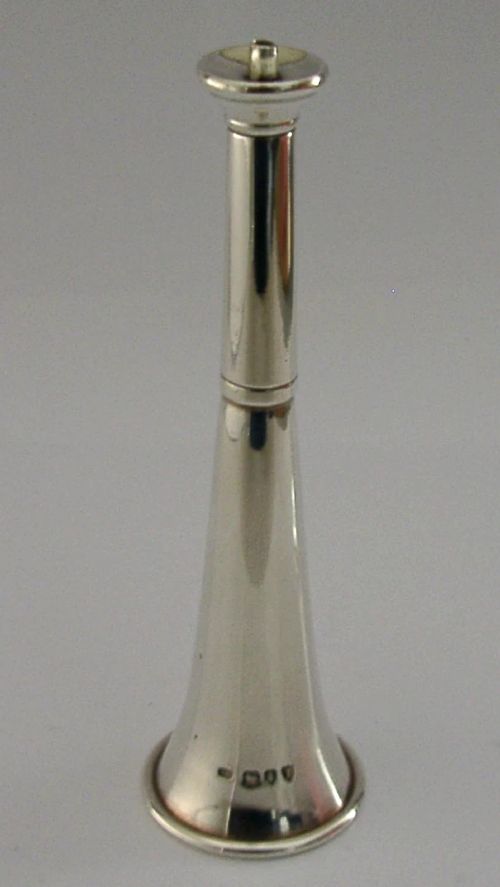
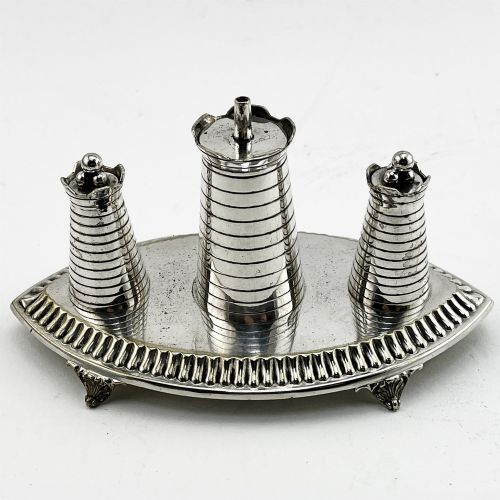
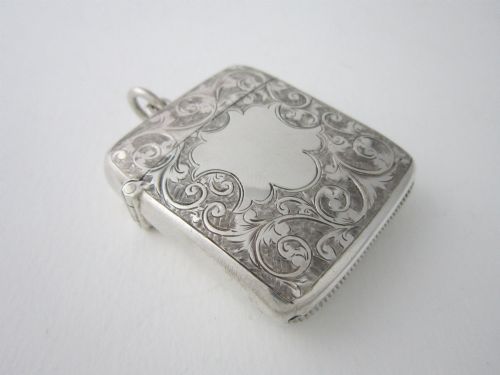
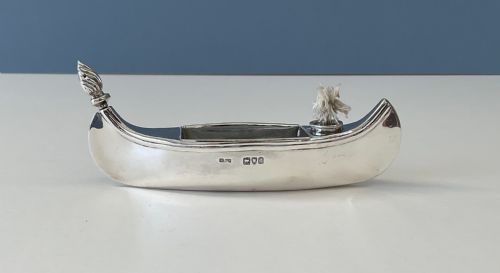
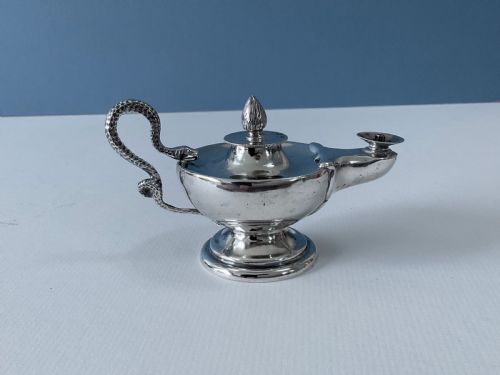
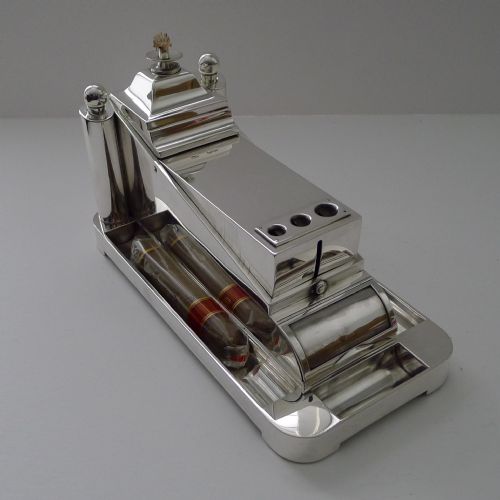
Novelty forms dominate the selection, appearing as hunting horns, canoes, Aladdin's lamps, castles, and fire carriages on wheels. Alongside these sculptural pieces, standard table models and pocket vesta cases provide the necessary ignition for cigars and pipes.
The objects frequently combine solid sterling silver or silver plate with subsidiary materials such as glass, horn, cotton wicks, and steel strikers. Makers utilise these mixed components to build robust mechanisms suitable for daily nineteenth-century use.
Factors of quality
Quality rests in the crispness of the chasing and the fidelity of the novelty modelling, distinguishing mass-produced wares from master-silversmith commissions. Pieces shaped as detailed hunting horns, canoes, or architectural castles demonstrate superior sculptural ambition.
The inclusion of fully articulated elements, such as working wheels on carriages or fitted double lids on humidor boxes, elevates an object. Hallmarks stamped clearly by recognised makers further solidify the standing of a piece within the period.
Victorian Silver Lighter Retail Price Guide 2026
Typical asking prices for victorian silver lighter among the pieces listed under this phrase on Sellingantiques today, from the lower quarter to the upper quarter. They describe what is for sale here now, not the wider market.
Listings feature sterling silver and silver plate alongside mixed materials including horn, glass, and steel.
Wright and Davies·Elkington·Richard Hodd and Son·John Wilmin Figg·Braham·Goldsmith and Silversmith
The Victorian Silver Lighter Glossary
- Sterling silver
- A silver alloy containing ninety-two point five percent pure silver by mass, standard for quality British plate and objects. This metal forms the primary body of the finest table lighters.
- Vesta case
- A small pocket box with a textured striker base used to hold and ignite matches. These companion pieces frequently match the materials of larger desk lighters.
- Tinder tube
- A cylindrical container holding a slow match or charred material used to catch a spark before the invention of safety matches. They represent an earlier ignition technology.
- Match striker
- A corrugated or roughened surface integrated into a smoking compendium for frictioning matches. They appear on both pocket cases and large desk models.
- Smoking compendium
- A fitted desk set combining lighters, match holders, and cigar storage in a single ensemble. These pieces coordinate the various accessories required for gentlemanly smoking.
Victorian Silver Lighter: Frequently Asked Questions
What is a victorian silver lighter?
A victorian silver lighter is a nineteenth-century smoking accessory designed to provide a flame for cigars and pipes at the desk or dining table. They range from utilitarian sterling silver cylinders to elaborate novelty sculptures.
Many pieces take whimsical shapes such as hunting horns, canoes, and miniature fire carriages. They utilise wicks, tinder, and steel strikers housed within precious metal casings.
How were these lighters used?
These items sat upon smoking tables, desks, or mantels as part of a gentleman's smoking compendium. Users drew a flame from the wick fed by internal fuel or tinder.
They served both a practical purpose for lighting cigars and a decorative function in nineteenth-century interiors. Companion pieces like vesta cases handled matches for portable use.
How do I date a silver lighter?
Dating relies heavily upon the assay office hallmarks stamped directly onto the sterling silver components. These marks reveal the exact year of manufacture and the silversmith responsible.
Stylistic cues such as Classical Revival motifs or Victorian novelty themes also help narrow down the production era. Archive comparisons provide further historical context for unmarked plated pieces.
What materials are used besides silver?
Makers frequently incorporated glass bodies, animal horn, and steel strikers into their silver designs. Fabric wicks and cotton provide the internal mechanism for holding a flame.
Silver plate also appears alongside solid sterling silver, particularly in larger novelty carriage and castle models. These mixed media constructions added durability and visual contrast.