


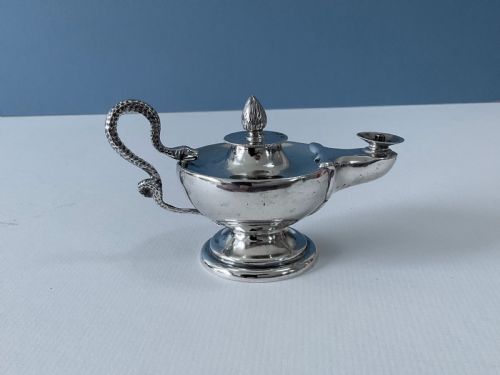


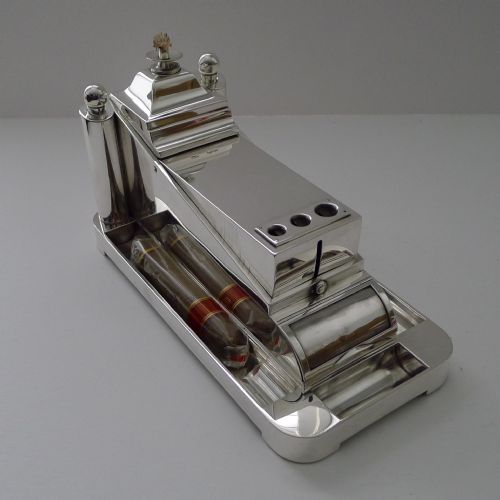
Victorian Table Lighter
A victorian table lighter brings nineteenth-century smoking customs to the modern room through ingenious miniature forms.
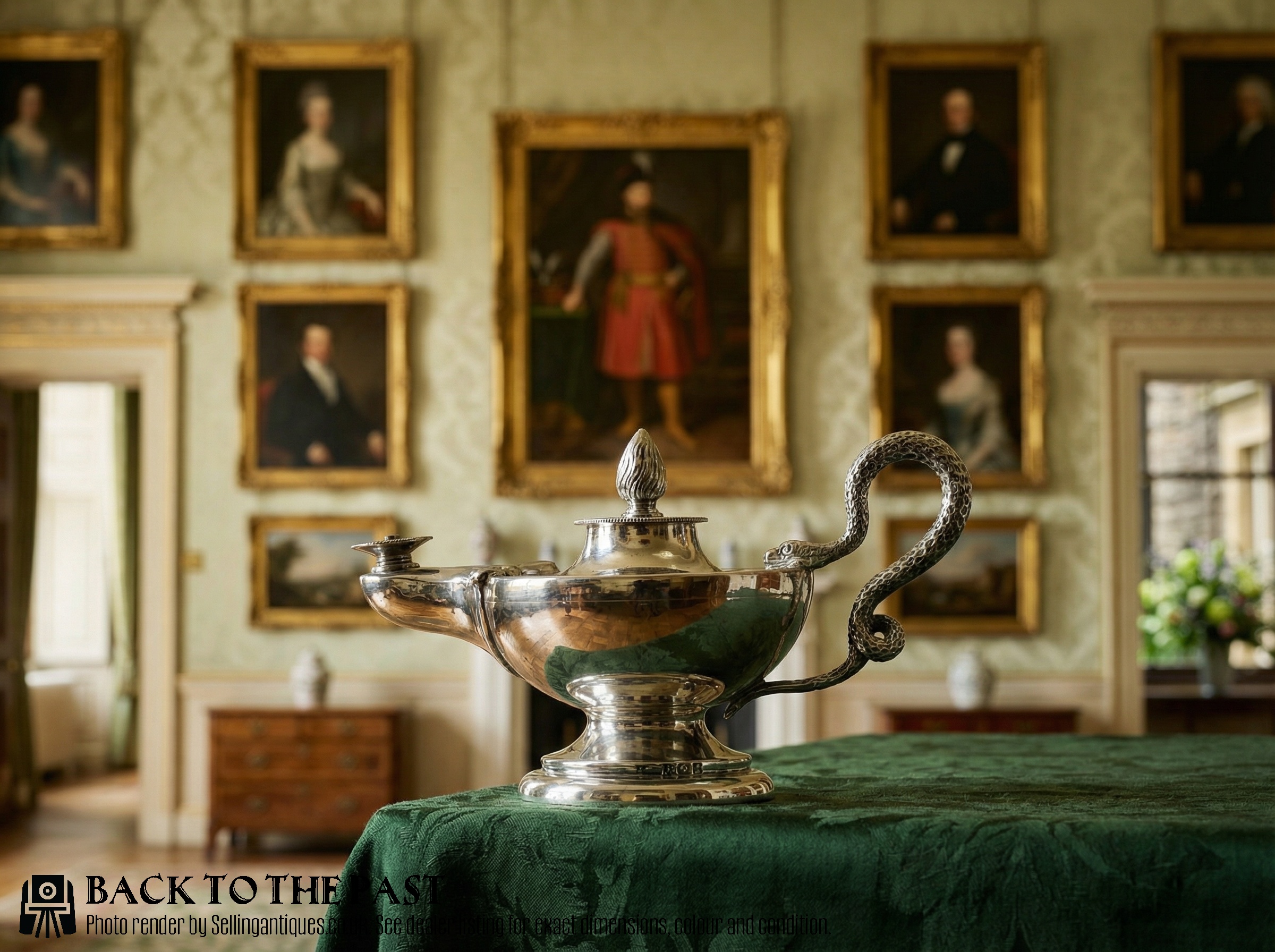
Victorian Table Lighter
When you search for a victorian table lighter, you encounter functional smoking accessories designed to sit permanently on a desk, smoking compendium, or drawing room table during the nineteenth century. These pieces supplied flame for cigars and pipes before safety matches became ubiquitous in every household.
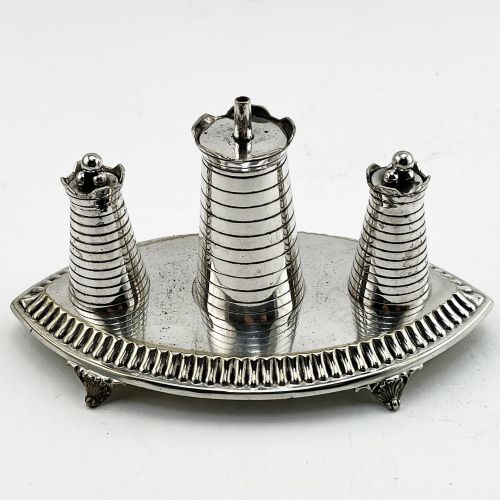
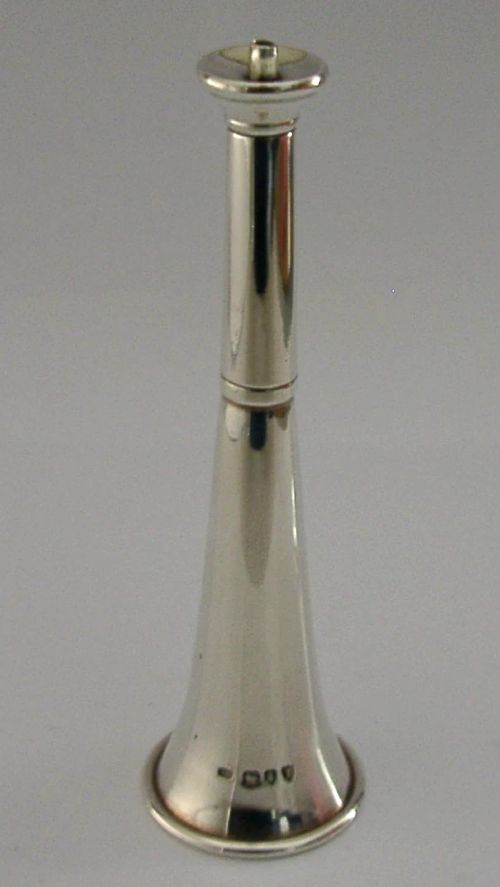
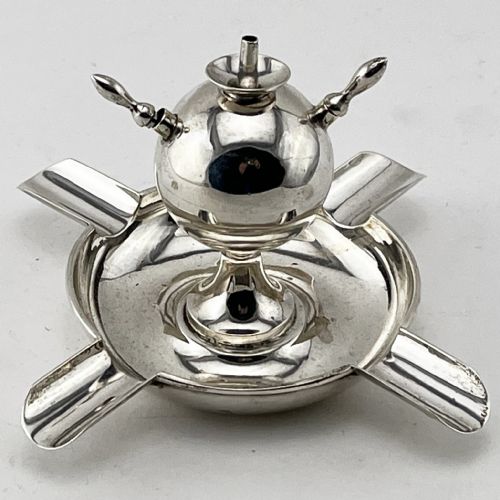
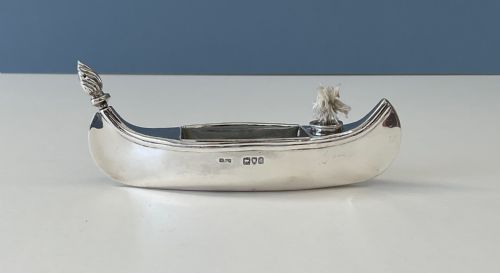
You are most likely to meet silver or silver-plated examples spanning the decades from eighteen-sixty to nineteen-hundred, frequently taking unusual novelty shapes rather than plain reservoirs. The evidence shows table lighters styled as hunting horns, canoes, fire carriages, and Aladdin's lamps.
Many items connect directly to smoking compendiums or cigar boxes, forming part of coordinated sets used in gentleman's smoking rooms. The forms range from simple classical revival lamps to elaborate mechanical novelties on wheels.
How they were made
Silversmiths utilised sterling silver and silver plate over base metals, shaping the reservoirs through casting, spinning, and hand-chasing. Cut glass also appears in combination with silver mounts to form the body of the lighter.
Functional elements required a fabric wick threaded through a burner, drawing fuel from an enclosed reservoir. Novelty pieces incorporate hinged lids, miniature wheels, and electrical mechanisms patented by makers like Clarke.
Victorian Table Lighter Retail Price Guide 2026
Typical asking prices for victorian table lighter among the pieces listed under this phrase on Sellingantiques today, from the lower quarter to the upper quarter. They describe what is for sale here now, not the wider market.
Some nineteenth-century smokers lit their cigars from miniature fire carriages rolling across the mahogany table.
What varies in quality
The distinction between standard production and exceptional work rests on the ambition of the novelty modelling and the crispness of the chased detail. Cast silver hunting horns and figural vessels demonstrate sculptural depth that flat-stamped metal lacks.
Attribution to documented workshops elevates an object, as seen in pieces bearing the marks of specialised silversmiths. The integration of functional compartments, such as matching match strikers or double-lidded humidor sections, indicates higher original status.
Braham·Wright & Davies London·Elkington·Richard Hodd and Son·John Wilmin Figg
The Victorian Table Lighter Glossary
- Sterling silver
- A silver alloy containing ninety-two point five percent pure silver by mass, standard for quality British plate. This metal provides the durable body for many desk accessories.
- Silver plate
- A layer of silver fused to a base metal core such as nickel silver or copper. This technique allowed makers to produce large novelty shapes at a lower material cost.
- Smoking compendium
- A desk set housing cigars, matches, and a lighter within one coordinated container. These multifaceted pieces organised the accessories of nineteenth-century smoking rituals.
- Fabric wick
- A woven cord that draws liquid fuel to the flame source of the lighter. This consumable element sits inside the burner mount.
- Match striker
- A textured surface integrated into the body of the smoking accessory for igniting friction matches. Ceramic, glass, or scored metal often served this purpose.
Victorian Table Lighter: Frequently Asked Questions
What is a victorian table lighter?
A victorian table lighter is a decorative and functional smoking accessory designed to remain stationary on a desk or table during the nineteenth century. These pieces provided a reliable flame for cigars and pipes before safety matches became common.
They appear in materials ranging from solid sterling silver to silver plate and cut glass. Many examples take whimsical novelty shapes, reflecting the Victorian taste for entertaining design.
How did people use them?
Victorian households placed these lighters in smoking rooms, libraries, and drawing rooms where guests gathered after dinner. Users tipped or opened the reservoir to ignite the fabric wick for lighting cigars and tobacco.
Larger specimens often formed part of a smoking compendium alongside cigar boxes and match strikers. They served as both conversation pieces and practical household utilities.
How do I identify the period?
Identifying the period involves examining hallmarked stamps, maker marks, and stylistic clues within the metalwork. Victorian pieces frequently display hallmarks that indicate the assay office and year of manufacture.
Stylistic indicators include the heavy ornamentation of the high Victorian era alongside classical revival motifs. Novelty forms referencing transport, animals, and mythology also point directly to nineteenth-century manufacturing trends.
Are they still functional?
Most surviving examples serve primarily as decorative antiques and display pieces rather than everyday lighting tools. The original wicks and fuel reservoirs often require careful handling or conservation to operate safely.
Collectors generally preserve them as historical objects representing nineteenth-century social habits. Their value lies in their craftsmanship, silver marks, and novelty form.