

Victorian Silver T Bar
When searching for a victorian silver t bar, collectors uncover sturdy pocket watch accessories designed to secure albert chains through buttonholes.
Victorian Silver T Bar
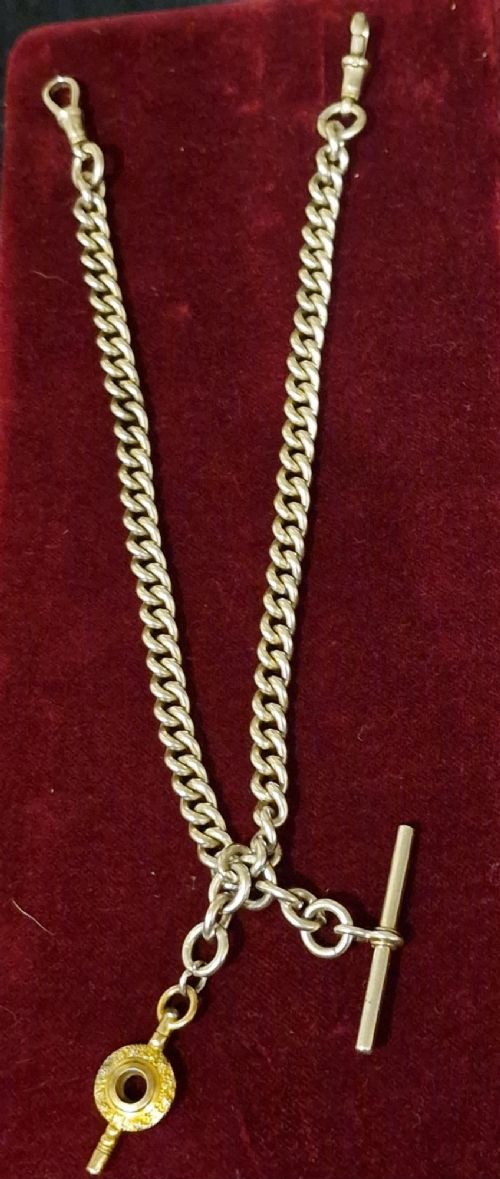
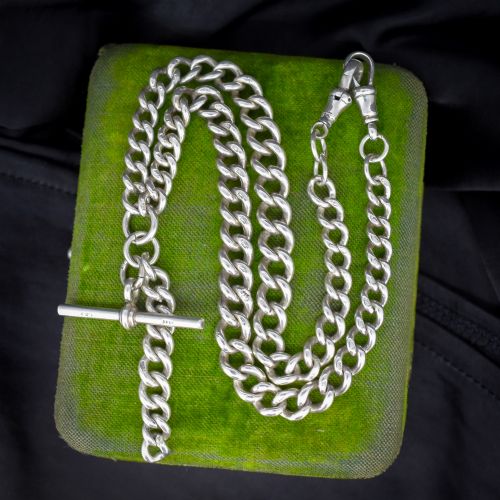
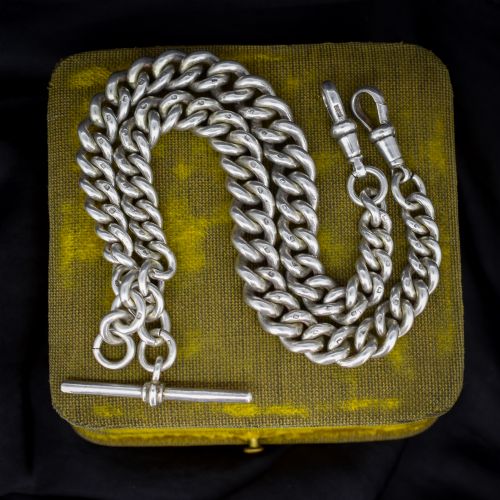
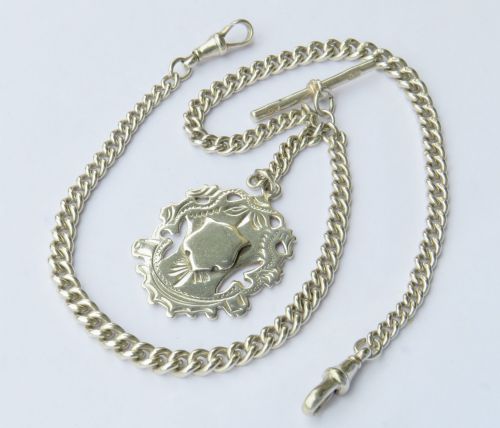
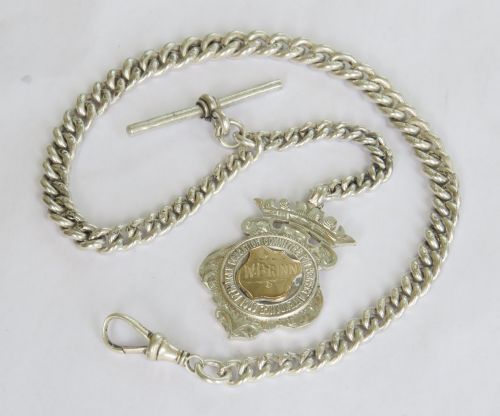
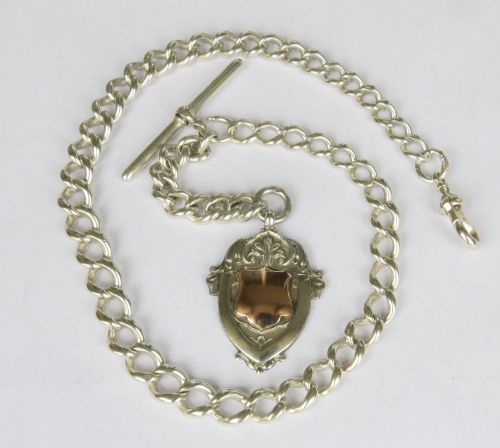
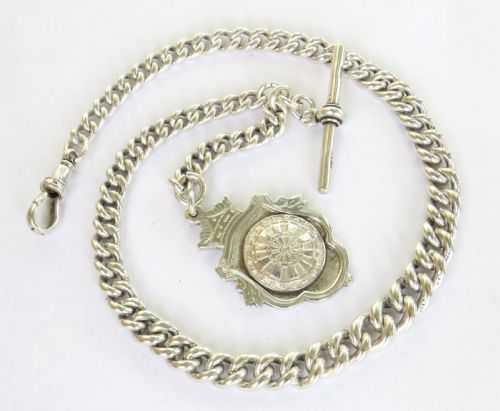
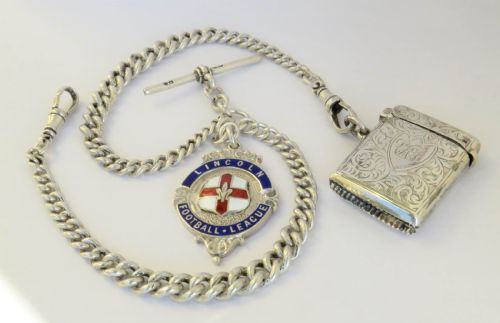
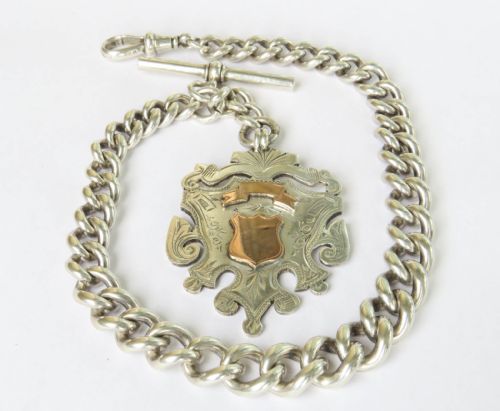
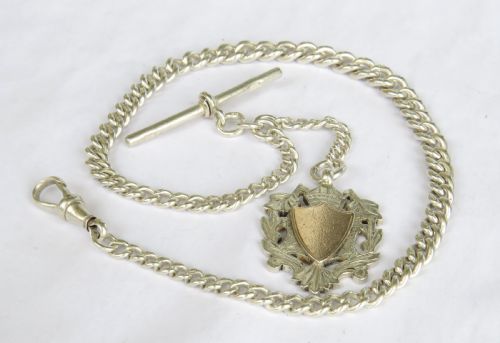
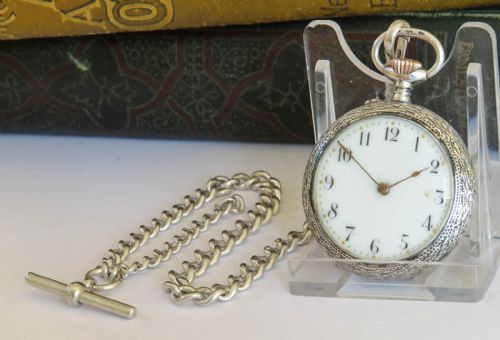
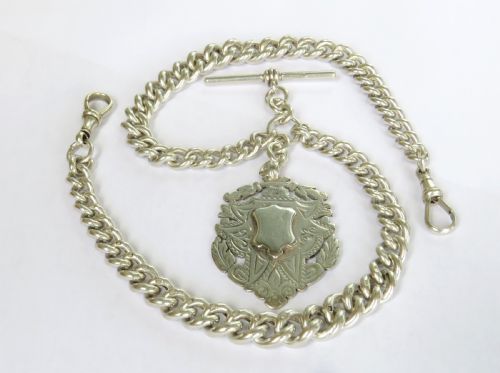
A victorian silver t bar functions as the central toggle on a pocket watch albert chain, securing the length securely through a waistcoat buttonhole. These components originate predominantly from the nineteenth century, spanning periods from the 1880s through to the Edwardian era.
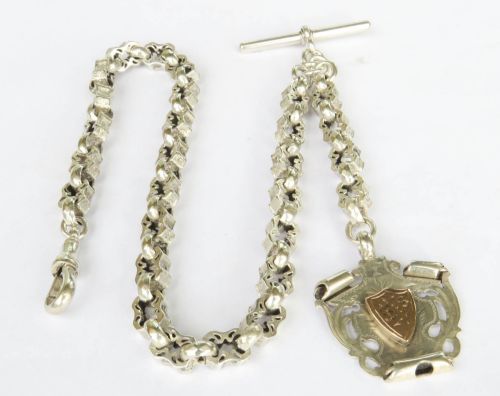
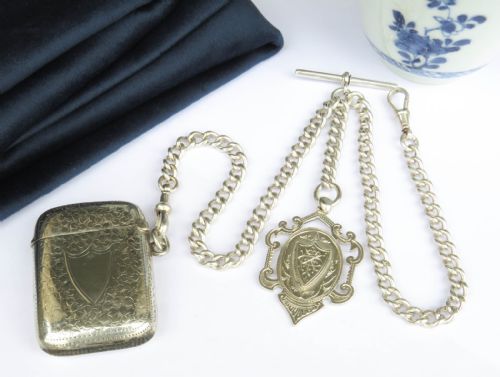
Most examples found on this page attach to double or single curb, trombone, and figaro link chains fashioned from sterling silver. They frequently appear alongside dog clips, fob seals, and vestas, reflecting their original purpose in daily gentleman's attire.
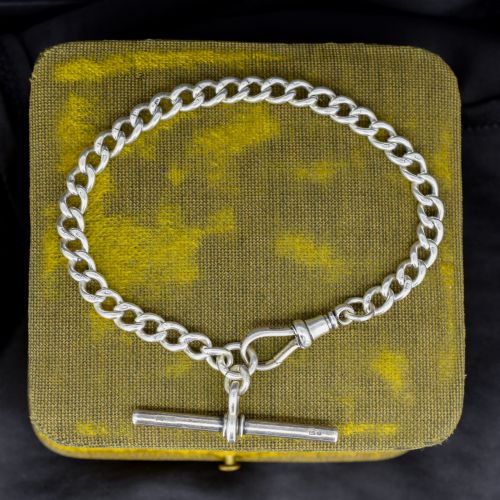
Beyond standard watch chains, the selection encompasses related items bearing horizontal crossbars or drops, including bracelets and decorative pocket watch accessories. The form remains robust, utilitarian, and characteristic of Victorian silver work.
Materials and Construction Techniques
Makers shaped these items primarily from sterling silver, casting or forging solid metal into distinct tubular crossbars and soldering suspension loops to the centre. Many links and bars display crisp hallmarks denoting assay offices, standard silver purity, and date letters.
Link chains accompanying the crossbars utilise varied wire-working methods, such as interlocking curb patterns, trombone links with rectangular and oval stations, or twisted figaro configurations. Artisans occasionally integrated gold accents, bloodstone, or agate swivels to enhance the visual weight of the ensemble.
Victorian Silver T Bar Retail Price Guide 2026
Typical asking prices for victorian silver t bar among the pieces listed under this phrase on Sellingantiques today, from the lower quarter to the upper quarter. They describe what is for sale here now, not the wider market.
Materials recorded across the inventory include sterling silver, silver plate, blonde oak, cut glass, and agate.
Assessing Craftsmanship and Condition
Quality in a victorian silver t bar rests upon the crispness of the original hallmarks, the structural integrity of the central suspension loop, and the absence of thinning to the metal from decades of friction. Superior pieces retain sharp edges on stamped linear decorations and secure attachment rings.
The overall heaviness of the associated chain, the retention of matching silver stamps across individual links, and original matching dog clips separate standard mass-produced examples from exceptional artisan work.
Hukin & Heath·J Dixon & Sons·Mappin Brothers·R & J Beck·Walter & John Barnard·Barnet Henry Joseph·Edward & John Barnard·Andrew Barrett & Sons
The Victorian Silver T Bar Glossary
- T-Bar
- A short horizontal metal bar attached to the middle of a watch chain. It passes through a waistcoat buttonhole to anchor the chain securely.
- Dog Clip
- A spring-loaded swivel clasp attached to the end of a watch chain. It fastens easily to a pocket watch loop.
- Vesta
- A small pocket-sized container used for holding matches during the Victorian period. These often accompany watch chains on the same loop.
- Sterling Silver
- An alloy of silver containing ninety-two point five percent silver and seven point five percent other metals, usually copper. British pieces carry standard hallmarks to verify this purity.
Victorian Silver T Bar: Frequently Asked Questions
What is a Victorian silver t bar used for?
A t-bar anchors a pocket watch chain to a waistcoat or jacket buttonhole. The crossbar slips horizontally behind the cloth to prevent the chain from falling.
Collectors today often repurpose these chains and bars to wear as necklaces or bracelets.
How can I date a silver t bar?
Dating relies upon the hallmarks stamped directly onto the metal bar or adjacent chain links. These marks typically include a date letter, a lion passant for sterling silver, and an assay office symbol.
Stylistic cues such as link geometry also help assign pieces to the Victorian or Edwardian eras.
What is an albert chain?
An albert chain is the specific name for the pocket watch chain worn across a waistcoat. Single albert chains run from one pocket to a buttonhole, while double chains loop between two pockets.
Both variants utilise a t-bar at the centre point for anchorage.
Can these chains be worn as necklaces?
Many buyers wear antique watch chains as necklaces by fastening the dog clip directly to the t-bar or to an intermediate link. The substantial weight of Victorian silver makes them suitable for this modern styling.